

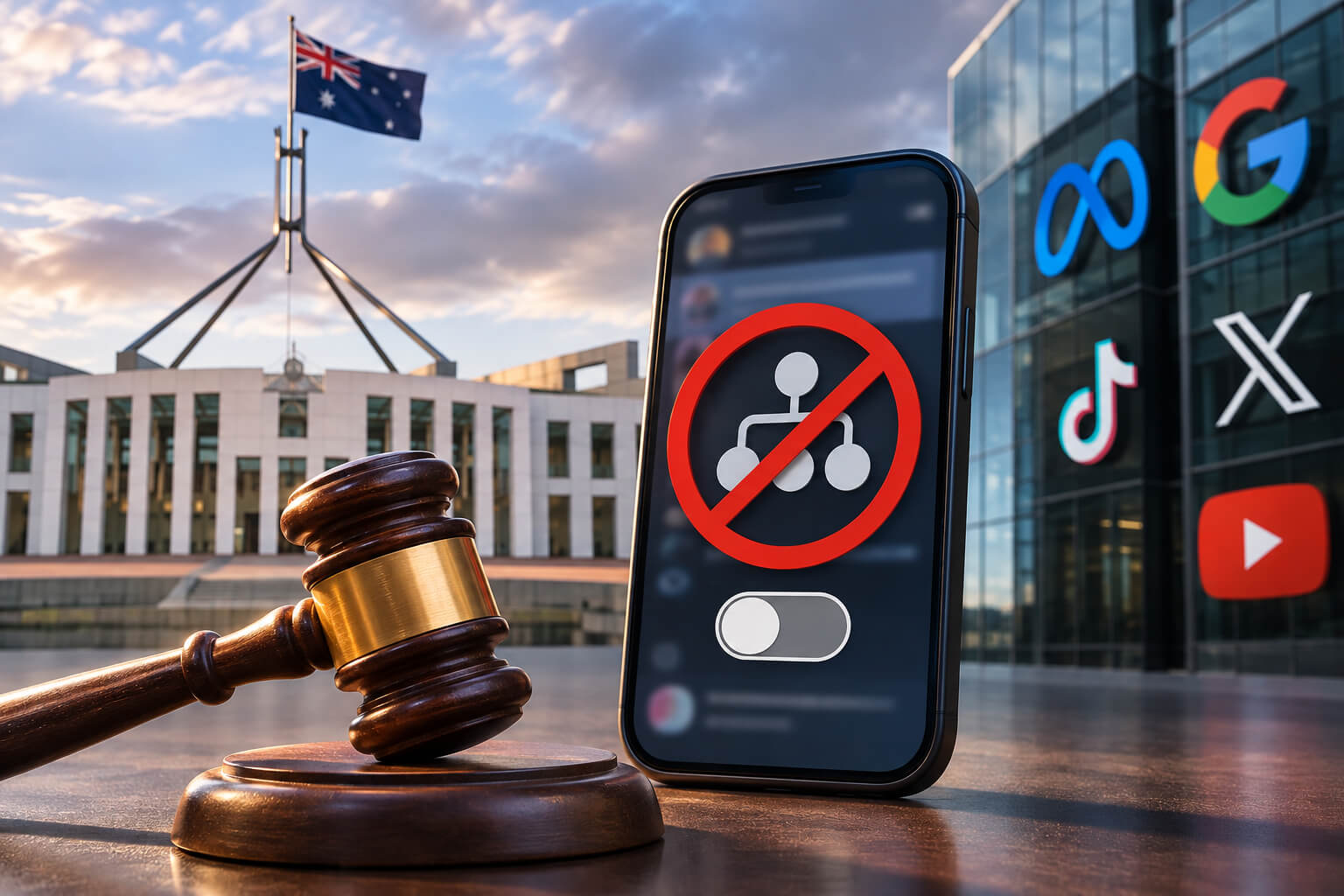
Australia has taken a major step toward changing how social media platforms control what people see online. The country’s Parliament has passed new digital safety legislation. This includes a plan to let users opt out of personalized recommendation algorithms.
The move could affect platforms such as Facebook, Instagram, TikTok, and other services. These services rely heavily on algorithms to determine which posts, videos, and accounts appear in users’ feeds.
The legislation is part of Australia’s broader Digital Duty of Care reforms. It aims to give people more control over their online experience. At the same time, it makes technology companies responsible for reducing harmful content and platform design risks.
After months of debate and negotiations, the government secured the parliamentary support needed to pass the legislation. This happened on November 25, 2026.
Australia Wants Social Media Users to Control Their Own Feeds
Under Australia’s “My Feed, My Way” initiative, social media platforms will be required to give eligible users the option to switch away from algorithmically recommended content. As a result, users will be able to choose content from accounts they already follow, instead of having their feeds filled with posts selected by recommendation systems.
The proposal also requires platforms to make that choice visible through notifications. This is instead of leaving users to search through complicated settings. Australians aged over 16 would be able to decide whether personalized recommendations should appear in their default feeds.
For years, recommendation algorithms have shaped social media experiences by analyzing viewing habits, engagement patterns, and interactions. These systems help platforms predict which content might keep users scrolling longer.
Australia’s approach challenges that model by making personalized recommendations a choice rather than something users must automatically accept.
Government Secures Support for Tougher Digital Safety Legislation
The legislation advanced after Prime Minister Anthony Albanese’s Labor government reached an agreement with the Australian Greens. This secured the votes needed to move the reforms through Parliament.
The agreement brought several amendments. These include stronger financial penalties for technology companies that fail to comply with their digital safety responsibilities.
The original proposal included penalties of up to A$109.2 million. Under the revised legislation, companies can face fines of up to 5% of their global turnover or A$109.2 million, whichever is greater.
For major technology companies generating billions in annual revenue, the potential financial consequences are substantial.
The reforms also introduce additional accountability measures. These include a pathway for individuals and groups to pursue legal action when breaches of the digital duty of care cause loss or damage.
Social Media Algorithms and Addictive Features Face Greater Scrutiny
Australia’s concerns extend beyond the content appearing in users’ feeds. The government also wants digital platforms to examine design features that may contribute to harmful online experiences, particularly among children and teenagers.
Recommendation systems, endless scrolling, and other engagement-focused features have attracted criticism for encouraging prolonged screen time. In addition, experts say these features expose users to potentially harmful material.
The new framework requires digital services to take reasonable steps to identify and reduce foreseeable risks. This is instead of waiting for serious problems to occur.
This responsibility extends beyond traditional social media platforms. Gaming services, mobile applications, and AI chatbots are also covered by the broader digital duty of care.
The legislation reflects a growing concern that online safety should be built into the design of digital services. This is instead of relying entirely on users to manage harmful experiences themselves.
Free Speech Concerns Spark Opposition to Australia’s New Rules
Despite support from online safety advocates, Australia’s legislation has faced criticism from political opponents and some representatives of the United States.
Critics argue that broadly defined online harms, combined with substantial penalties, could pressure platforms to restrict lawful content to avoid regulatory action.
Concerns have also been raised about the powers of Australia’s eSafety Commissioner and proposals allowing researchers to use test accounts to examine how platforms recommend content, particularly to younger users.
Supporters see such testing as a way to understand whether platforms are complying with their safety obligations. Opponents question how far government oversight should extend into online speech and platform operations.
The Australian government maintains that the reforms are designed to give users more control over their online experience. The reforms also establish clearer responsibilities for digital service providers.
What the Algorithm Opt-Out Law Means for Facebook, Instagram, and TikTok
For social media companies, Australia’s new rules could require meaningful changes to how feeds are presented. In addition, there may be changes to how users manage their preferences.
Platforms such as TikTok and Instagram have built much of their popularity around personalized content discovery. Their recommendation systems introduce users to videos, creators, and trends they might never encounter through accounts they already follow.
Giving users a more prominent option to disable those recommendations could change how people discover content.
For creators and businesses, the effects may be mixed. Accounts with loyal followers could benefit from audiences choosing following-only feeds. On the other hand, emerging creators may find it harder to reach new users if fewer people rely on algorithm-driven recommendations.
Much will depend on whether Australians actually use the opt-out feature and how platforms implement the new requirements.
The legislation does not mean recommendation algorithms are disappearing. Users who prefer personalized feeds will still be able to choose them.
Australia Could Set an Example for Social Media Regulation Worldwide
Australia’s decision comes as governments around the world are taking a closer look at the influence of major technology platforms.
The European Union has already introduced rules under its Digital Services Act. These rules require certain large platforms to offer recommendation options that do not rely on profiling.
Australia’s legislation adds another approach to the growing international debate over algorithmic transparency, online safety, and the responsibilities of technology companies.
The country’s experiment could also provide useful evidence about how people behave when given greater control over their feeds.
If large numbers of users choose following-only content, social media companies may need to reconsider how they approach content discovery and audience engagement.
If most users continue relying on personalized recommendations, the results could demonstrate how deeply algorithms have become embedded in everyday social media habits.
When Will Australia’s Social Media Algorithm Opt-Out Rules Take Effect?
Although Australia’s Parliament passed the Digital Duty of Care legislation on November 25, 2026, the changes will not take effect immediately.
The government has indicated that the broader digital duty of care will commence in 12 months. This would place implementation in late 2027.
The detailed requirements for the “My Feed, My Way” initiative are being developed through a separate rule-making process. This includes consultation on how platforms should provide following-only feeds.
That means social media companies will have time to prepare for the new obligations, while regulators finalize important implementation details.
Australia has already made headlines for its approach to restricting social media access for younger users. Now it is targeting another defining feature of modern social media: the recommendation systems that decide what people watch.
The next question is whether users, when given the choice, will actually turn those algorithms off.
Sources
- Social Media Today – Australian Government Moves Ahead With Algorithm Opt-Out Legislation – November 24, 2026.
- Australian Government – Department of Infrastructure – Australia’s Digital Duty of Care Becomes Law – November 26, 2026.
- Prime Minister of Australia – My Feed, My Way – September 8, 2026.
- Australian Government – Department of Infrastructure – Choice of Feeds on Social Media.
- Associated Press – Australia Passes Online Safety Law, Putting Big Tech at Risk of Multibillion-Dollar Fines – November 25, 2026.
