
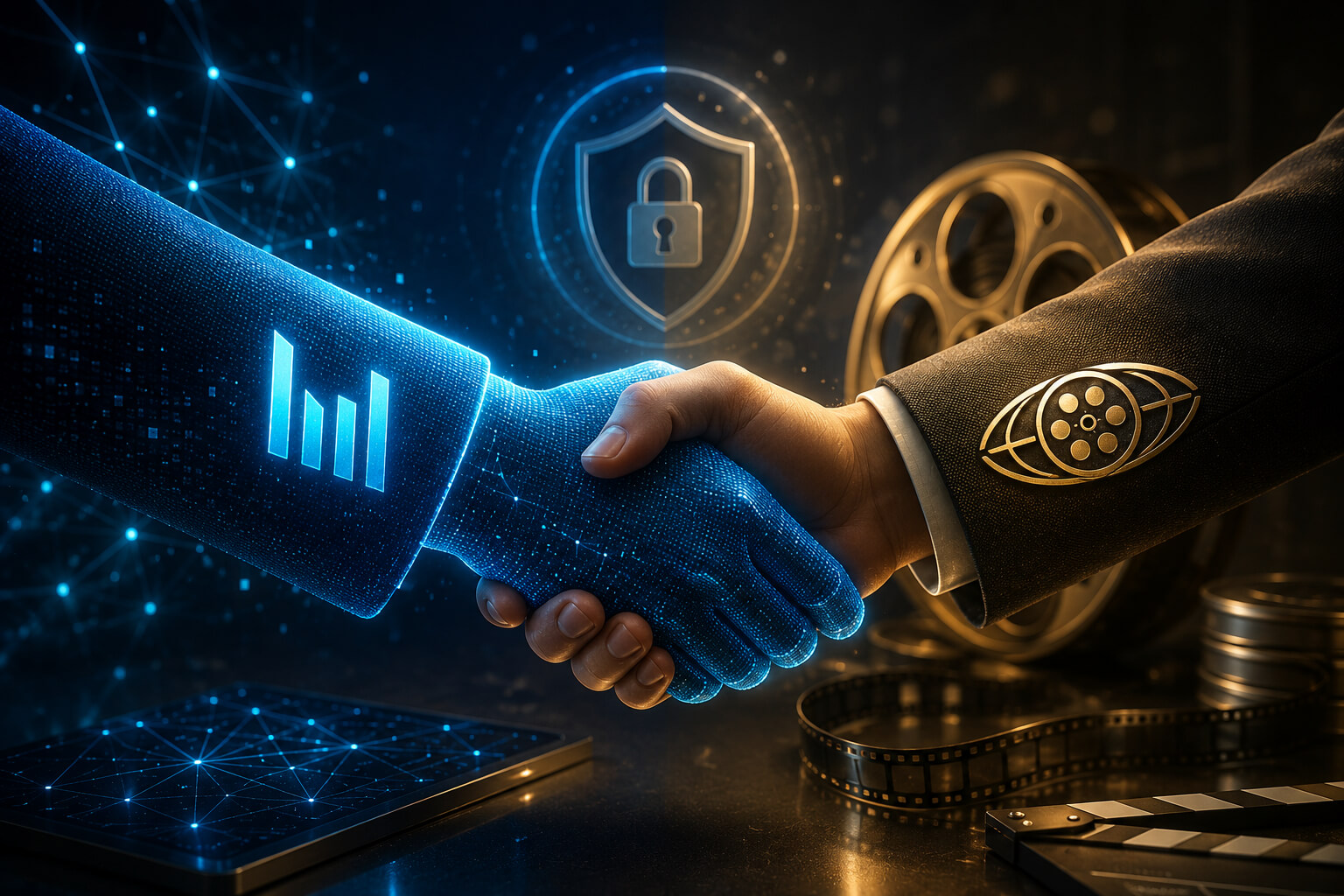
TikTok owner ByteDance has reached a new agreement with the Motion Picture Association as pressure grows over what generative AI tools can create using copyrighted movies, characters and recognizable actors. This ByteDance Motion Picture Association deal marks a significant development in the conversation around AI and copyright.
The deal focuses on ByteDance’s growing collection of AI video and image-generation tools, including Seedance and Seedream. It also reaches beyond TikTok itself. The companies say the framework will apply across products including CapCut, Dreamina and the TikTok USDS Joint Venture.
This isn’t simply another AI partnership announcement. It follows months of tension between Hollywood’s biggest studios and ByteDance over AI-generated content that looked a little too familiar.
ByteDance and the MPA Agree on New AI Guardrails
ByteDance and the Motion Picture Association announced a Memorandum of Understanding on August 17, 2026. The agreement creates a framework for maintaining stronger safeguards around generative AI models such as Seedance and Seedream, specifically with intellectual property protection in mind.
The MPA represents some of the biggest companies in entertainment, including Netflix, Paramount Pictures, Prime Video and Amazon MGM Studios, Sony Pictures, Universal Studios, The Walt Disney Studios and Warner Bros. Discovery. That makes this a fairly significant group for ByteDance to be working with as AI-generated video becomes easier to produce and harder to distinguish from professionally created footage.
The Deal Comes After Hollywood Challenged ByteDance
The agreement didn’t appear out of nowhere. In February, the MPA sent ByteDance a cease-and-desist letter concerning Seedream 5.0 Lite and Seedance 2.0. The two sides later entered discussions that eventually led to the new agreement. ByteDance says newer versions, including Seedream 5.0 Pro and Seedance 2.5, already reflect improvements in intellectual property protections.
Social Media Today reported that some Seedance-generated clips had depicted recognizable actors in realistic fictional scenes. One widely discussed example showed AI versions of Brad Pitt and Tom Cruise fighting on a rooftop. The MPA’s concern was straightforward: AI users shouldn’t be able to freely recreate actors or studio-owned material without authorization simply because a generative model can produce it.
AI Video Is Running Into Hollywood’s Copyright Wall
Text-to-video models are getting good very quickly. That’s exciting for creators, but it creates a messy problem for platforms providing the tools.
Ask an AI system for a generic action hero and there may be little controversy. Ask it for a convincing version of a famous actor inside a scene resembling a major film franchise and things get murkier fast.
Rights holders are increasingly watching that line.
The ByteDance Motion Picture Association deal suggests major AI platforms may end up building more restrictions directly into their generation models rather than waiting for individual copyright disputes to happen afterward. The MPA described copyright as fundamental to the film and television business, while ByteDance said responsible AI development needs to include meaningful protections for rights holders.
TikTok, CapCut and Dreamina Are Part of the Bigger Story
It’s easy to look at this as a Seedance story, but the agreement has wider implications.
ByteDance distributes creative technology through several enormous consumer platforms. TikTok already sits at the center of short-form video culture. CapCut is widely used for video editing. Dreamina offers AI-powered creative tools. Seedance and Seedream push the company further into direct AI content generation.
So guardrails introduced at the model level could eventually affect a huge amount of AI-assisted social content.
Exactly how restrictive those safeguards become is another question. Neither side has published a detailed list explaining every type of prompt, likeness or copyrighted character that will be blocked. The announcement instead establishes an ongoing framework for cooperation as the technology changes.
This Probably Won’t End the AI Copyright Fight
The agreement is meaningful, but it isn’t a universal solution.
Generative AI models from dozens of companies can create recognizable people, fictional characters, brands and visual styles. Even strong safeguards from one developer won’t settle the broader debate over training data, likeness rights, copyright ownership and what counts as infringement.
Social Media Today described the ByteDance agreement as a step toward better intellectual property protection while noting that misuse remains possible across the wider AI ecosystem.
That’s probably the part worth watching.
AI video is moving from novelty clips into mainstream creative production. Studios don’t want their characters and talent recreated endlessly without permission. AI companies don’t want copyright battles hanging over every new model release. Agreements like this may become much more common as those two worlds collide.
What the ByteDance Motion Picture Association Deal Means for Creators
For everyday creators, nothing suggests that AI-generated video is suddenly disappearing from TikTok or CapCut.
The change is more likely to show up around what those tools allow people to generate.
Requests involving copyrighted characters, recognizable actors or protected entertainment properties could face stronger filtering as ByteDance continues developing its safeguards. How aggressively those restrictions are enforced will matter, especially for creators who use AI for parody, fan content, experimentation or commercial production.
ByteDance and the MPA say their collaboration will continue as generative AI technology develops. That means this agreement looks less like a finished rulebook and more like the beginning of an ongoing negotiation over what AI video platforms should — and shouldn’t — let people create.
Sources
- Social Media Today — TikTok owner ByteDance signs Motion Picture Association deal
- TikTok Newsroom — MPA and ByteDance Announce Global Agreement to Protect Intellectual Property on AI Video and Image Generation Models
