


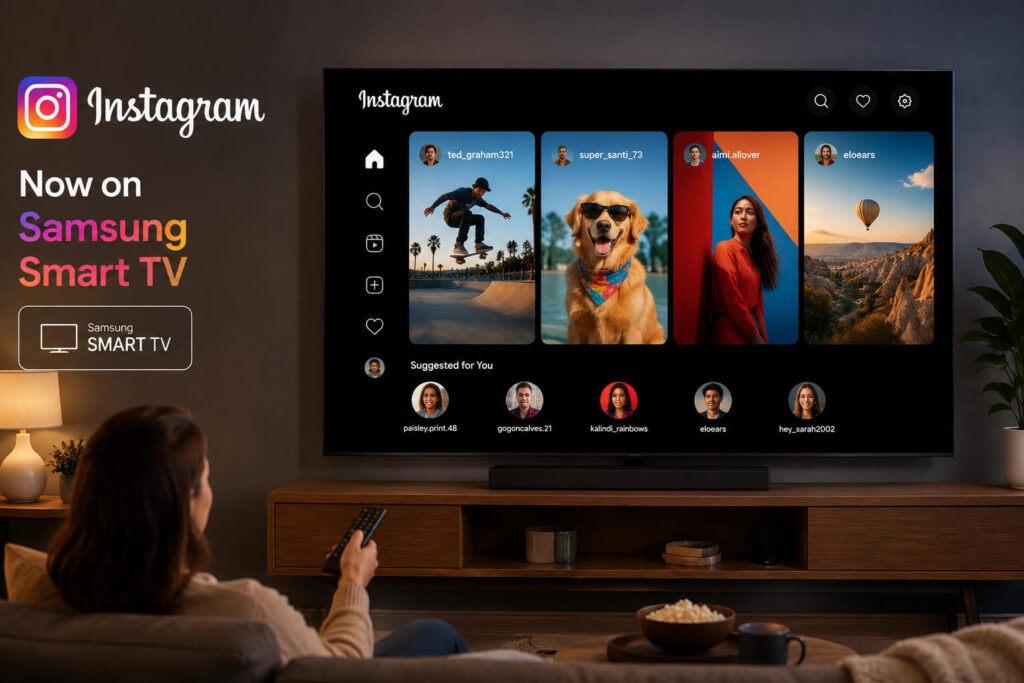
Instagram is taking another major step into connected TV as the platform expands its TV app to Samsung Smart TVs in the United States.
The move gives more users a way to watch Instagram content on larger screens, including Reels, Stories, livestreams, and creator-led video formats. It also shows how Meta is continuing to test whether Instagram can become more than a mobile-first social app.
Instagram Comes to More Connected TV Devices
With the new Samsung Smart TV rollout, Instagram’s updated TV app is now available on most major connected TV devices in the U.S.
Instagram has already been expanding its TV experience across other platforms, including Amazon Fire TV and Google TV. The Samsung Smart TV launch gives the app access to another major living-room screen, helping Instagram compete more directly with video platforms that already have strong TV viewing habits.
For users, the experience is designed to make Instagram video content easier to watch on a big screen instead of only through a phone.
What Users Can Watch on Instagram for TV
Instagram is not simply mirroring the mobile app on television. The company is testing and developing features that are better suited to connected TV viewing.
These include:
- Personalized Instagram TV channels
- Stories formatted for TV screens
- Horizontal video support
- Reels sharing from mobile to TV
- Improved livestream viewing
- Long-form and episodic creator content
The addition of horizontal video is especially important because vertical videos do not always translate naturally to a television screen. By testing more TV-friendly formats, Instagram may be preparing for a broader push into longer and more immersive video content.
Reels Could Drive Instagram’s TV Strategy
Reels has become one of Instagram’s biggest drivers of engagement, and connected TV gives Meta another way to extend that momentum.
Short-form video has already proven successful on television through platforms like YouTube, where viewers increasingly watch Shorts and creator content on bigger screens. Instagram appears to be following a similar path by making Reels and other video formats easier to view in the living room.
The ability to send Reels from a phone to a TV could also make Instagram content more shareable in group settings, such as with friends or family.
Why Instagram Is Moving Toward TV
Instagram has long been known as a mobile-first social media platform, but user behavior is changing. Audiences are now watching more short-form and creator-led content on connected TVs, not just on phones.
For Instagram, this shift could open new opportunities in three major areas:
First, it gives creators more room to experiment with longer videos, episodic content, and TV-style storytelling.
Second, it gives users another way to consume Instagram content in a more relaxed, lean-back format.
Third, it could eventually create new advertising opportunities for Meta if Instagram TV viewing grows at scale.
Can Instagram Succeed on Smart TVs?
Instagram has tested TV viewing before, including through earlier IGTV efforts, but past attempts did not become major consumer habits. This time, however, the market may be different.
Connected TV usage is growing, short-form video is now more mainstream, and creators are increasingly producing content that can work across multiple screens.
Still, the big question is whether Instagram users actually want to watch social media content on TV. Scrolling through a mobile feed is very different from watching videos on a couch, so Instagram will need to make the experience feel natural and useful.
What This Means for Creators and Brands
For creators, Instagram’s Samsung Smart TV expansion could create new opportunities to produce content that feels more premium, longer-form, and TV-friendly.
For brands and marketers, this could become another signal that social media video is moving beyond the smartphone. If Instagram can build strong connected TV usage, advertisers may eventually gain access to new placements that combine social engagement with big-screen viewing.
Final Thoughts
Instagram’s expansion to Samsung Smart TV shows that Meta is serious about testing the future of social video on connected TV.
While it is still unclear whether users will adopt Instagram as a TV-viewing platform, the rollout gives Instagram a stronger presence in the living room and could reshape how creators, brands, and audiences think about social video.
As Instagram continues to test Reels, Stories, livestreams, horizontal video, and long-form creator content on TV, the platform may be laying the groundwork for a bigger entertainment push beyond mobile.