

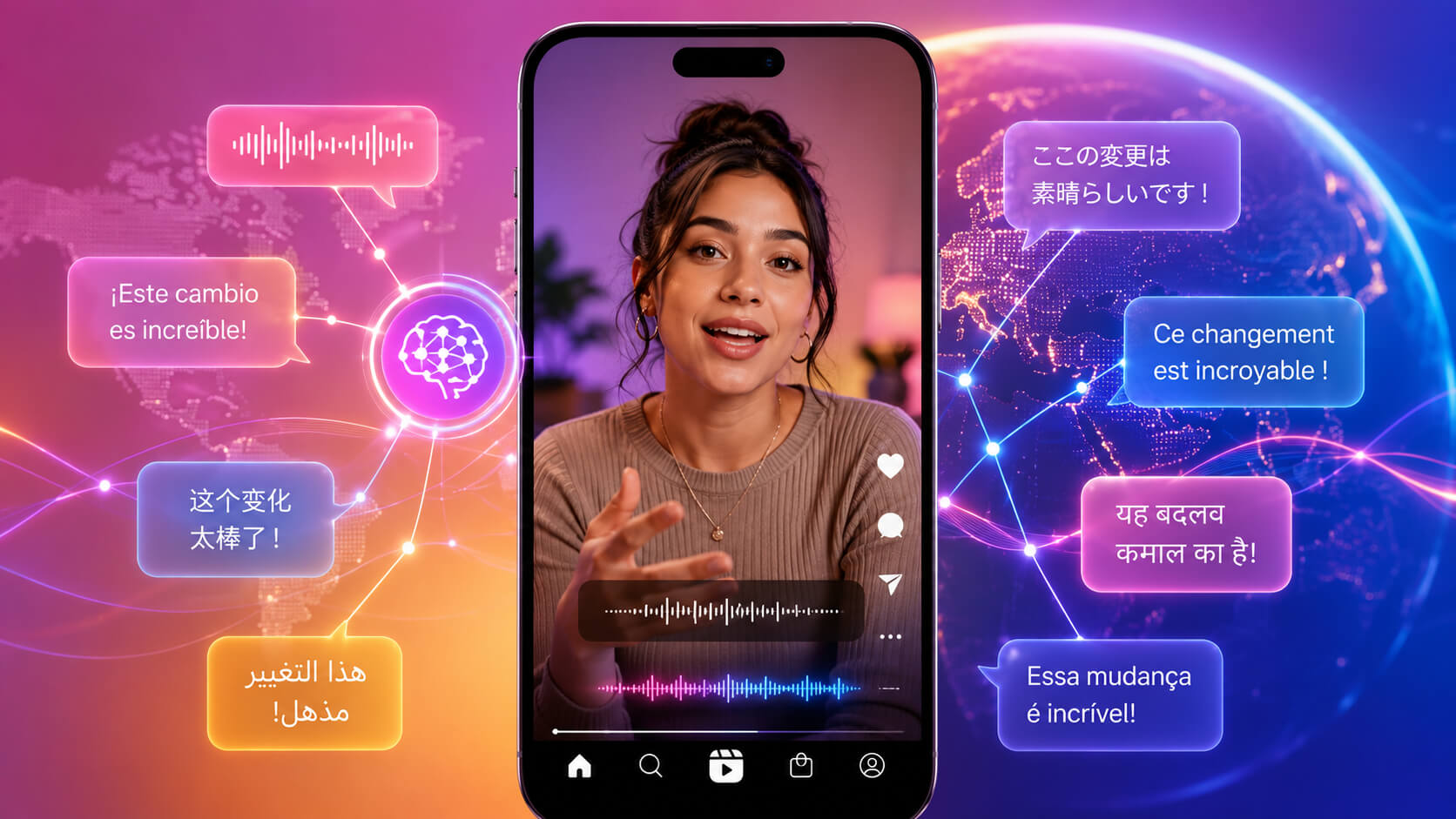
Instagram is making it easier for a Reel filmed in Paris, Tokyo, Rome, or Seoul to reach people far beyond its original language. The platform has expanded its AI-powered translation tools with support for French, German, Italian, Japanese, and Korean. These languages join the translation options already available across Instagram Reels, including English, Spanish, Portuguese, Hindi, Bengali, Tamil, Telugu, Marathi, and Kannada.
This is not limited to placing translated subtitles below a video. Meta AI can translate the spoken audio, reproduce the creator’s vocal tone, and adjust visible mouth movements to match the translated dialogue. The result is supposed to look and sound closer to an original recording rather than a traditional dubbed clip.
Instagram Reels AI Translations Reach Five More Languages
The latest expansion brings several major European and Asian languages into Instagram’s translation system. Creators can now use Meta AI translations for:
- French
- German
- Italian
- Japanese
- Korean
The new additions arrived on Instagram on July 14, 2026, according to an update from Meta. They build on an existing language lineup that already covers several of Instagram’s largest creator and viewer markets. Meta began with English and Spanish before moving into Hindi, Portuguese, and five Indian languages.
The rollout has been gradual. Almost cautious. Translation sounds straightforward until the platform has to preserve timing, tone, slang, facial movement, and the way someone actually speaks. A technically accurate sentence can still feel wrong when the delivery sounds flat or the lips clearly do not match. Instagram is trying to smooth out those awkward edges.
Meta AI Can Dub and Lip-Sync Reels
Creators who activate the translation option can have Meta AI generate a dubbed version of their Reel in another supported language. The system attempts to retain the sound and tone of the original speaker’s voice. Lip syncing can also be enabled, allowing Instagram to modify mouth movements so they line up more naturally with the translated audio.
That part will probably attract the most attention. Automatic captions have been common on social platforms for years. AI-generated dubbing that still sounds like the original creator is a different proposition. Add synthetic lip syncing, and the same video can begin to feel locally produced for several audiences at once.
Viewers are informed when a Reel has been translated using Meta AI. They can also manage their language preferences and choose not to see translations for particular languages. Creators retain some control as well. Meta allows them to review translations before publishing and remove translated versions later if something does not look or sound right.
A Bigger Audience Without Recording the Video Again
For creators, the obvious benefit is reach. A Japanese travel creator could potentially share a Reel with English, Italian, or German-speaking viewers without recording separate versions. A French fashion account could test content among audiences that previously scrolled past because the spoken language created too much friction.
No second filming session. No separate voice actor. No manually synchronized dub. That could be especially useful for smaller creators who want international visibility but do not have the budget to localize every video professionally. It may also change which Reels Instagram recommends.
Language has always shaped content discovery. A viewer might enjoy the idea behind a video, but the algorithm has little reason to recommend it when the person cannot understand what is being said. Reliable translation gives Instagram more freedom to circulate content across geographic and linguistic boundaries. One Reel can travel much farther. At least, that is the pitch.
Translation Accuracy Still Matters
AI translation is not flawless, and short-form video is full of things that machines struggle with. Jokes can lose their timing. Local expressions may be translated too literally. Brand names, regional accents, sarcasm, technical language, and overlapping conversations can create strange results. Background music adds another complication.
Meta previously advised creators to reduce noise, avoid people talking over one another, and keep the speaker’s face visible when using its translation and lip-syncing features. The system can support videos with up to two speakers, but cleaner audio generally gives the AI less room to make a mess. Creators will still need to check the translated version before trusting it with a new audience.
A mistranslated product description is inconvenient. A badly translated joke can be embarrassing. For news, health, legal, political, or financial content, mistakes carry more weight. Automatic does not mean review-free.
Instagram Wants Reels to Feel Less Regional
Instagram’s translation expansion fits into a broader push to make content discovery less dependent on location and language. Meta says more than half a billion Facebook users now watch AI-translated videos each week. The company has also said that AI-dubbed videos are already adding incremental time spent on Instagram.
Those figures explain why Meta keeps adding languages. Translated Reels give viewers more content to watch, give creators more potential followers, and give Instagram a larger pool of videos to recommend. Everyone gets something. Meta gets more viewing time.
The platform is also bringing translation features into its wider creation ecosystem. Instagram’s Edits app recently added tools for automatically translated bilingual captions, another small sign that multilingual publishing is becoming part of the standard workflow rather than a specialist feature.
What the Expansion Means for Brands
Brands operating across several markets could use Instagram Reels AI translations to test localized campaigns without producing every video from scratch. A company could record one strong piece of creator-led content, translate it into several supported languages, and compare how different audiences respond.
That sounds efficient. It can also go wrong quickly. Direct translations do not automatically account for cultural references, regional humor, buying habits, or local advertising rules. A message that performs well in one country may feel bland—or oddly aggressive—in another.
AI dubbing can reduce production work. It cannot replace local judgment. For basic explainers, demonstrations, event clips, interviews, and product introductions, the feature could save considerable time. More sensitive campaigns will still benefit from native speakers reviewing the finished content.
Reels Are Becoming Multilingual by Default
Instagram is slowly removing one of the oldest barriers in online video: the language spoken by the person holding the camera. The addition of French, German, Italian, Japanese, and Korean gives creators access to several valuable international audiences. More languages will almost certainly follow. The interesting part is not simply that Instagram can translate a Reel.
It is how invisible the translation may eventually become. When the voice sounds familiar, the captions make sense, and the lips appear to match, viewers may spend less time thinking about where a video came from. They will simply watch it. That could make Instagram feel more global. It may also make the line between an original performance and an AI-produced version increasingly difficult to see.
Sources
- Social Media Today – Instagram Reels Adds More AI Translations
- Meta – Discover Reels From Around the World With Meta AI Translation
- Meta – Translate, Dub and Lip Sync Reels With Meta AI
- Meta – Instagram Expands Local Voice Translations
