


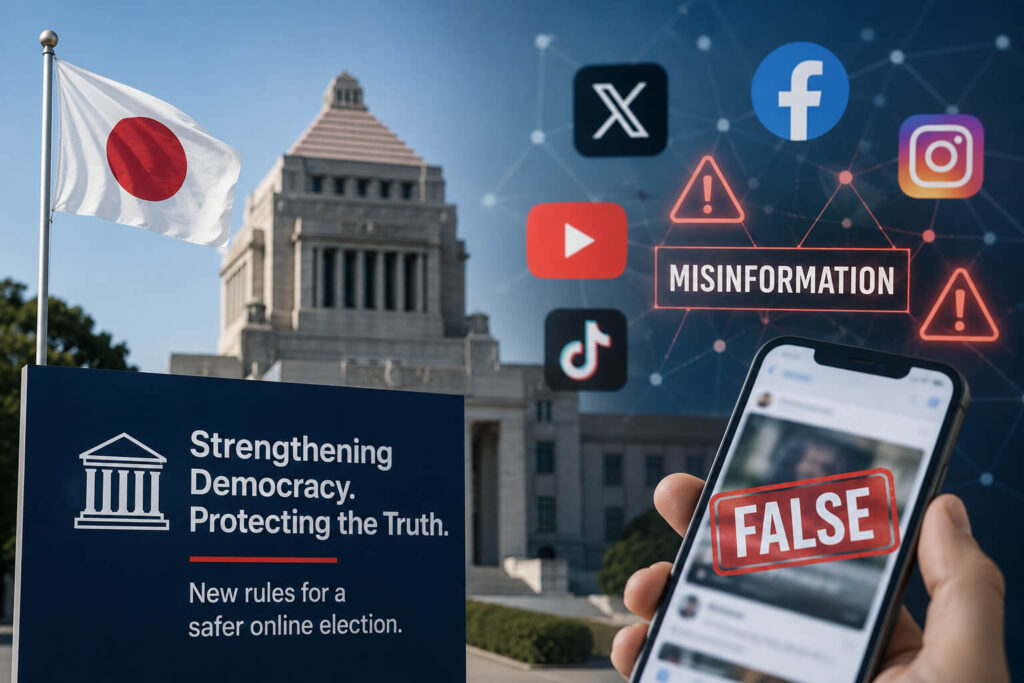
Japan is preparing to take a stronger stance against election misinformation. Political parties are reviewing new rules that could make both social media users and online platforms more responsible for the spread of false or misleading content during campaign periods.
The proposed changes focus on protecting the fairness of elections. This comes at a time when misinformation, edited media, and AI-generated content can spread quickly across social media platforms.
Social Media Users Could Face New Responsibilities
Under the proposed revisions, social media users would be expected not to damage the fairness of elections by sharing false statements, misleading claims, or distorted information.
The move signals a major shift in how Japan may handle election-related online activity. Instead of focusing only on political campaigns or platforms, the rules would also place responsibility on individual users. These users include those who post or share content during election periods.
This could affect how people discuss candidates, parties, campaign issues, and political claims online.
AI-Generated Images and Videos May Need Warning Labels
One of the most notable parts of the proposal involves generative AI.
Users who post AI-generated videos or images that could be mistaken for real content may be required to attach warning labels. This rule would aim to help viewers understand when political content has been created or altered using artificial intelligence.
As AI tools become more advanced, governments around the world are becoming increasingly concerned about deepfakes, fake campaign videos, and misleading political images.
Japan’s proposed approach would make transparency a key part of election-related social media activity.
Social Media Platforms May Also Have New Duties
The proposed rules would not only apply to users. Social media companies could also be required to take necessary steps to reduce the negative impact of illegal, false, or factually distorted information on elections.
Platforms may also need to report their actions to the government once a year.
This could increase pressure on major social media services to improve moderation, labeling, reporting, and response systems during election campaigns.
Why This Matters for Social Media Regulation
Japan’s proposal reflects a growing global concern. Social media has become one of the most powerful tools in political communication, but it can also be used to spread misinformation quickly.
Election misinformation can confuse voters, damage trust in public institutions, and affect democratic processes. With generative AI making it easier to create realistic fake content, governments are looking for new ways to protect elections without limiting legitimate political speech.
Japan’s planned revisions could become an important example of how countries balance free expression, platform accountability, and election integrity.
When Could the Rules Take Effect?
If the revisions move forward as planned, authorities could enforce the new rules on March 1, 2027. That timeline would place the measures ahead of Japan’s unified local election campaign periods next spring.
The government expects to formalize the legislation soon. It aims to enact the rules during the current parliamentary session, which ends in July.
The Bigger Picture
Japan’s proposed social media election rules show how quickly governments are adapting to the risks of misinformation and AI-generated political content.
For users, the message is clear: sharing political content online may soon carry greater responsibility. For platforms, the pressure to manage false information during elections is likely to grow.
As more countries respond to the rise of AI and viral misinformation, social media regulation around elections may become one of the biggest digital policy issues in the coming years.