


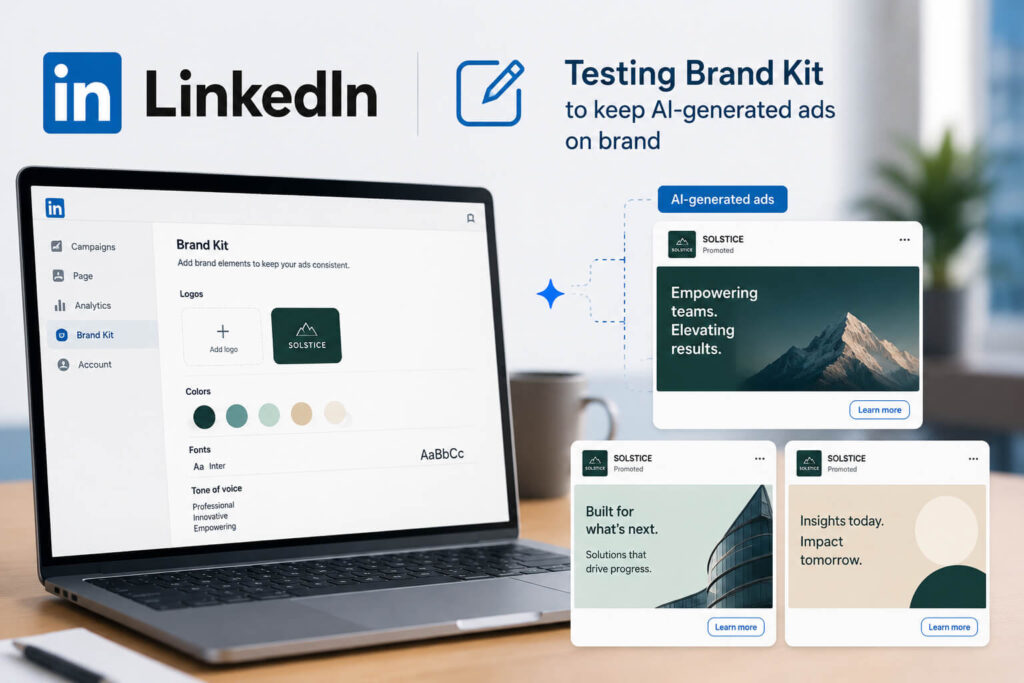
LinkedIn is developing a new Brand Kit feature designed to help businesses keep their ads and marketing content consistent across the platform.
The feature, currently available only to selected users, allows marketers to set key brand rules inside LinkedIn Campaign Manager. These rules can include brand colors, font preferences, and brand voice guidelines.
Once added, LinkedIn can use these brand assets as reference points when generating AI-powered ad suggestions, creative assets, and promotional content.
What Is LinkedIn Brand Kit?
LinkedIn Brand Kit is a tool that lets businesses define their core visual and messaging identity within LinkedIn’s ad platform.
Instead of manually checking every AI-generated ad or creative suggestion, marketers can give LinkedIn a clearer framework to follow. This may help reduce off-brand content and make AI-generated recommendations more useful for businesses.
The Brand Kit can include:
- Official brand colors
- Font preferences
- Brand voice guidance
- Existing LinkedIn Company Page signals
- Previous content from a brand’s LinkedIn presence
LinkedIn can also automatically assemble a brand voice based on a company’s past LinkedIn activity, including posts and Company Page content.
Why LinkedIn Brand Kit Matters
The rise of AI tools has made it easier for marketers to create ads, captions, and promotional content quickly. However, speed can also create problems.
AI-generated content can sometimes feel generic, inconsistent, or disconnected from a company’s established brand identity. For businesses that rely on a clear tone and visual style, that can create confusion or weaken brand recognition.
LinkedIn Brand Kit appears to address that problem by giving AI tools more specific brand instructions.
For marketers, this could mean faster content creation with fewer manual edits. For brands, it could mean more consistent ads and messaging across LinkedIn campaigns.
A Step Toward More Controlled AI Content
LinkedIn has been adding more AI features across its platform, including tools that help users write posts, refine updates, and create ad content.
But the platform is also facing a broader challenge: too much low-quality AI-generated content can reduce trust and engagement. Users do not want feeds filled with generic AI posts, and brands do not want ads that sound robotic or off-message.
Brand Kit could help strike a better balance. Instead of letting AI create content without guidance, marketers can set clear rules that help the system stay closer to the brand’s identity.
Benefits for Social Media Marketers
If LinkedIn rolls out Brand Kit more widely, it could become a useful tool for social media managers, advertisers, and B2B marketing teams.
Potential benefits include:
- More consistent LinkedIn ad creative
- Faster campaign setup
- Fewer off-brand AI suggestions
- Better alignment with company messaging
- Easier brand governance for marketing teams
- More personalized AI recommendations
This could be especially helpful for larger companies with strict brand guidelines or agencies managing several client accounts.
The Risk of Overusing AI
While LinkedIn Brand Kit may improve AI-generated content, it does not remove the need for human review.
AI tools can still make mistakes, misunderstand context, or generate content that feels too generic. Brands should treat AI-generated ads and posts as drafts, not final versions.
The best use of LinkedIn Brand Kit will likely be as an assistant for marketers, not a replacement for strategy, creativity, or editorial judgment.
What This Means for Brands on LinkedIn
LinkedIn’s Brand Kit feature shows how social platforms are trying to make AI tools more practical for businesses.
Instead of focusing only on content generation, platforms are now adding more controls to help brands shape how AI behaves. This could become a key trend across social media marketing tools in the coming months.
For now, LinkedIn Brand Kit is still limited to selected users. But if the test expands, it could give marketers a more reliable way to create AI-assisted LinkedIn ads that match their brand identity.
Final Thoughts
LinkedIn Brand Kit could be a valuable addition for businesses that want to use AI without losing brand consistency.
By allowing marketers to define colors, fonts, and voice, LinkedIn is giving brands more control over AI-generated campaign assets. The feature also reflects a bigger shift in social media marketing: AI tools are becoming more powerful, but they still need strong human direction.
For brands using LinkedIn as a major B2B marketing channel, this feature is worth watching closely.