

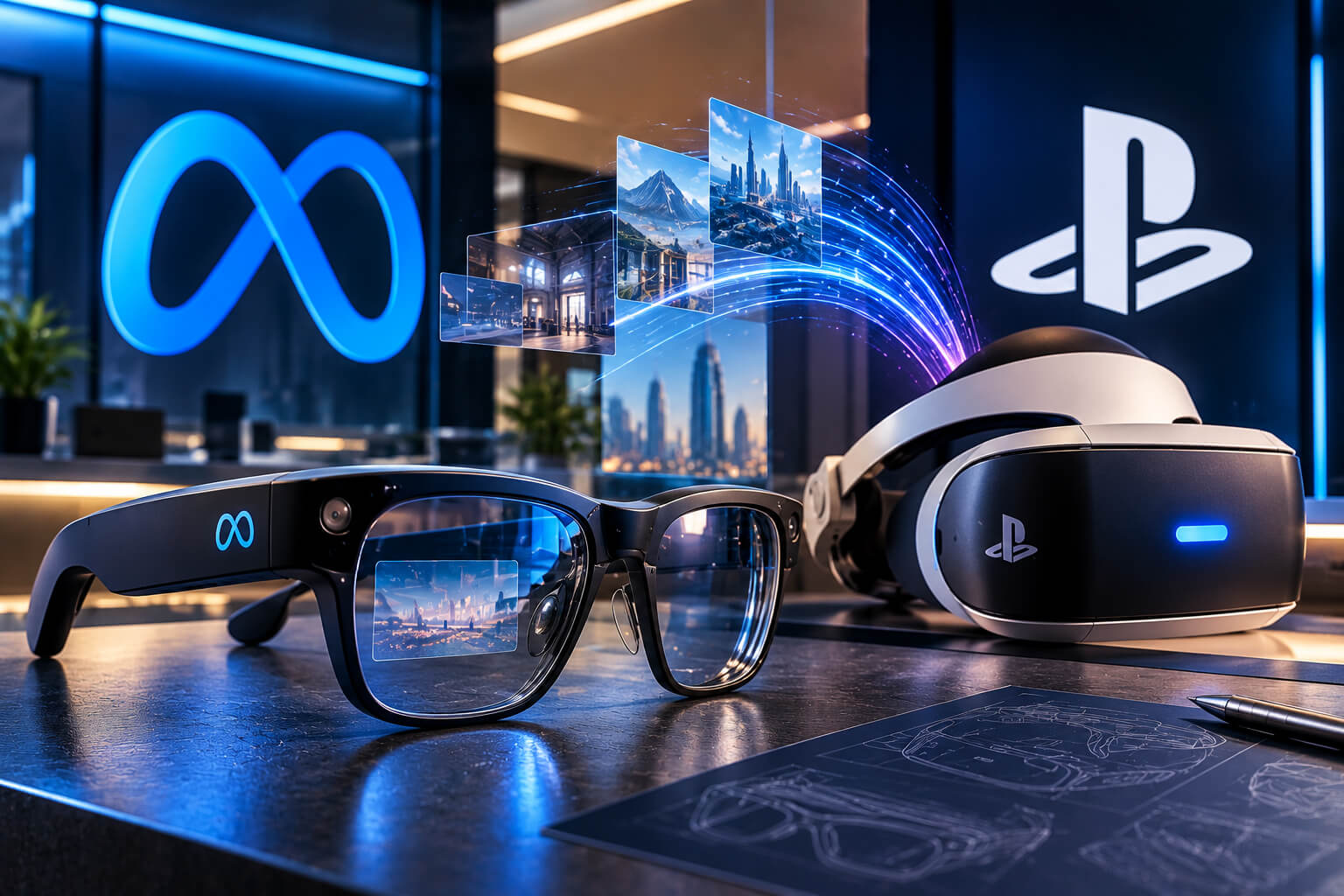
Meta has acquired a substantial portfolio of virtual reality and extended reality patents from Sony, strengthening its intellectual property holdings as the company explores new possibilities for wearable technology.
The transaction involves technologies related to head-mounted displays, augmented reality, mixed reality and immersive computing. According to reports, Sony transferred 43 US patents to Meta between June and September 2026, while the broader agreement covers 419 patents worldwide.
The acquisition comes as both companies reassess their positions in the virtual reality market. Sony faces questions about its long-term VR hardware strategy, while Meta is increasingly directing attention toward artificial intelligence and lightweight wearable devices.
Neither company has publicly disclosed the financial terms of the transaction.
Meta Expands Its XR Technology Portfolio Through Sony Patent Acquisition
Meta’s acquisition gives the company access to intellectual property covering several areas of extended reality technology. Sony developed the inventions between 2010 and 2022, including innovations related to information processing, head-mounted displays and immersive digital experiences.
Reports indicate that the wider portfolio includes 180 US patents and 239 patents or filings across other markets, including Japan, China, South Korea and Europe. The agreement reportedly took effect in December 2025, with subsequent patent assignments recorded during 2026.
For Meta, the deal expands its technological resources as it continues developing virtual reality headsets, mixed reality systems and AI-powered glasses. Owning these patents could provide additional flexibility when designing future products, although the company has not confirmed which inventions it intends to use.
The acquisition does not automatically mean Meta will introduce new hardware based on Sony’s technology. It does, however, strengthen the company’s position in an increasingly competitive market for immersive computing.
Sony’s Virtual Reality Strategy Faces Growing Uncertainty
Sony has played an important role in bringing virtual reality gaming to mainstream audiences through its PlayStation VR products. The company introduced PlayStation VR2 in February 2023, offering improved displays, eye-tracking technology and more advanced controllers.
Despite those improvements, the headset has faced challenges involving pricing, software availability and competition from standalone VR devices. Sony later introduced PC compatibility to expand its potential audience, but uncertainty surrounding the future of its VR business has continued.
The patent transfer adds another question about Sony’s long-term plans. Selling intellectual property associated with immersive hardware may indicate that the company is reconsidering how much it wants to invest in developing its own XR devices.
However, the transaction does not confirm that Sony is abandoning virtual reality entirely. The company has not formally announced the end of PlayStation VR2 or ruled out future developments in immersive technology.
For PlayStation users, the immediate impact remains uncertain. Existing hardware and software do not automatically change ownership simply because Sony transfers patents associated with related technologies.
Meta Shifts Its Focus Toward AI-Powered Glasses and Wearable Devices
Meta’s decision to acquire Sony’s patents comes during a broader adjustment in its approach to virtual reality and the metaverse. For years, CEO Mark Zuckerberg positioned immersive digital environments as a major part of the company’s future, investing heavily in VR headsets, virtual worlds and supporting technology.
Artificial intelligence has since become a more immediate priority. Meta increasingly sees opportunities in personal AI assistants and wearable devices that allow people to interact with digital information throughout their daily routines.
During Meta Connect 2026, Zuckerberg discussed how the company’s expectations surrounding immersive technology have evolved. Meta originally anticipated that advanced immersive experiences would develop ahead of powerful AI systems, but the rapid progress of artificial intelligence has changed that outlook.
Rather than abandoning virtual reality, Meta appears to be exploring how AI and immersive computing can work together. Lightweight glasses, intelligent assistants and mixed reality interfaces could eventually offer experiences that differ significantly from conventional VR headsets.
Sony’s intellectual property may support that direction by giving Meta access to additional research and technology related to wearable displays.
Meta’s Next-Generation VR Glasses Could Benefit From Sony Technology
One of the biggest challenges facing virtual reality manufacturers is creating devices that people can comfortably wear for extended periods. Traditional VR headsets can deliver immersive experiences, but their weight and size often make them less practical for everyday activities.
Meta has been exploring lighter hardware that could reduce those limitations. At Meta Connect 2026, the company outlined its vision for next-generation VR glasses, including a device described as approximately five times lighter than the Meta Quest 3.
Reducing the size and weight of immersive devices could make the technology more accessible to consumers who find existing headsets uncomfortable or inconvenient. Smaller hardware could also create opportunities for entertainment, communication, productivity and digital content.
Sony’s patent portfolio includes technologies relevant to head-mounted displays and XR glasses. These inventions could complement Meta’s existing development efforts as the company experiments with different approaches to wearable computing.
Still, Meta has not confirmed that any particular Sony patent will appear in an upcoming product. The acquisition provides intellectual property rights and potential development options rather than a confirmed roadmap for future hardware.
What Meta’s Sony Patent Acquisition Could Mean for Social Media
Meta’s investment in extended reality technology could eventually influence how people access Facebook, Instagram and other digital platforms. Most social media interactions currently happen through smartphones, but wearable devices may introduce different ways to communicate, create content and consume information.
AI-powered glasses could allow users to access digital services through voice commands, visual interfaces and contextual assistance. Instead of constantly checking a phone, people might eventually interact with messages, notifications and other content through lightweight wearable displays.
Content creators could also benefit from new opportunities involving immersive storytelling, interactive experiences and digital content connected to physical environments. These formats may offer alternatives to traditional photos, short-form videos and livestreams.
For advertisers and brands, wearable technology could eventually introduce new ways to reach audiences. However, commercial opportunities will depend on consumer adoption, privacy protections, platform capabilities and whether users find the experiences genuinely useful.
The Sony patent acquisition does not guarantee these changes. It simply adds to Meta’s growing collection of technologies that could support a future where social media extends beyond smartphone screens.
Meta’s VR Ambitions Continue Despite a Changing Technology Market
Meta’s acquisition of Sony’s virtual reality patents reflects a changing competitive landscape for immersive technology. While Sony appears to be reassessing parts of its XR strategy, Meta continues investing in technologies that could support future generations of wearable devices.
The company’s priorities have evolved considerably since it first placed the metaverse at the centre of its long-term vision. Artificial intelligence now plays a much larger role in its product development, particularly as Meta explores how intelligent assistants could operate through glasses and other personal devices.
That shift does not necessarily mean traditional virtual reality will disappear. Gaming, entertainment, training and professional applications still provide reasons for companies to develop immersive hardware.
The larger question is whether Meta can turn its technological investments into products that consumers want to use regularly. Smaller devices, useful AI features and more natural digital interactions could help, but affordability and everyday practicality remain important challenges.
For now, the acquisition strengthens Meta’s intellectual property portfolio while raising further questions about Sony’s future in virtual reality. How Meta uses those patents will become clearer as its next generation of wearable technology takes shape.
Sources
- Social Media Today – Meta Acquires Multiple VR Patents From Sony
- Road to VR – Sony Sells XR Headset Patents to Meta
- VR.org – Sony Patent Transfers to Meta
- Push Square – Sony Seemingly Ends VR Ambitions by Selling Patents to Meta
