

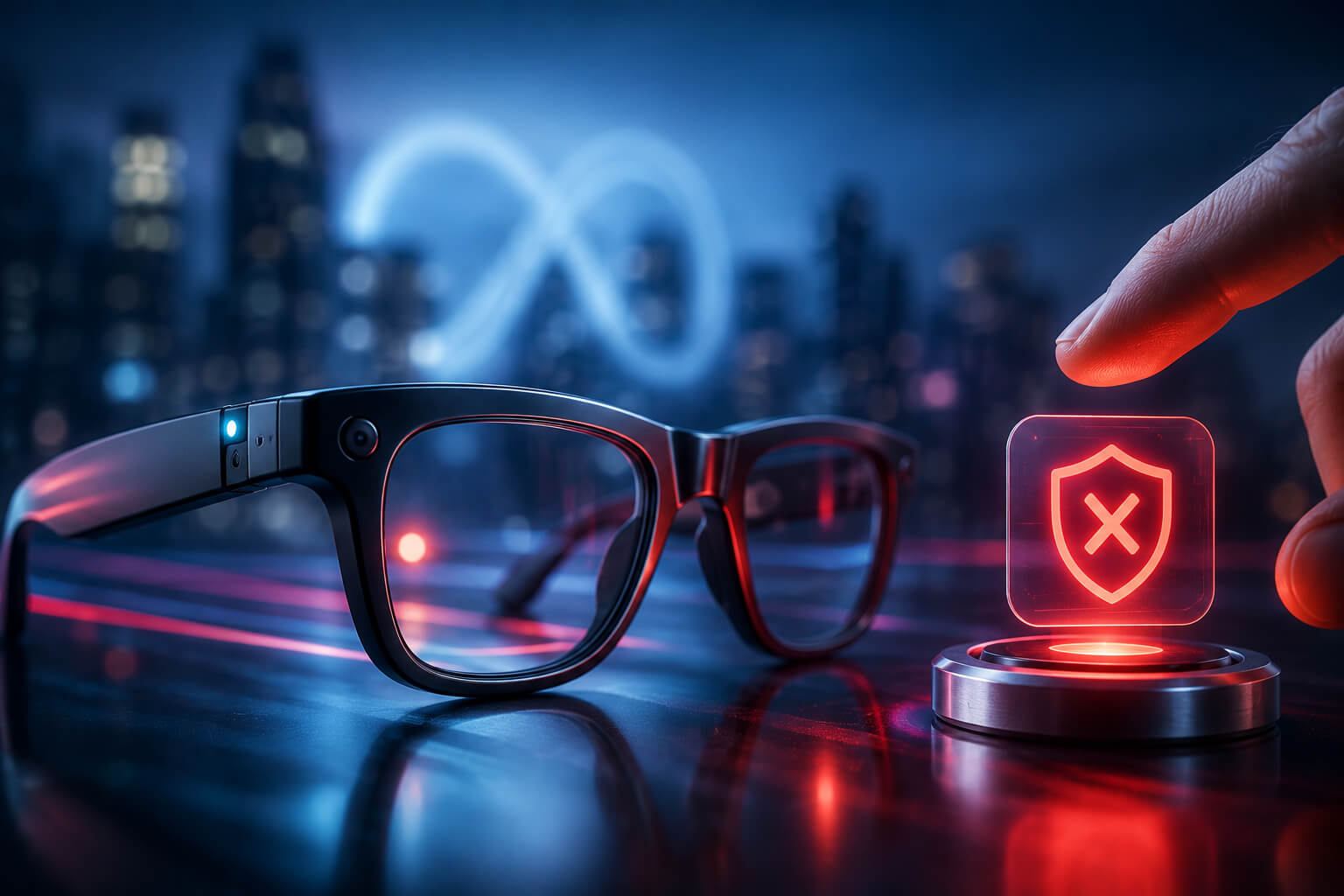
Meta may be preparing a more direct response to one of the biggest problems facing its AI glasses: privacy.
The company filed a patent in February 2026 for a hardware-based cut-off switch. The feature could disconnect the glasses from recording, AI functions, and other connected features. In simple terms, it could turn Meta’s smart glasses back into ordinary glasses.
That matters now. Privacy complaints around camera-equipped glasses are getting louder. Some venues have already started restricting or banning the devices. (socialmediatoday.com)
Meta’s AI Glasses Could Get a Physical Off Switch
Meta’s proposed feature goes beyond a normal software setting. The patent describes a hardware mute switch built directly into the glasses. Activating it could cut access to recording and connected AI functions. The idea is simple. Wearers could show that the glasses are no longer acting as a recording device. That could be useful in places where cameras are unwelcome. It could also give users more control when they want the technology fully disconnected. (socialmediatoday.com)
Privacy Is Becoming a Bigger Problem for Meta’s Glasses
Meta’s glasses are designed to blend into everyday life, but that is also what makes some people uncomfortable. A phone camera is usually easy to spot. Smart glasses can be much harder to notice. That difference has fueled concerns about unwanted filming. Workers, performers, and customers have all raised questions about being recorded without clear consent. The backlash is no longer limited to social media complaints. Some venues and workplaces are starting to treat smart glasses as a surveillance issue.
Pubs, Restaurants and Events Are Starting to Push Back
The privacy debate is already affecting where Meta glasses can be worn. Social Media Today reports that some pubs and restaurants in the U.K. have restricted the devices. The goal is to protect staff and customers from unwanted recordings. Events and venues have also introduced similar limits. That creates a practical problem for Meta. A wearable device becomes less useful if people cannot wear it freely in everyday places. (socialmediatoday.com)
A Kill Switch Only Works If Other People Can See It
There is one awkward problem with Meta’s proposed solution. Someone standing nearby needs to know the glasses are actually disabled. A hidden switch may reassure the wearer, but it does much less for everyone else. Meta would need some clear external signal. Without that, strangers may still assume the camera and microphone are active. Privacy around smart glasses depends on trust as much as technical controls.
Meta Has Already Tried to Address Recording Concerns
This is not Meta’s first attempt to calm privacy worries. Its glasses already include an indicator light that turns on while recording. Some users reportedly found ways to cover or interfere with that light. Meta later adjusted how newer devices respond when the indicator is blocked. The camera can be disabled if the glasses detect tampering. That was a useful safeguard, but it also showed how quickly privacy protections can become a cat-and-mouse game.
The Kill Switch Could Also Protect the Wearer
The patent may not only protect people standing near someone wearing Meta glasses. It could also protect the owner. A physical disconnect could reduce the risk of outside systems accessing the device. That could help prevent unauthorized recording through compromised software or connections. In that sense, the kill switch becomes a privacy tool for both sides. It protects people nearby and the person wearing the glasses.
Meta Still Wants AI Glasses to Become an Everyday Device
None of this suggests Meta is slowing down its wearable strategy. The company continues to expand its AI glasses lineup and add new features. Meta also wants developers to build experiences around the devices. The ambition is obvious. It wants AI glasses to become a normal computing interface rather than a niche gadget. That makes privacy controls even more important as adoption grows.
That Ambition Makes the Privacy Problem Harder to Ignore
A device worn occasionally creates one kind of privacy concern. A device worn all day creates another. Meta promotes its glasses as a way to access AI almost anywhere. Cameras, microphones, and contextual assistants are central to that experience. Those features are useful for the wearer, but they can feel very different to everyone else. The more common smart glasses become, the more pressure Meta will face to make their status clear.
Meta’s AI Glasses Kill Switch Could Matter More Than It Sounds
A physical off switch does not sound like a major AI breakthrough, but it may still become an important feature. The future of smart glasses depends on more than better cameras and smarter assistants. People around the wearer also need to feel comfortable. Meta’s proposed kill switch could help with that. The real challenge is visibility. People need to know when the device is truly off.
Sources
- Social Media Today — Meta Is Developing an AI Glasses Kill Switch
Read the original report - The Verge — Meta Glasses and Workplace Privacy Concerns
Read the report
