


Key Takeaways
- Meta introduced Messenger scam protection features to enhance safety and reduce fraud on the platform.
- The system uses automated detection to warn users about suspicious messages and provides easier reporting options.
- AI technology analyzes messages on users’ devices to maintain the privacy of encrypted conversations.
- Common scams targeted include fake investments, fraudulent job offers, and impersonation schemes.
- Meta’s broader strategy includes removing accounts linked to scams and combining detection, alerts, and reporting systems for user safety.
Meta has introduced new Messenger scam protection features designed to reduce fraud and improve safety on the messaging platform. The update adds automated detection systems that identify suspicious behavior and warn users about possible scams. These tools focus on early alerts and easier reporting options. The goal is to help users recognize fraud attempts before they engage with scammers.
The new features are part of Meta’s broader strategy to reduce scams across its messaging services. Messenger now analyzes messages from unknown contacts to detect patterns commonly associated with fraud. When suspicious activity appears, the app immediately displays a warning notification.
Messenger Scam Protection Alerts for Suspicious Messages
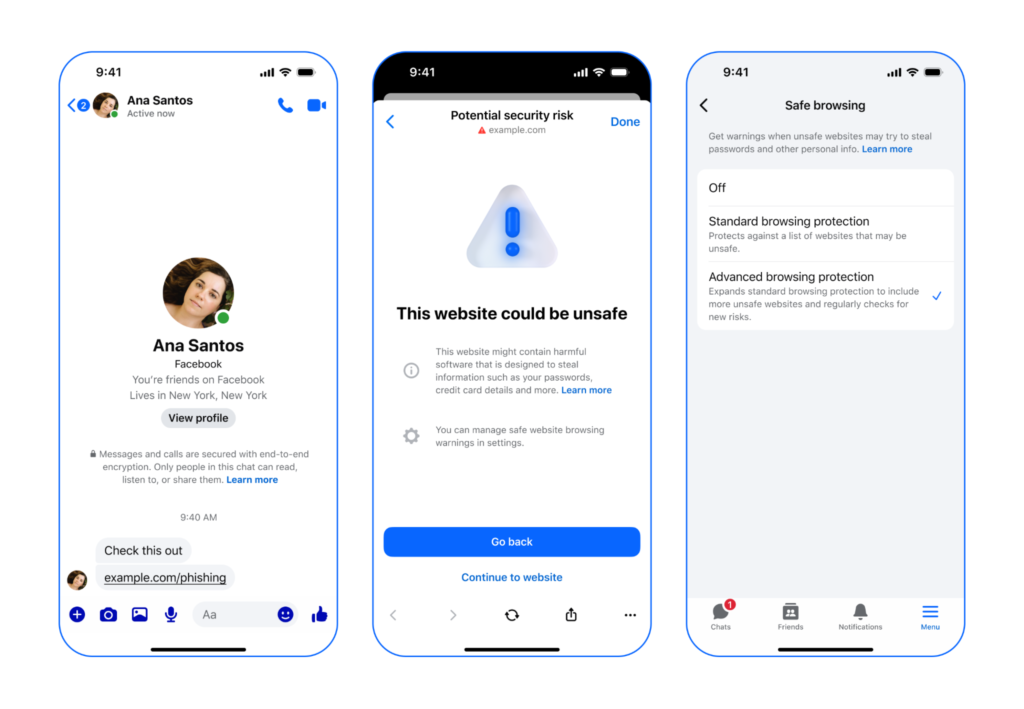
The Messenger scam protection system shows alerts when a message matches known scam patterns. These warnings inform users that the message may be part of a fraudulent attempt. The alert also explains possible risks and encourages users to proceed carefully.
Users receive several options when a warning appears. They can block the sender directly from the alert. They can also report the account to Meta for further review. In some cases, the app suggests submitting the conversation for additional analysis.
AI Technology Behind Messenger Scam Protection
The Messenger scam protection system uses artificial intelligence to analyze suspicious messages. The detection process begins on the user’s device. This approach helps maintain the privacy of encrypted conversations.
If a user chooses to send messages for deeper analysis, AI tools review the content for common scam signals. The system then explains why the message appears risky. It may highlight suspicious language, urgent payment requests, or other known fraud patterns.
Common Scams Targeted by Messenger Scam Protection
Meta designed Messenger scam protection to detect several common scam types. These include fake investment opportunities, fraudulent job offers, and urgent payment requests. Impersonation scams are also a major focus.
In many cases, scammers pretend to represent trusted companies or customer support services. Their goal is to obtain personal data or financial information. Some scams involve building relationships with victims before requesting money or directing them to fraudulent websites.
Meta’s Broader Efforts to Combat Scams
Meta reports that scams remain widespread across online platforms. Messaging apps are frequently used by fraud networks to contact potential victims. Criminal groups often operate large networks of accounts to reach users.
The company has taken action against these operations. Meta says it removed more than 21,000 pages and accounts linked to customer support impersonation schemes. It also disrupted nearly 8 million accounts associated with organized scam centers.
The new Messenger scam protection tools are part of a broader security strategy across Meta platforms. These updates combine automated detection, warning alerts, and reporting systems to help users identify and avoid scams.
Source: https://engineering.fb.com/2026/03/09/security/how-advanced-browsing-protection-works-in-messenger/