

Key Takeaways
- Meta launches Muse Spark, its most advanced AI model, to enhance user interaction on Facebook, Instagram, and WhatsApp.
- Muse Spark is a multimodal AI, understanding text and images for faster and more personalized responses.
- This model could change how content is discovered and shared, driving visibility for creators and marketers.
- Concerns over privacy arise as personalization requires more user data, impacting engagement dynamics.
- Muse Spark is part of Meta’s broader AI strategy aimed at developing ‘personal superintelligence’ for deeper user understanding.
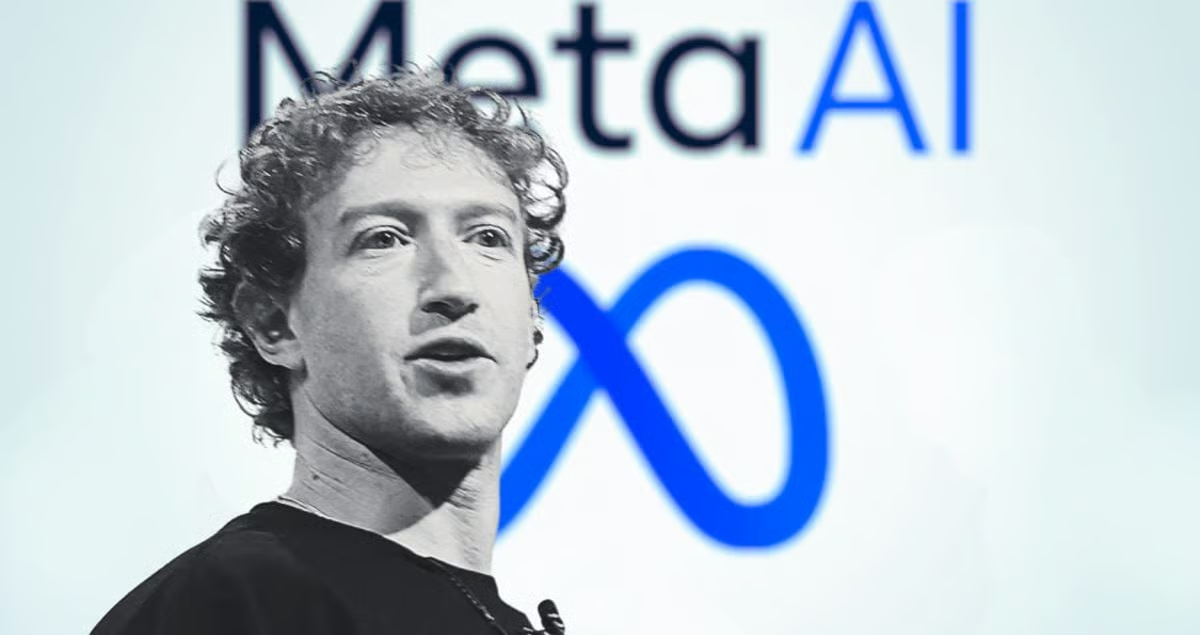
Meta’s launch of the Muse Spark AI model signals a big change in how people will use Facebook, Instagram, and WhatsApp. As the company leans further into advanced AI, this move hints at a more interactive and personalized social media experience.
Meta Unveils Its Most Advanced AI Yet
Meta has introduced Muse Spark, the first AI model built by its Superintelligence Labs, and it’s a clear step forward in the company’s long-term AI strategy. After investing heavily in talent and infrastructure, Meta is now bringing those efforts to life through a system designed to be faster, smarter, and more capable. Muse Spark is already powering the Meta AI app and website, with plans to roll out across Messenger, Instagram, Facebook, WhatsApp, and even smart glasses soon. Compared to earlier Llama models, this version feels more refined and tightly integrated into Meta’s ecosystem. It also reflects a shift in approach, with access currently limited through an API preview instead of being fully open-source.
What the Meta Muse Spark AI Model Launch Changes
This launch introduces several meaningful upgrades that could reshape how people interact with social platforms. Muse Spark is a multimodal AI, meaning it can understand both text and images, making it useful for everything from analyzing photos to answering complex questions. It also runs on multiple AI agents working at the same time, which helps deliver faster and more detailed responses. On top of that, Meta is doubling down on personalization. The AI can draw insights from posts, photos, and videos across its platforms to generate responses that feel more relevant and tailored to each user.
Why This Matters for Creators and Marketers
For creators and marketers, this isn’t just another tech update. It could change how content gets discovered and shared. AI-generated responses may start including links to Reels, posts, and other creator content, opening up new ways to drive visibility and traffic. At the same time, user behavior may shift. Instead of scrolling through feeds, people might rely more on AI to find what they need, which could reshape how engagement works. There are also some concerns to consider. As personalization improves, the system will rely on more user data, raising questions about privacy and how that data is used.
Meta’s Bigger AI Strategy
Muse Spark is just one piece of a much larger plan. Meta is aiming to build what it calls “personal superintelligence,” an AI that understands users on a deeper, more intuitive level. The company has already invested billions to compete with major players like OpenAI and Google, and this model is likely just the beginning. More models in the Muse series are expected, each bringing improved capabilities and performance as Meta continues to evolve its AI ecosystem.
Conclusion:
The launch of Muse Spark marks the start of a new phase for social media, where AI plays a central role in how people search, create, and connect. As it rolls out across Meta’s platforms, it’s likely to reshape user behavior and content discovery in ways that creators and businesses will need to watch closely. Stay tuned for more updates on how AI continues to transform the digital space.
👉 Source: https://www.socialmediatoday.com/news/meta-superintelligence-launches-muse-spark-ai-model/817026/
