


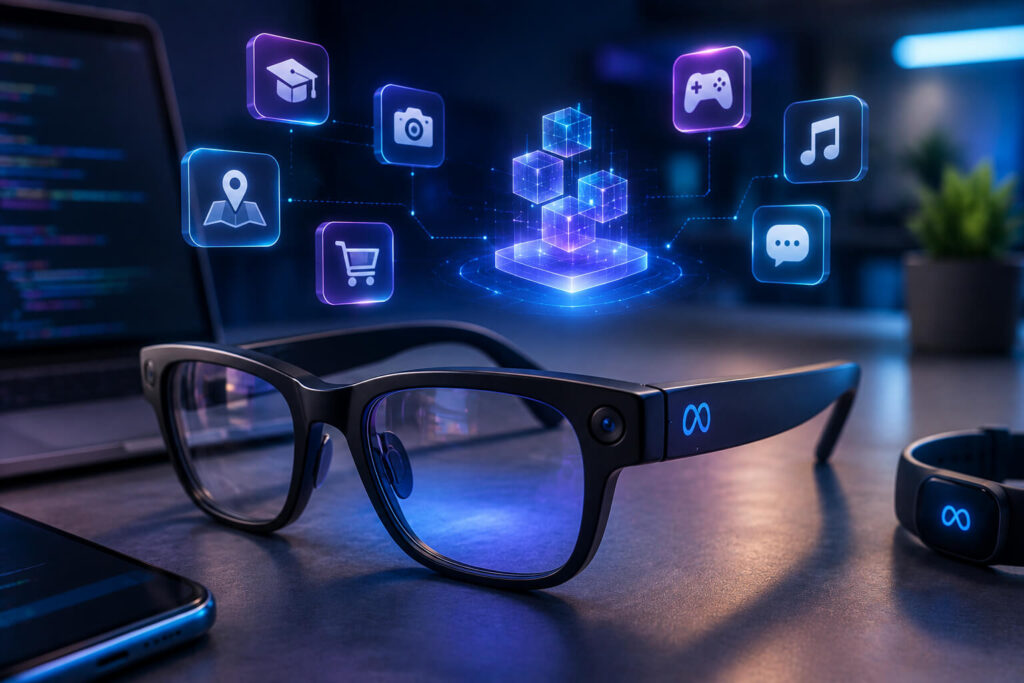
Meta is making another major move in wearable technology by opening its AI-powered smart glasses platform to third-party developers. The decision could significantly expand the functionality of Meta’s Ray-Ban Display glasses while accelerating innovation across the growing AI wearables market.
The announcement highlights Meta’s broader ambition to build a larger ecosystem around its smart glasses products as competition in AI-powered wearable devices continues to increase.
Meta Expands Developer Access for AI Glasses
Meta announced that developers will now be able to build applications and integrations for its smart glasses through the new Meta Wearables Device Access Toolkit. The toolkit provides access to the glasses’ built-in sensors, cameras, microphones, and audio systems.
With these capabilities, developers can create:
- AI-powered assistant experiences
- Real-time translation tools
- Navigation and mapping applications
- Livestreaming integrations
- Context-aware productivity features
This expansion opens the door for a much broader wearable app ecosystem beyond Meta’s own native services.
Ray-Ban Display Glasses Gain More Features
Meta’s latest Ray-Ban Display glasses already include several AI-powered features, such as:
- Real-time language translation
- Voice-controlled messaging
- Live captions
- Navigation assistance
- AI-generated contextual responses
The glasses also include an integrated display capable of presenting information directly within the user’s field of view.
Meta has recently introduced additional features as well, including gesture-based virtual typing and enhanced display recording capabilities, helping position the glasses as more than just a wearable camera device.
Why Third-Party Developers Matter
Opening the platform to external developers could greatly increase the practical value of Meta’s smart glasses. Similar to how app ecosystems helped smartphones become dominant consumer devices, Meta appears to be applying the same strategy to wearable technology.
Some early developer experiments already include:
- AI-guided theme park experiences
- Golf coaching tools with live feedback
- Accessibility applications for visually impaired users
- First-person livestreaming experiences
These early use cases suggest Meta wants its glasses to evolve into an everyday computing platform rather than remain a niche gadget.
Meta’s Bigger AI Wearables Strategy
Meta has been investing heavily in AI and wearable technologies as part of its long-term vision for the future of computing. The company believes AI-powered glasses could eventually replace many smartphone functions.
Recent reports indicate Meta is also working on:
- Advanced AI assistants
- Neural wristband controls
- Improved augmented reality displays
- AI agents capable of completing real-world tasks
Meta’s broader ecosystem currently includes Meta AI, smart glasses, Horizon OS, and future mixed reality hardware initiatives.
Competition in AI Wearables Is Growing
Meta’s expansion of developer access comes at a time when competition in AI wearables is rapidly intensifying. Companies such as Samsung, Apple, Google, and XREAL are all investing more heavily in smart glasses and mixed reality technologies.
Samsung is reportedly preparing its own AI-powered smart glasses launch, while Apple continues advancing its spatial computing strategy around Vision Pro and future wearable products.
By opening its platform earlier, Meta may gain an important advantage in attracting developers before competing ecosystems become fully established.
Privacy Concerns Remain
Despite the rapid progress in wearable AI technology, privacy concerns surrounding smart glasses continue to grow. Features such as camera access, contextual awareness, facial recognition, and always-on AI processing have raised ongoing questions about surveillance, consent, and data security.
Meta says users will maintain permission controls over app access and sensor usage, but privacy will likely remain one of the biggest challenges as AI-powered wearables become more mainstream.
Final Thoughts
Meta’s decision to open its AI smart glasses platform to third-party developers could mark a major turning point for wearable technology.
By allowing developers to build new apps and experiences for Ray-Ban Display glasses, Meta is positioning its wearables as a serious next-generation computing platform powered by artificial intelligence.
As competition in smart glasses and wearable AI continues to accelerate, the race to shape the future of AI-powered computing is only beginning.