


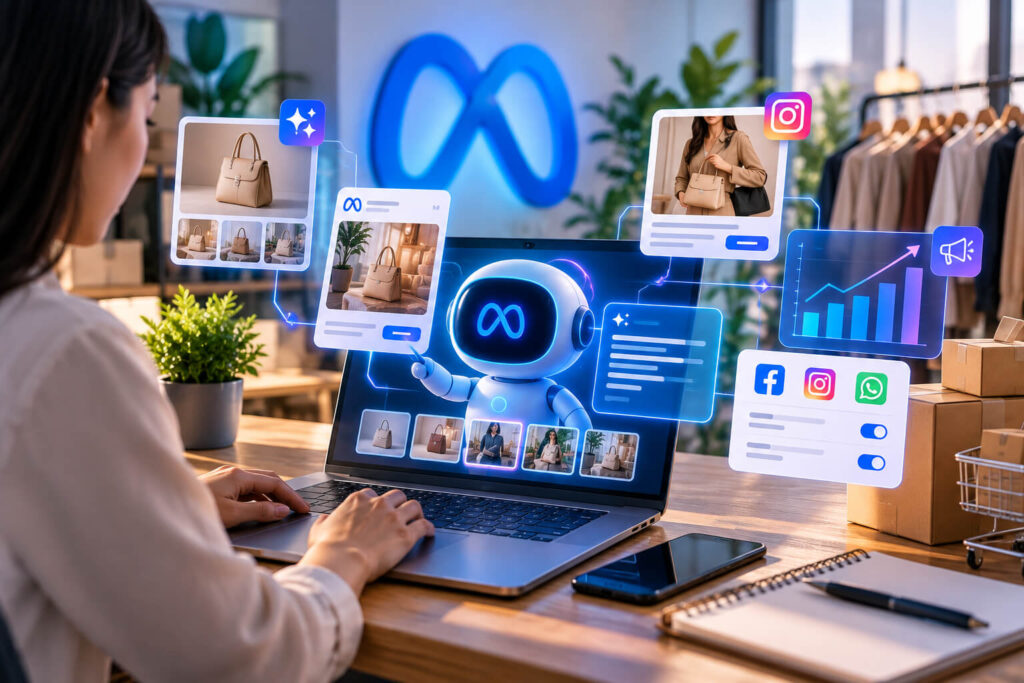
Meta is showing small businesses what its Muse AI agent can actually do. The company has shared new examples of how business owners are using the technology to analyze Facebook and Instagram advertising, develop campaigns and manage everyday marketing tasks.
The update, reported on October 18, 2026, follows the September launch of Muse for Small Business, a service designed to help companies work more efficiently through AI-powered assistance.
Meta says advertising analysis has become one of the most common uses of Muse. Business owners are asking the AI agent to identify their strongest campaigns, explain poor performance and recommend improvements.
The technology also connects with popular business applications, including Shopify, Canva and HighLevel. That allows companies to bring several marketing activities into one workflow instead of managing each task separately.
For smaller businesses without dedicated marketing teams, the appeal is straightforward. Less time sorting through reports. More time deciding what to do next.
Meta Muse AI Helps Businesses Analyze Facebook and Instagram Ads
Advertising performance analysis has emerged as one of the most popular applications of Meta Muse AI for businesses. According to Meta, business owners frequently ask the agent to examine their advertising accounts and explain which campaigns are performing well.
Muse can review available campaign information, identify stronger-performing advertisements and suggest ways to improve results. Business owners can ask direct questions about their advertising performance without manually examining every report inside Meta Ads Manager.
A small retailer running several Facebook and Instagram campaigns, for example, could ask Muse to compare the results and identify advertisements that deserve closer attention. The agent can then explain potential reasons behind those results and recommend adjustments.
This approach could make advertising data easier to understand, particularly for owners who handle marketing alongside sales, customer service and daily operations.
However, Muse’s recommendations still depend on the quality of the information available. Businesses should review suggested changes before adjusting budgets or making important campaign decisions.
Muse AI Guides Small Businesses Through Advertising Campaign Creation
Meta says many businesses are also using Muse to plan and structure new advertising campaigns. Instead of navigating campaign settings without a clear strategy, owners can explain their marketing objectives and ask the AI agent for guidance.
The process often begins with a creative brief. A business can provide information about its products, target customers, promotional goals and available advertising materials. Muse then examines those details and suggests how the campaign could be organized.
For a company preparing a seasonal promotion, this could mean receiving recommendations about campaign structure, creative direction and the information needed before launching advertisements.
The conversational format allows business owners to refine their plans through follow-up questions. They can ask Muse to explain its suggestions or consider a different approach based on their resources.
Meta says this type of campaign guidance is becoming another common use case among small businesses.
The feature could be particularly helpful for companies that lack advertising specialists. Still, the AI agent does not eliminate the need for a clear marketing strategy or ongoing campaign monitoring.
Meta Muse Connects Shopify, Canva and HighLevel for Marketing Automation
One of Muse’s more practical capabilities involves connecting different business applications. Meta says some companies are combining its advertising tools with Shopify, Canva and HighLevel to create connected marketing workflows.
These integrations allow the AI agent to work with information from multiple platforms. A business could use Shopify product data to identify items worth promoting, develop a creative direction with Canva resources and organize related marketing activities through HighLevel.
Muse can help connect those steps, reducing the need to repeatedly move information between separate applications.
For e-commerce businesses, this could simplify the process of turning product information into advertising campaigns.
A store owner might begin by asking Muse to review available products and suggest a promotional approach. The agent could then help prepare a campaign brief and support the development of advertising materials.
The actual level of automation depends on the connected services and the permissions granted by the business.
Meta’s broader goal is to make Muse useful beyond simple question-and-answer interactions. By connecting applications, the company wants its AI agent to assist with tasks that normally require several tools and multiple steps.
Muse AI Assists With Product Catalogs and Meta Pixel Installation
Meta has also identified product catalog setup and pixel tracking as tasks that businesses are asking Muse to help manage.
Product catalogs are important for companies selling goods through Facebook and Instagram. They organize product information and support advertising formats that display relevant items to potential customers.
Creating and maintaining these catalogs can involve several technical steps, especially when businesses connect external e-commerce platforms.
Muse can guide owners through parts of the process and help them understand the requirements.
The agent can also assist with Meta Pixel installation. The tracking tool helps businesses measure certain activities on their websites, including actions visitors take after interacting with advertisements.
For business owners unfamiliar with website tracking, the setup process can be confusing. Incorrect configurations may also affect the reliability of advertising reports.
Muse aims to make these tasks easier to manage through conversational assistance.
Businesses should still check that their product information and tracking configurations work correctly. They also need to follow applicable privacy and consent requirements when collecting customer data.
Meta Expands Muse for Small Business With More Third-Party Applications
Meta introduced Muse for Small Business in September 2026, expanding its AI agent beyond personal productivity into business operations.
The service connects with Facebook Pages, Instagram professional accounts and Meta advertising accounts. It also supports integrations with several external applications used for marketing, communication, finance and project management.
Among the supported services are Shopify, Canva, Slack, Notion, Stripe, QuickBooks, Asana, Dropbox and Zoom.
These connections allow Muse to access relevant business information with the owner’s permission. The agent can then use that context to help analyze performance, prepare plans and complete supported tasks.
Meta says users remain in control of important actions. Muse requires approval before publishing content, sending communications or spending money.
The company offers many basic capabilities for free, while paid subscriptions provide access to additional usage or features.
For businesses considering the service, the value will depend on how well Muse works with their existing tools and whether it can reliably reduce routine work.
Small Businesses Use Muse AI for Marketing and Daily Operations
Although advertising is receiving considerable attention, Meta is positioning Muse as a broader business assistant.
The company has previously demonstrated how the agent can review financial information, help develop growth plans, organize communications and identify tasks that require attention.
A business owner could ask Muse to examine recent sales and marketing activity before preparing a plan for the coming month. The AI agent could use information from connected applications to highlight trends and suggest priorities.
Muse can also assist with drafting communications and reviewing information from business tools.
These capabilities may be useful for smaller companies where one person handles several responsibilities.
However, the technology should not replace professional judgment. Financial analysis, customer communications and business planning can involve decisions that require careful review.
Muse may help organize information and prepare recommendations, but owners remain responsible for verifying the results and approving important actions.
What Meta Muse AI Means for Social Media Marketers and Agencies
Meta’s growing investment in Muse could influence how businesses approach social media marketing.
Small companies may find it easier to review advertising results, prepare campaign briefs and organize marketing workflows without relying on separate tools for every task.
For agencies, the development raises questions about how AI will change routine marketing services.
Basic reporting and campaign preparation could become easier to automate. That may increase the importance of services that require deeper expertise, including creative strategy, audience research and campaign optimization.
Muse could also help clients understand their advertising performance before discussing broader decisions with marketing professionals.
However, Meta has not released comprehensive evidence showing that businesses using Muse consistently achieve higher advertising returns or lower operating costs.
The examples shared by the company demonstrate how people are using the agent, not guaranteed improvements in marketing performance.
Businesses should evaluate the technology based on their own needs, available resources and campaign results.
Meta’s Muse AI Push Reflects Growing Interest in Agentic Business Tools
Muse is part of a wider shift toward AI systems that can help complete tasks rather than simply generate written responses.
Traditional chatbots typically answer questions based on the information provided. Agentic AI systems aim to work across applications, examine available data and assist with multi-step processes.
Meta is bringing that approach into the small business environment.
The company already has a large ecosystem of businesses using Facebook and Instagram for advertising and customer engagement. Connecting those services with external applications gives Muse access to practical business workflows.
This could make AI assistance more useful for owners who already depend on Meta’s platforms.
There are challenges, though. Businesses must decide which applications to connect, what information the agent can access and which actions require approval.
The accuracy of AI-generated recommendations also remains important, particularly when those recommendations influence advertising spending or financial decisions.
Meta’s approach suggests that business automation will increasingly involve AI agents working across several services rather than operating inside one application.
Meta Muse AI Could Change How Small Businesses Manage Marketing
Meta’s latest examples offer a clearer picture of how small businesses are experimenting with Muse.
Advertising analysis appears to be a leading use case, while campaign planning and connected marketing workflows are also attracting interest.
The ability to assist with product catalogs, tracking configurations and everyday business tasks gives Muse a role beyond generating social media captions or marketing copy.
For business owners, the potential benefit is convenience. Instead of reviewing several platforms separately, they can ask an AI agent to help gather information and organize the next steps.
The technology still requires oversight. Campaign recommendations need verification, connected applications require appropriate permissions and important actions should remain under human control.
Meta is betting that these practical capabilities will encourage more small businesses to adopt AI.
Whether Muse becomes an essential business tool will depend on its reliability and the results companies achieve when using it.
For now, Meta Muse AI for businesses is moving beyond basic assistance and into the everyday work of managing advertising, marketing and business operations.
Sources
- Social Media Today – Meta Outlines Muse AI Use Cases for Businesses
- Meta Newsroom – The Future Is for Everyone: Muse for Small Business
- TechCrunch – Meta Is Expanding Its AI Agent Muse to Small Businesses
- Social Media Today – Meta Launches Muse AI for SMBs
- Muse for Small Business – Official Muse Business Platform