


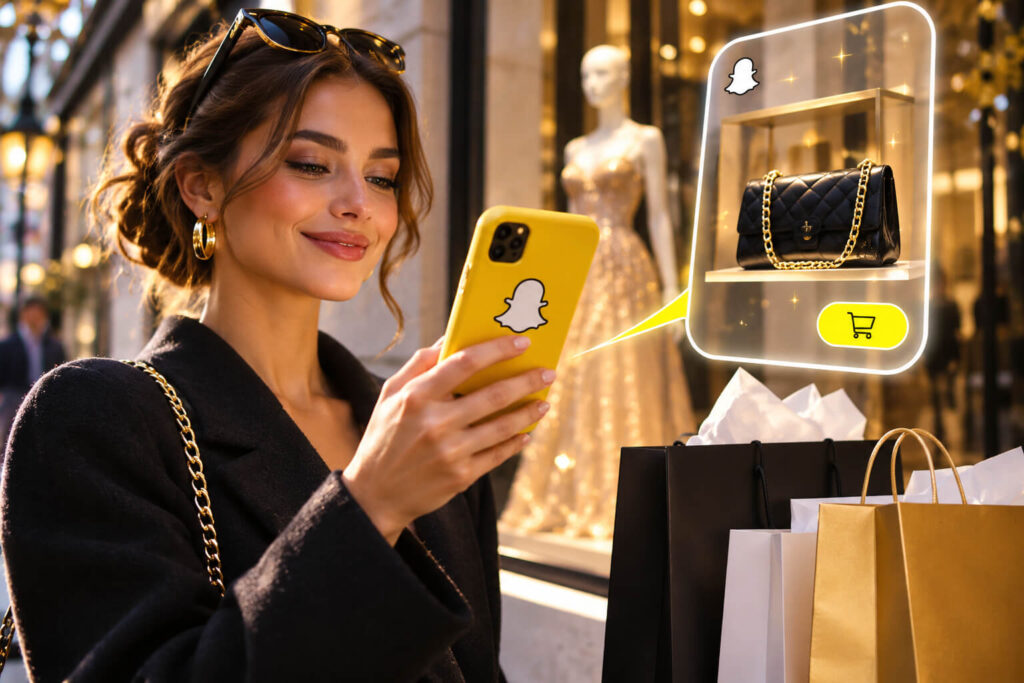
Luxury shopping is changing, and social media is becoming a bigger part of how consumers discover, discuss, and eventually purchase high-end products.
A new study released by Snapchat on November 17, 2026, highlights how private conversations, trusted recommendations, and digital experiences are influencing luxury shoppers, particularly younger consumers who increasingly turn to social platforms before making expensive purchases.
The research, conducted by Ifop in partnership with Snap Inc. and WPP Media, surveyed 9,000 luxury shoppers aged 18 to 45 across nine global markets.
One of the findings is particularly revealing. 84% of daily Snapchat users say social media makes them feel closer to the luxury world, compared with 76% of luxury shoppers overall.
The numbers suggest that luxury brands are no longer connecting with consumers exclusively through traditional advertising, celebrity endorsements, or physical boutiques. Much of that relationship now develops through everyday digital interactions.
Social Media Is Bringing Luxury Brands Closer to Consumers
Luxury brands have traditionally built their identities around exclusivity, prestige, and limited accessibility. Social media has complicated that formula by making designer collections, fashion campaigns, and luxury experiences available to almost anyone with a smartphone.
Snapchat’s research found that 76% of luxury shoppers believe social platforms help them feel connected to luxury brands, while the figure rises to 84% among daily Snapchat users. This growing digital connection allows consumers to experience luxury culture even when they are not actively shopping for expensive products.
However, greater accessibility also presents a challenge. Although 78% of surveyed consumers still consider luxury brands aspirational, 65% believe luxury has become less special than it once was. For brands that depend on exclusivity, maintaining a sense of rarity while reaching wider digital audiences is becoming increasingly difficult.
Private Conversations Are Influencing Luxury Shopping Decisions
A luxury purchase might begin with an advertisement or influencer recommendation, but the final decision often happens somewhere less visible: a private conversation between friends.
According to Snapchat’s findings, 62% of luxury shoppers say private chats directly influence their purchasing decisions, while 54% believe conversations with close connections have more influence than public social media feeds. These exchanges can involve product screenshots, personal recommendations, or simple questions about whether an expensive item is worth buying.
Trust plays an important role in those decisions. Around 81% of luxury shoppers rely on trusted opinions to validate their choices, increasing to 85% among daily Snapchat users. The findings are particularly relevant to Snapchat because the platform emphasizes communication between close friends rather than relying entirely on public-facing content.
For luxury marketers, this means a campaign’s influence may extend beyond visible likes, comments, and shares. A product that becomes part of private conversations can generate purchasing interest without necessarily attracting widespread public engagement.
Luxury Consumers Are Redefining Status and Personal Expression
Luxury products still represent status, but consumers are becoming more selective about how they express it. Owning something expensive is not always about attracting attention. For many shoppers, the appeal comes from personal identity, individual taste, and recognition within smaller social circles.
Snapchat’s research found that 77% of luxury shoppers associate luxury with self-expression and confidence rather than simply displaying wealth. Another 74% believe luxury status is becoming less about impressing everyone and more about being understood by people who share similar interests and preferences.
This change could influence how brands develop their advertising campaigns. Instead of focusing exclusively on prominent logos, celebrity appearances, or extravagant lifestyles, luxury companies may benefit from highlighting individuality, craftsmanship, and the personal meaning behind their products.
Consumers still appreciate exclusivity, but the desire to own something distinctive does not always translate into wanting to show it off publicly.
Product Scarcity and Anticipation Continue to Drive Luxury Demand
Limited availability has always played a role in luxury marketing, and Snapchat’s latest research suggests that anticipation remains an important part of the shopping experience.
The study found that 79% of luxury shoppers believe the period between a product announcement and its release contributes to its overall value. Among daily Snapchat users, 78% believe a luxury product that requires waiting can justify a higher price than one available immediately.
Consumers also tend to spend time exploring products before making a purchase. Around 39% of surveyed luxury buyers interacted with a product at least four times before buying it, suggesting that repeated exposure can help build interest and confidence.
Still, shoppers do not necessarily want the purchasing process to drag on indefinitely. Approximately 57% prefer moving from product discovery to purchase within a few days to two weeks. Luxury brands therefore face an interesting balancing act: creating enough anticipation to make products desirable without allowing that excitement to disappear before customers are ready to buy.
Augmented Reality Is Creating New Luxury Shopping Experiences
Trying on luxury products has traditionally been part of the appeal of visiting a physical boutique. Snapchat’s research suggests that augmented reality is giving consumers another way to explore expensive items before committing to a purchase.
According to the report, 71% of luxury shoppers believe AR try-on technology can transform general product interest into a stronger desire to own something. The technology allows consumers to visualize accessories, experiment with different styles, and interact with products through their smartphones.
Among luxury consumers who engaged with Snapchat’s AR try-on experiences, 66% reported visiting a store or website afterward, while 54% reported purchasing the product. Another 28% shared an AR Lens with trusted friends, allowing them to seek opinions before making a decision.
These figures come from research commissioned by Snap and should not be interpreted as independently verified sales conversion rates. Nevertheless, they indicate that interactive shopping experiences may play a growing role in luxury marketing, particularly when digital engagement encourages consumers to explore products through physical stores or online shopping platforms.
Luxury Brands Are Finding Value in Storytelling and Craftsmanship
Luxury shoppers are not interested only in the finished product. Many also want to understand the history, craftsmanship, and creative process behind the items they purchase.
Snapchat’s study found that 80% of luxury consumers become more interested in owning an iconic product after learning about its story, production, or craftsmanship. Meanwhile, 79% prefer subtle reinterpretations of established luxury designs rather than complete reinventions.
These findings suggest that heritage remains valuable, but brands need to communicate it in ways that feel relevant to modern audiences. Behind-the-scenes videos, interviews with designers, and interactive product demonstrations can help consumers understand what makes a luxury item distinctive.
Technology may also help traditional brands reach younger shoppers. Around 75% of respondents believe augmented reality and other innovative technologies can make established luxury brands feel fresh and relevant again. Rather than replacing traditional craftsmanship, digital experiences can provide another way to communicate its value.
Snapchat Highlights the Growing Importance of Personal Connections
The research reinforces Snapchat’s positioning as a platform where close relationships can influence purchasing behavior. Unlike social networks that emphasize public engagement and broad visibility, Snapchat’s messaging environment encourages users to exchange recommendations and opinions within smaller groups.
For luxury brands, that creates opportunities to develop campaigns designed for personal sharing rather than public attention alone. Interactive AR experiences, product previews, and creator collaborations can give consumers something worth discussing with friends.
The findings also suggest that luxury marketing cannot depend entirely on reaching the largest possible audience. Building trust, encouraging meaningful engagement, and creating memorable product experiences may be more valuable than generating impressions without genuine purchasing interest.
However, because the study was commissioned by Snap Inc. and its partners, brands should evaluate these findings alongside independent consumer research and their own campaign performance.
What Snapchat’s Luxury Shopping Trends Mean for the Future of Social Commerce
Snapchat’s latest findings point to a luxury shopping market where digital discovery and personal relationships increasingly work together.
Consumers may encounter a designer product through a social media campaign, explore it using augmented reality, and ask friends for their opinions before making a purchase. These interactions can happen across different platforms and may never appear in conventional engagement metrics.
For luxury brands, understanding that journey could become increasingly important. Successful campaigns may need to combine product storytelling, interactive technology, and content that encourages genuine conversations rather than focusing entirely on public visibility.
The luxury industry is unlikely to abandon exclusivity or traditional retail experiences. But Snapchat’s research suggests that the path toward a luxury purchase is becoming more personal, more digital, and increasingly influenced by the people consumers trust.
A luxury brand might reach millions through advertising. Convincing someone to buy could still come down to a conversation between two friends.
Sources
- Social Media Today – Snapchat Shares Insight Into Luxury Shopping Trends (November 17, 2026)
https://www.socialmediatoday.com/news/snapchat-shares-insight-into-luxury-shopping-trends/874984/ - Snapchat for Business – Luxury Demands a New Playbook: Navigating the Paradoxes of Modern Desire (November 17, 2026)
https://forbusiness.snapchat.com/blog/new-age-of-luxury - Snap Inc., WPP Media and Ifop – New Age of Luxury Research, 2026. Research findings published through Snapchat for Business.
https://forbusiness.snapchat.com/blog/new-age-of-luxury