


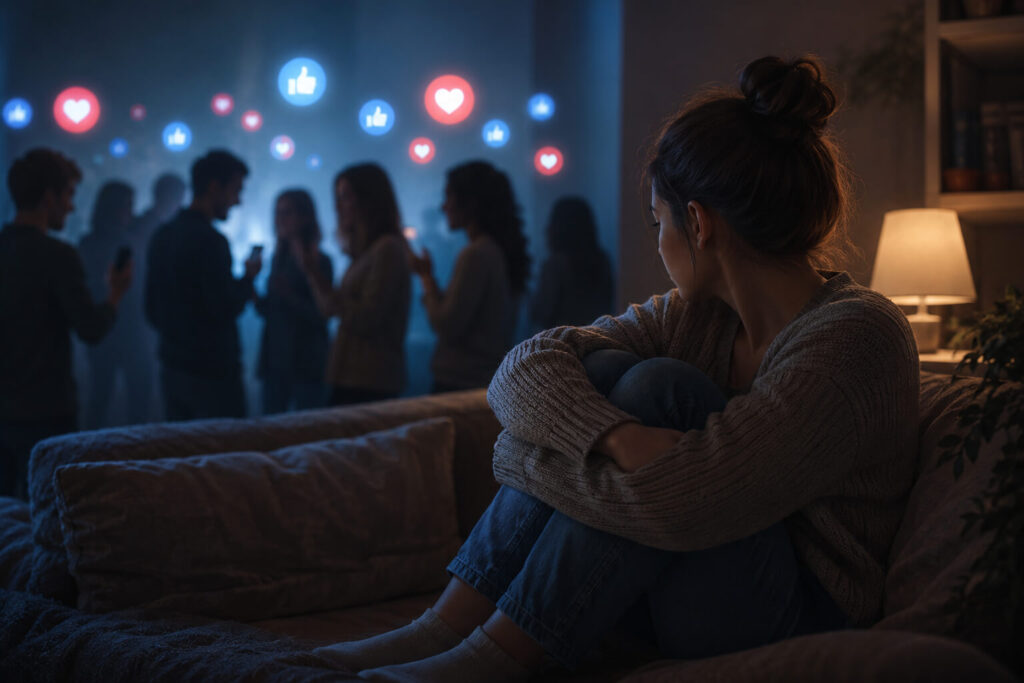
Social media still takes up plenty of people’s time. What appears to be disappearing is the social part.
Users are scrolling through short videos, following news, watching creators and letting recommendation algorithms fill their feeds. They are not necessarily sharing more about their own lives. In many cases, they are posting less, becoming more selective and moving personal conversations into private groups.
A new Incogni study suggests this is not a small behavioral adjustment. It may be a broader retreat from public participation online.
The research surveyed 1,000 American adults in June 2026 and found that 55% now post less frequently than they did five years ago. Another 53% said they have become stricter about who can view what they share. People have not completely left social media. They are simply using it differently.
Social Media Users Are Posting Less Than Before
For years, social networks encouraged users to document almost everything. Holidays, relationships, meals, opinions, milestones and minor daily frustrations all became material for the feed. That habit appears to be fading.
Incogni found that more than half of respondents have reduced how often they post. Instead of publishing life updates to hundreds of followers, many users now share selectively through private messages, group chats or smaller audience settings.
Public feeds have not gone quiet, of course. They remain packed with content. The difference is who creates it.
A relatively small group of creators, influencers, brands, publishers and highly active users now produces much of what everyone else sees. Most people watch, react and occasionally share something without becoming regular public contributors.
That imbalance is not new. Pew Research Center found in 2019 that the most active 10% of American Twitter users generated 80% of tweets posted by U.S. adults on the platform. The median user tweeted only twice per month. The feed may look endlessly busy while most of its audience remains mostly silent.
Maintaining an Online Presence Now Feels Like Work
Posting used to feel casual. Now it can come with an invisible checklist. Choose the right photo. Write something clever. Avoid saying too much. Check who reacted. Answer the comments. Keep the account active. Try not to look like you are trying too hard.
Incogni found that 51% of respondents believe maintaining an online presence feels like work. That figure rose to 60% among Gen Z users. The pressure makes sense when social media increasingly rewards consistency, presentation and performance. Even ordinary users can feel as though they are managing a small personal brand.
For aspiring creators, the workload becomes even heavier. Posting is no longer just about sharing something interesting. It may involve studying algorithms, editing videos, following trends, measuring engagement and trying to turn attention into income.
That sounds less like socializing and more like running a tiny media operation from a phone.
Digital Fatigue Is Pushing People Away From Apps
Some users are responding to that pressure by removing the source of it. Nearly half of Incogni’s respondents, or 47%, said they had deleted a social media or messaging app because it caused stress or anxiety. The rate reached 61% among Millennials and 56% among Gen Z. Stepping away does not produce one simple reaction.
Among respondents who went for an extended period without checking messages, 27% said they felt peaceful. Another 21% felt relaxed. Yet 22% reported anxiety, showing how difficult it can be to disconnect from services that have become woven into friendships, work and everyday communication.
Gen Z felt that tension more sharply. Thirty-four percent reported anxiety when they did not check messages, while 29% experienced fear of missing out. Users may dislike the pressure of staying connected. Leaving still feels uncomfortable.
Political Conflict Is Making Social Platforms Less Inviting
The problem is not only how often people feel expected to post. It is also what greets them when they open an app. Political arguments, outrage-driven posts and aggressive comment sections have become common parts of the social media experience. Incogni found that 44% of respondents felt political content and polarization made them want to withdraw from social platforms.
Algorithms often benefit from emotional reactions. Anger, fear and conflict can generate comments, shares and longer viewing sessions, giving platforms a reason to keep provocative content moving through feeds. That does not mean every controversial post receives an artificial boost. Still, platforms built around engagement have little incentive to make every feed calm.
For users who opened social media to check on friends, the shift can feel exhausting. A family photo may appear beside a political rant, a creator controversy, an advertisement and a video designed to trigger an argument. Eventually, some people stop contributing. They watch from a distance instead.
Social Platforms Are Turning Into Entertainment Networks
Lower posting activity does not necessarily mean people spend less time on social media.
Platforms have redesigned their feeds around recommended videos and content from accounts users do not follow. Open Instagram, Facebook, TikTok or YouTube and the experience increasingly resembles personalized television rather than a digital gathering of friends.
Social Media Today noted that Meta has previously reported rising time spent on Facebook and Instagram, helped by the expansion of short-form video recommendations. This creates a strange situation. People may post less while continuing to scroll for hours.
The apps remain busy, but the activity has changed. Users arrive for entertainment, news, trends and creator content. Personal updates now compete with polished videos and algorithmically selected posts from strangers. Social media is not disappearing. It is becoming media first and social second.
Privacy Concerns Could Drive More Users to Leave
Stress and polarization are already making users pull back. Privacy may be the issue that pushes some of them out completely. In the Incogni survey, 51% of respondents said increasing privacy or security risks could persuade them to delete their social media accounts. Harassment, bullying and hate speech ranked as another major reason users might leave.
Roughly one-third also said they could quit because of excessive use, mental health concerns or conflicts with loved ones over their social media habits. Younger adults were particularly likely to identify mental health as a possible reason to leave.
Deleting an account remains a big step, however. Sixteen percent said nothing would convince them to leave social media entirely. People may complain about the apps, reduce their posting and take occasional breaks. Many still see them as too useful—or too deeply embedded in daily life—to abandon.
What the Shift Means for Social Media Marketers
Brands cannot assume that users visit social platforms primarily to talk about themselves or interact publicly with friends. A growing portion of the audience behaves more like viewers. They scroll, watch, search and send posts privately. That changes what successful social media content looks like.
Highly polished promotional posts may struggle against videos that offer immediate entertainment or practical value. Public engagement metrics may also tell only part of the story because people increasingly share content through direct messages and private groups. The quieter audience still matters.
Someone may never comment on a brand’s post yet send it to three friends. Another person might watch several product videos without following the account. A user could discover a company through an algorithmic recommendation rather than a traditional social connection. Marketers will need to create content that works inside an entertainment-driven feed without treating every viewer as a potential public participant.
Social Media Is Not Empty, Just Different
Calling social media “less social” does not mean users have stopped connecting online. The connection has moved. Public timelines are giving way to private chats. Personal updates are reaching smaller circles. Meanwhile, the main feed has become a stream of videos, opinions, news, advertisements and creator content chosen by algorithms.
People still spend time there. They may even spend more of it watching. They are simply becoming more careful about adding their own lives to the feed. That may be the clearest sign of where social media is heading. The platforms are louder than ever, yet the average user is becoming quieter.