


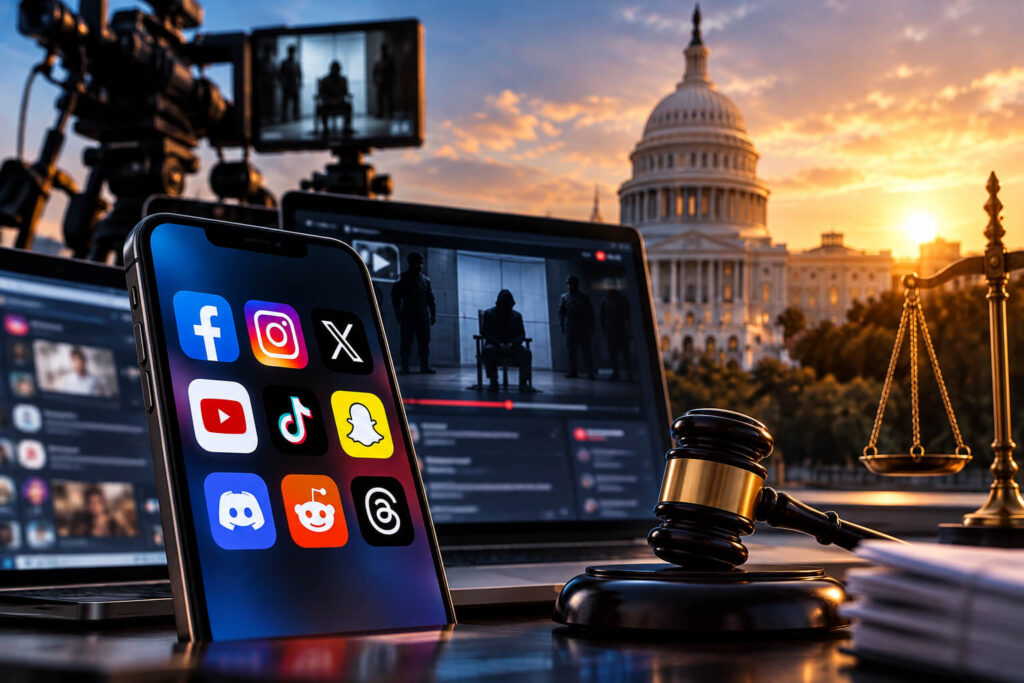
A proposed social media execution livestream has placed some of the world’s biggest technology companies in an uncomfortable position, raising questions about how platforms handle graphic content when government officials are involved.
US Secretary of Defense Pete Hegseth has reportedly proposed broadcasting the execution of Nidal Hasan, the former US Army major convicted of killing 13 people during the 2009 Fort Hood shooting in Texas.
The execution is reportedly scheduled for December 3, 2026. Hegseth suggested making the event publicly accessible through a livestream, arguing that people should see the consequences of serious crimes.
The proposal has created an unusual dilemma for social media companies. Some platforms have already rejected the possibility of hosting the broadcast, while others have avoided giving a definitive answer.
YouTube, Meta, X and Twitch Remain Silent on Execution Livestream Proposal
Several major social media platforms have yet to clarify whether they would allow the proposed execution livestream. According to Social Media Today, YouTube, Twitch, Meta and X declined to comment when approached about potentially hosting the broadcast.
Their silence has raised questions about how these companies would apply their existing content moderation policies. Most major platforms restrict graphic violence, disturbing imagery and content depicting serious physical harm. A government-authorised execution broadcast, however, could present a situation that their public policies do not specifically address.
The uncertainty becomes more complicated when considering the source of the proposed livestream. Unlike ordinary users who upload violent footage, government officials may argue that broadcasting an execution serves a public information purpose.
No formal government request to host the livestream has been publicly confirmed. That means the platforms are not necessarily refusing to enforce their rules. Still, their reluctance to comment leaves users wondering whether political considerations could influence future moderation decisions.
TikTok and Kick Reject the Proposed Execution Broadcast
While several technology companies have avoided taking a public position, TikTok and Kick have reportedly made their stance clear. Both platforms indicated that broadcasting the proposed execution would violate their existing content policies.
Their responses highlight the different approaches social media companies may take when confronted with politically sensitive material. TikTok and Kick have signalled that their restrictions on graphic violence would apply to the proposed broadcast, regardless of its potential public interest.
The decision also raises questions about consistency across the industry. Social media companies regularly remove videos involving serious violence, death and disturbing scenes. Allowing an official execution livestream could create the perception that government-backed content receives different treatment from material uploaded by ordinary users.
For TikTok and Kick, the issue appears relatively straightforward under their stated policies. Other platforms have yet to explain whether they would reach the same conclusion.
Political Relationships Add Pressure to Social Media Companies
The execution livestream controversy comes at a time when major technology companies are maintaining close relationships with the US government. Executives from some of the world’s largest platforms have engaged with the Trump administration on artificial intelligence, national security, technology investment and regulatory matters.
Social Media Today highlighted recent interactions involving Meta CEO Mark Zuckerberg, Google CEO Sundar Pichai and X owner Elon Musk. Their relationships with Washington demonstrate how closely technology policy and government interests have become connected.
That political environment could make the proposed execution broadcast particularly sensitive. Rejecting a request from government officials might create tension, while allowing the livestream could expose platforms to criticism from users, advertisers and digital rights advocates.
There is no confirmed evidence that the administration has pressured social media companies to host the broadcast. Nevertheless, the controversy raises a broader question about whether major platforms can maintain independent moderation decisions when requests involve powerful government institutions.
Graphic Content Policies Face an Unusual Challenge
Social media companies have spent years developing policies designed to limit the circulation of violent and disturbing material. These rules generally restrict graphic footage that could expose users to serious physical harm, death or other distressing scenes.
A government execution livestream would create an unusual challenge for those policies. Unlike footage documenting an unexpected violent incident, the proposed broadcast would involve a planned event conducted by government authorities.
Some supporters might argue that broadcasting the execution promotes transparency or public accountability. Critics could question whether showing such an event serves a legitimate public interest or simply exposes audiences to unnecessary graphic violence.
The issue could also extend beyond the original livestream. Even if major platforms refused to host the broadcast, users might attempt to share recordings, screenshots or edited clips afterward. Moderation teams would then need to determine whether that secondary material violates their rules.
Those decisions could become particularly difficult when news organisations, commentators and ordinary users discuss the event for informational purposes. Platforms would need to distinguish between legitimate reporting and content that unnecessarily amplifies graphic imagery.
Social Media Platforms Could Face Public Backlash Over Their Decisions
The proposed execution livestream could become a significant test of public confidence in social media moderation. Whatever decision the major platforms eventually make, they may face criticism from different groups.
Companies that allow the broadcast could be accused of weakening their content standards or giving government officials preferential treatment. Those that reject it might face criticism from people who believe official government proceedings should remain publicly accessible.
Advertisers may also become part of the discussion. Brands generally seek to avoid appearing alongside disturbing or controversial content, particularly when violent imagery could damage their public reputation. Although no specific advertiser response has been confirmed, the potential commercial implications could influence how platforms assess the situation.
For social media companies already facing scrutiny over online safety, transparency and political influence, the controversy highlights the difficulty of applying consistent rules to highly sensitive events.
The central issue is not simply whether an execution can appear online. It is whether platforms will enforce their published policies consistently when the content originates from government authorities rather than ordinary users.
Proposed December 3 Execution Could Test Livestream Moderation Rules
With the reported December 3, 2026, execution date approaching, attention may increasingly turn toward whether the US government formally requests a social media broadcasting partner.
For now, the proposed livestream remains uncertain. No confirmed hosting arrangement has been announced, and the reported execution schedule does not guarantee that a public broadcast will take place.
TikTok and Kick have reportedly rejected the possibility of carrying the event under their existing policies. YouTube, Meta, X and Twitch have not publicly committed to either hosting or refusing the proposed broadcast.
Their eventual responses could reveal how major technology companies balance content moderation standards, public interest arguments and politically sensitive government requests.
The controversy also reflects a larger challenge facing the social media industry. As platforms become increasingly important channels for public communication, their decisions about what users can watch carry consequences beyond ordinary content moderation.
Whether the execution livestream ultimately happens or not, the debate has already raised an important question: Should government involvement change how social media platforms enforce their rules on graphic violence?
For companies that regularly defend their commitment to online safety and consistent moderation, that question may prove difficult to avoid.
Sources
- Social Media Today – Social Media Platforms Have Not Ruled Out Execution Livestream
- The Verge – Technology and Social Media Coverage
- CNN – US Politics and Government Coverage