


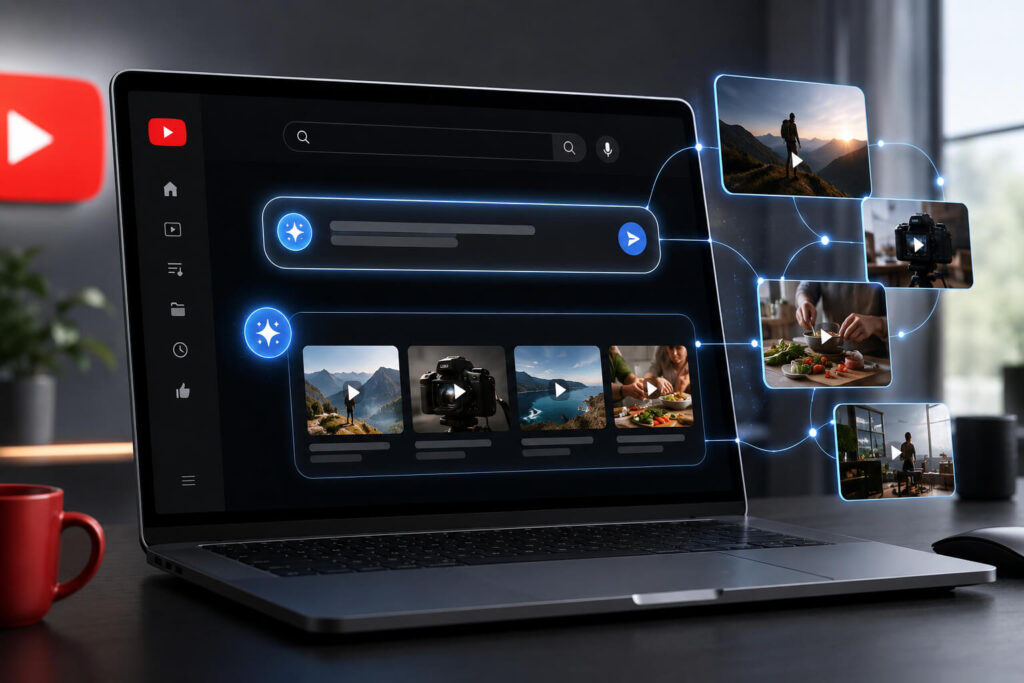
YouTube search is starting to feel less like a search box and more like a conversation.
The platform has launched the desktop version of Ask YouTube, its AI-powered conversational search tool, for signed-in users in the U.S. aged 13 and above. The feature is designed to help people ask longer, more natural questions instead of relying only on short keyword searches.
That may sound small at first. It is not. Search is one of the most important parts of YouTube, and now YouTube is slowly reshaping how people discover videos, Shorts, clips, and answers inside the platform.
What Is Ask YouTube?
Ask YouTube is a conversational search experience that lets users type more detailed prompts into YouTube and receive AI-assisted responses.
Instead of searching something basic like “best headphones,” users can ask something more specific, such as which noise-canceling headphones are better for travel, or how to plan a budget road trip, or how to learn a new skill step by step.
YouTube says the tool blends relevant videos, Shorts, clips, and text-based guidance to help users explore questions more deeply. In other words, it is not replacing video search. It is adding another layer on top of it.
Ask YouTube Is Now Available on Desktop
Ask YouTube first appeared in the mobile app in 2023, and YouTube later connected AI chatbot features to connected TV experiences. Now the desktop rollout finally brings the feature to the main YouTube website.
Users can access it by clicking the Ask YouTube button in the search bar and typing a question in normal language. After that, they can continue with follow-up questions if they want to go deeper into a topic.
That follow-up part matters. Traditional search usually makes users start over. Ask YouTube lets the search session continue, more like a back-and-forth.
YouTube Still Keeps Traditional Search
YouTube is not removing its regular search bar. Ask YouTube is being offered as an optional add-on, so users can still search the old way when they want quick results.
That is probably the safer move. Some people want AI summaries and guided answers. Others just want the video they already had in mind.
Still, the direction is obvious. YouTube wants discovery to become more flexible, especially for searches that are messy, layered, or hard to phrase with only a few keywords.
Why This Matters for Creators and Marketers
For creators, Ask YouTube could change how content gets found.
A video may no longer depend only on matching a short search phrase. It may also need to answer broader questions clearly enough for YouTube’s AI systems to surface it inside conversational results.
That means titles, descriptions, chapters, captions, and the actual spoken content inside videos may become even more important. Not in a keyword-stuffing way. More in a “does this video actually answer the question?” way.
For marketers, this is another reminder that AI search is not limited to Google or ChatGPT. It is showing up inside the platforms where people already spend time.
YouTube Search Is Becoming More Conversational
YouTube has a huge advantage in AI discovery because it already has the content people want: tutorials, reviews, travel guides, product comparisons, explainers, music analysis, and everyday how-to videos.
Ask YouTube gives that content a more guided entry point.
A person does not have to know the exact title of a video. They can describe what they need. YouTube can then point them toward relevant clips and answers.
That is useful, but it also changes the pressure on creators. Helpful content may matter more. Clear structure may matter more. Random filler may become easier to ignore.
The Bigger AI Discovery Shift
Ask YouTube desktop is part of a wider move across social and content platforms. Search is becoming less about typing the perfect phrase and more about asking a complete question.
YouTube is not alone here, but its version is interesting because video search has always been a little messy. Sometimes users know what they want. Sometimes they only know the problem they are trying to solve.
Ask YouTube is built for that second group.
And for YouTube, that could keep users inside the platform longer. Instead of leaving to search elsewhere, users may ask YouTube directly and move from answer to video without much friction.
What Comes Next
For now, Ask YouTube is available to signed-in desktop users in the U.S. aged 13 and older. The feature still feels like an add-on, not the default YouTube search experience.
But this is usually how platform changes begin.
First, the button appears. Then users test it. Then discovery behavior shifts quietly. Creators notice later, usually when traffic patterns start acting strange.
Ask YouTube may not replace traditional search. But it does show where YouTube wants discovery to go next: less typing, more asking, and more AI helping users decide what to watch.