


YouTube is giving creators more data while quietly drawing a harder line around the kind of videos it does not want filling the platform. The recent YouTube Studio Insights update reflects the platform’s ongoing push for transparency and higher content standards.
The company is testing a refreshed YouTube Studio experience built around analytics, trends, and artificial intelligence-powered recommendations. At the same time, YouTube has offered new guidance on repetitive, emotionally manipulative, and potentially misleading AI-generated content.
These may look like two separate updates. They are closely connected.
YouTube wants creators to understand what works. It just does not want them turning those insights into an endless stream of nearly identical videos.
YouTube Studio Is Putting Insights Ahead of Everything Else
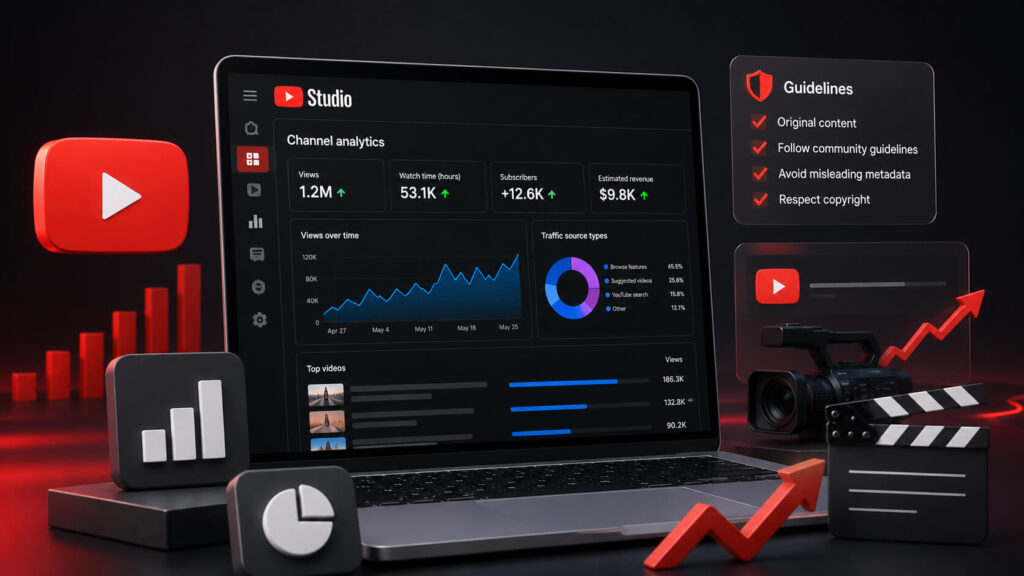
The new desktop experience is being described as “insights first,” which gives a pretty clear idea of where YouTube is taking its creator dashboard.
Under the test, the familiar Analytics tab is being renamed Insights. Navigation inside Studio is also being adjusted so creators can reach performance information more quickly rather than digging through several menus. The experiment is initially being rolled out to a limited group of creators.
A name change alone would not matter much. The larger shift is that YouTube appears to be turning Studio from a reporting dashboard into something closer to an active channel adviser.
Instead of simply showing views, watch time, and subscriber changes after the fact, the platform wants to surface patterns creators can use while deciding what to publish next.
AI Insight Cards Will Look for Patterns in Creator Channels
YouTube is also testing AI-powered insight cards covering channel performance, content patterns, and audience loyalty.
The cards could help creators spot connections that are not always obvious in a spreadsheet. Perhaps viewers consistently return for a specific topic. Maybe one format brings in new subscribers while another keeps existing viewers watching. A creator might already suspect that. Studio could make the pattern harder to miss.
YouTube has been moving in this direction for some time. Its Ask Studio tool already lets creators use conversational prompts to explore channel data, audience reactions, and potential content ideas. YouTube has presented these tools as support for creator decision-making rather than a replacement for the creative process.
That distinction will matter more as AI becomes embedded across the platform.
Creators are not exactly short on numbers. The harder problem is deciding which numbers deserve attention.
The Trends Tab Is Getting More Useful Too
YouTube is experimenting with improvements to the Trends tab, adding more information about topics gaining traction across the platform.
For creators, that could make Studio a stronger research tool. Channel analytics explain what already worked. Trend data offers clues about what audiences may want next.
There is an obvious temptation here: see a trend, copy its structure, produce ten variations, and upload until something catches fire.
YouTube appears to know that temptation exists. Its updated content guidance arrives at almost the same moment.
YouTube Clarifies What It Calls Inauthentic Content
YouTube has refined its guidance around the platform’s Inauthentic Content Policy, particularly for channels publishing repetitive or mass-produced videos.
This is not being presented as a brand-new policy. YouTube says the underlying monetization rules have not changed. The company is providing more detail about the material it may consider unsatisfying, off-putting, or unsuitable for monetization.
YouTube previously renamed its “repetitious content” policy to “inauthentic content,” clarifying that repetitive and mass-produced material has long been ineligible for monetization under the YouTube Partner Program. The platform says monetized content should remain original and authentic.
The timing is difficult to ignore.
Generative AI can now produce scripts, narration, images, thumbnails, characters, and full videos at a speed that would have been unrealistic for most channels only a few years ago. A creator no longer needs a large production team to flood a niche with content. Sometimes, all it takes is a template and an automated workflow.
Generic Template Videos Could Face More Scrutiny
One area YouTube is watching involves generic and repetitive content built from templates.
That does not mean every recurring format is suddenly a problem. Many successful channels use recognizable structures, recurring segments, and consistent editing styles.
The issue is when videos become so interchangeable that viewers can barely tell them apart.
A channel publishing dozens of minimally changed slideshows, automated narrations, recycled clips, or near-identical explainers may struggle to prove that each upload offers something original. YouTube says viewer feedback around this kind of content has generally been negative.
AI is not automatically the violation. Low-effort duplication is the bigger concern.
Emotionally Manipulative Videos Are Also in the Frame
YouTube’s clarification also covers videos designed to attract attention through distressing or emotionally manipulative scenes.
Matt Halprin, YouTube’s vice president of Trust and Safety, pointed to channels repeatedly showing animals in distress as an example of content viewers may find unpleasant or exploitative. A single legitimate documentary or news report is not the same as building an entire channel around manufactured distress.
This category can get messy fast.
Social platforms have always rewarded strong emotional reactions. Shock, fear, anger, and sympathy can push viewers to stop scrolling. AI makes it easier to manufacture those moments, even when the event shown never happened.
YouTube seems less interested in banning emotion than in stopping channels from turning distress into a repeatable engagement formula.
AI Personas May Need Extra Care With Sensitive Advice
AI-generated presenters and virtual personalities are not being rejected outright.
YouTube’s concern becomes sharper when those personas discuss sensitive subjects such as health, finance, or legal matters. An artificial presenter confidently delivering questionable medical or investment advice can look polished enough to be credible, even when the information behind it is thin or completely wrong.
This is one of the places where synthetic media stops being a novelty and starts becoming a trust problem.
YouTube has already strengthened its approach to AI disclosure. In May 2026, the company said it began introducing signals that can automatically apply labels when its systems detect significant photorealistic AI use that a creator did not disclose.
The platform is not trying to remove AI from video creation. Quite the opposite. YouTube keeps adding AI tools of its own. It is trying to separate useful creative assistance from automated content that misleads viewers or drags down the overall experience.
Better Analytics Will Not Protect Low-Effort Channels
The YouTube Studio Insights update gives creators more ways to understand performance. It could help with topic selection, audience retention, channel planning, and identifying which videos bring viewers back.
None of that guarantees monetization.
A channel can understand the algorithm perfectly and still produce content viewers dislike. It can follow every trend, optimize every title, and publish at impressive speed. Should the finished videos feel repetitive, manipulative, or empty, the data will not make them more authentic.
That is the tension sitting inside YouTube’s latest update.
The platform is handing creators sharper tools. It is also making it clearer that those tools should not be used to manufacture an unlimited supply of disposable videos.
Sources
- Social Media Today – YouTube refreshes Studio and updates video guidance
- YouTube Help – YouTube channel monetization policies
- YouTube Blog – New in YouTube Studio: Ask AI, Title A/B Testing and More
- YouTube Blog – How creators can get the most from Ask Studio
- YouTube Blog – Improving AI labels for viewers and creators