

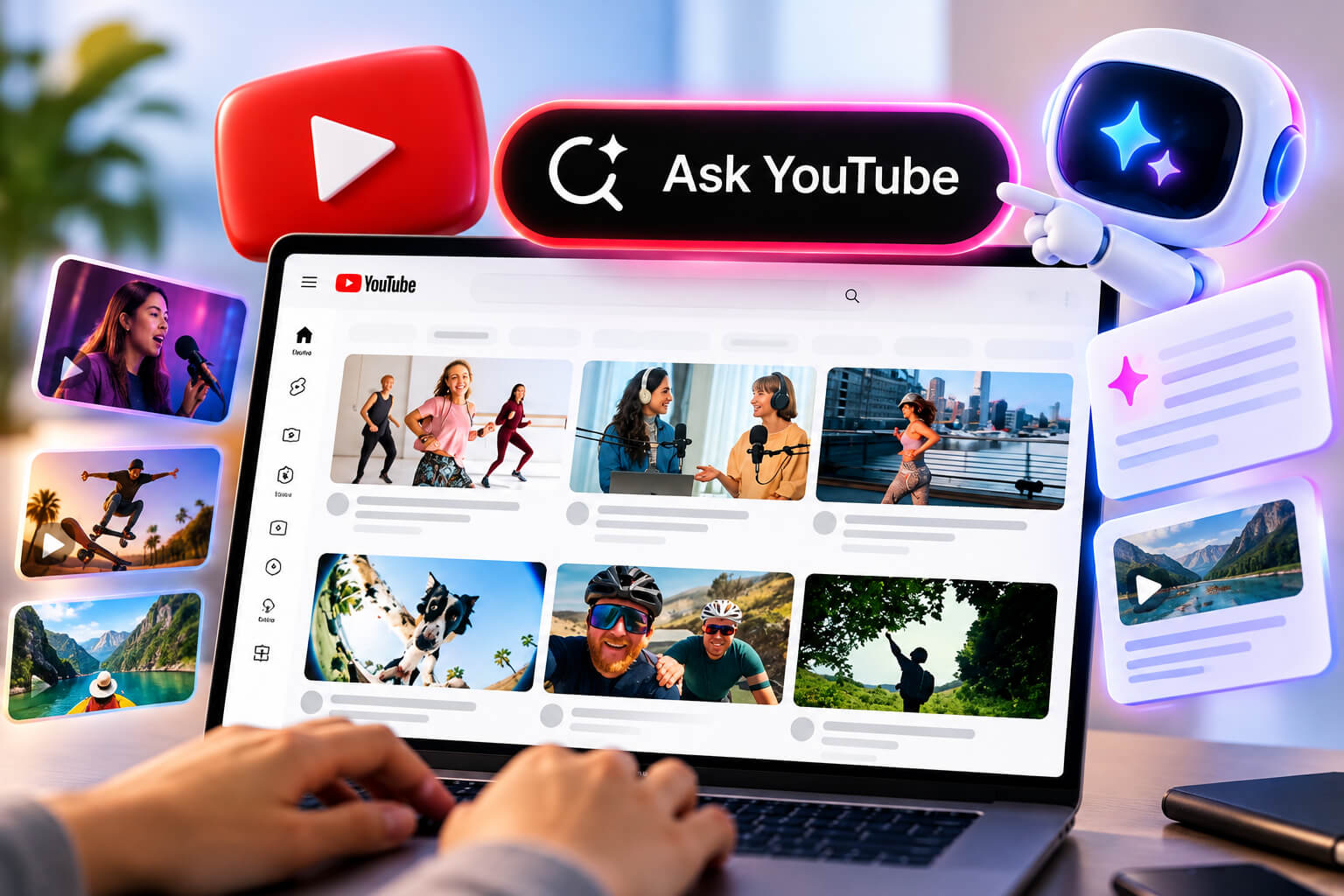
YouTube is experimenting with a new search experience that could change how people find information on the platform. Instead of displaying only a list of videos, the company is testing AI-generated answers that appear directly within search results.
The latest YouTube AI search replies experiment expands the platform’s Ask YouTube feature. It allows viewers to receive conversational explanations, discover relevant video clips and explore questions without opening a separate AI chatbot.
YouTube announced the experiment on October 15, 2026. The feature is currently available to a small group of signed-in desktop users in the United States who search in English.
For viewers, the update could make finding answers faster. For creators, it introduces questions about how AI-generated summaries might affect video discovery and viewing habits.
YouTube Tests AI-Generated Answers in Standard Search Results
YouTube is bringing its conversational AI technology into the search experience that millions of people already use to find videos. The experiment places AI-generated responses at the top of certain search results, offering additional information before viewers browse the usual video listings.
The feature targets questions that benefit from detailed explanations rather than a single straightforward answer. These include tutorials, practical advice and searches involving several possible solutions.
Someone searching for ways to remove marks from painted walls, for example, might receive a structured explanation alongside relevant video moments demonstrating different techniques.
YouTube says these responses combine written information with useful segments from existing videos. Viewers can expand the answer by selecting Show more or continue scrolling to access traditional search results.
The company is testing whether this approach makes searching more convenient, particularly when users need information from several videos rather than one specific clip.
Ask YouTube Brings Conversational Search Into Everyday Browsing
The experiment builds on Ask YouTube, the platform’s AI-powered search assistant that allows viewers to explore topics using natural language.
Instead of entering short search terms, users can ask detailed questions and receive responses that combine written explanations with relevant videos and Shorts. They can also ask follow-up questions to narrow their search or explore a subject more deeply.
A person planning a road trip, for instance, could ask YouTube to suggest destinations, explain travel routes and identify attractions along the way. The AI can then recommend videos that provide additional context.
The latest test makes this experience more visible by placing Ask YouTube previews directly within regular search results.
That removes an extra step for some viewers. They no longer need to select the dedicated Ask YouTube option before encountering AI-generated information.
YouTube still allows users to browse standard video listings, so the new experiment does not eliminate traditional search.
YouTube AI Search Replies Focus on Tutorials and Complex Questions
YouTube is initially focusing on searches where AI-generated explanations could provide useful context beyond a list of videos.
Tutorials and skill-based questions are particularly suitable because viewers often need several steps to understand a process. Searching for cooking instructions, home repairs or technical guidance may involve watching multiple videos before finding a useful answer.
The AI previews attempt to simplify that process by identifying relevant information and presenting it in a structured format.
Instead of requiring viewers to search through lengthy tutorials, YouTube can highlight specific video moments connected to the question.
This could make the platform more useful for people seeking quick explanations or practical demonstrations.
However, the accuracy of those explanations remains important. AI-generated answers can misinterpret information or overlook details that matter.
YouTube advises users to verify important information rather than treating its AI responses as definitive answers.
YouTube Expands Ask YouTube Across Mobile, Desktop and Television
The new search experiment follows YouTube’s broader expansion of Ask YouTube across different devices.
On October 12, 2026, the company announced that its conversational search feature was becoming available to U.S. viewers across web, mobile and television platforms.
The expansion allows users to ask complex questions while browsing on smartphones, computers or connected televisions.
On supported televisions, viewers can use voice commands to explore topics without typing lengthy search queries.
YouTube is also expanding its AI assistant within video watch pages. The company plans to make Ask YouTube available while viewers watch Shorts and livestreams, allowing them to request additional information about content without leaving the viewing experience.
These developments suggest that YouTube wants conversational AI to become a more familiar part of its platform.
Rather than limiting AI to a separate search tool, the company is gradually integrating it into different stages of content discovery and viewing.
Could YouTube’s AI Search Replies Affect Creator Video Views?
YouTube’s latest experiment could make searching easier, but it also raises concerns about how viewers interact with creator content.
Traditionally, someone searching for an answer would open a video, watch the relevant section and possibly explore other content from the same channel.
AI-generated responses introduce another possibility. If YouTube provides enough information directly within the search results, some viewers may no longer feel the need to watch the complete video.
That could affect creators who depend heavily on search traffic, particularly those producing tutorials, educational content and practical guides.
The concern resembles the debate surrounding AI-generated summaries in Google Search, where publishers have questioned whether instant answers reduce visits to original websites.
However, YouTube has not released evidence showing that the new experiment reduces video views or creator revenue.
The platform also argues that AI-assisted search can introduce viewers to relevant channels by highlighting video clips, titles and creator information.
Whether that additional exposure compensates for any reduction in full-video viewing remains uncertain.
YouTube Says AI Search Can Help Creators Reach New Audiences
YouTube maintains that Ask YouTube provides another opportunity for creators to reach viewers who might not otherwise discover their content.
AI-generated responses can include relevant video clips alongside channel names and titles, making it easier for users to identify the original sources.
The company says eligible views generated through videos, Shorts and previews within Ask YouTube count toward overall view metrics and YouTube Partner Program eligibility.
This means creators may still receive measurable engagement when their videos appear in the conversational search experience.
YouTube has also encouraged creators to publish original, high-quality content with descriptive titles and clearly organized video chapters.
These elements help its systems understand which parts of a video address particular questions.
Still, appearing in an AI-generated response does not guarantee additional traffic or stronger earnings.
The actual impact will depend on how viewers interact with the results and whether they choose to watch the original content.
What YouTube’s AI Search Experiment Means for Video SEO
The growing presence of AI-generated responses could eventually influence how creators approach YouTube search optimization.
Traditional YouTube SEO focuses on video titles, descriptions, keywords, thumbnails and audience engagement. These elements help the platform understand content and determine its relevance to different searches.
Conversational AI adds another consideration: how clearly a video answers the questions viewers ask.
A tutorial that explains a process in organized sections may be easier for YouTube’s systems to interpret than one that provides little structure.
Clear chapter titles could also help the platform identify useful moments within longer videos.
For creators producing educational material, product demonstrations or technical guides, this makes well-organized explanations increasingly relevant.
However, YouTube has not introduced a separate ranking formula specifically for AI-generated search previews.
Creators should therefore avoid assuming that changing titles or adding chapters will automatically secure placement within Ask YouTube responses.
The most practical approach remains producing useful, accurate content that directly addresses audience interests.
Google’s AI Strategy Is Changing How YouTube Handles Search
YouTube’s experiment reflects Google’s broader investment in conversational artificial intelligence.
Google has already introduced AI-generated summaries and interactive search features designed to help people explore complicated questions without relying entirely on traditional search listings.
YouTube is applying a similar approach to video discovery.
The platform has a particular advantage because its content includes visual demonstrations, interviews, tutorials and detailed explanations created by millions of channels.
By combining AI-generated text with relevant video moments, YouTube can offer responses that go beyond written information.
Someone learning a practical skill may benefit from reading a short explanation while watching a demonstration of the same process.
The challenge is ensuring that these summaries remain accurate and continue directing attention toward the creators who produced the original material.
As AI becomes more prominent across Google’s services, YouTube’s search experience may increasingly resemble an interactive information assistant rather than a conventional video directory.
YouTube’s AI Search Test Signals a New Direction for Video Discovery
YouTube’s latest experiment shows how conversational AI is becoming more closely connected to everyday search.
By placing Ask YouTube previews directly within standard search results, the company is exploring whether users can find helpful information with fewer steps.
The feature could improve searches involving tutorials, complex questions and topics that benefit from multiple explanations.
For creators, the potential impact is less straightforward. AI-generated answers may introduce their videos to new audiences, but they could also change how often people open and watch full-length content.
YouTube has not confirmed when the experiment will expand beyond its limited group of U.S. desktop users.
For now, the platform is testing a search experience where viewers can ask questions, receive structured explanations and explore relevant video clips without leaving the results page.
The change may seem small at first. But if YouTube expands the feature, the familiar process of searching, clicking and watching could look quite different.
Sources
- Social Media Today – YouTube Tests AI Replies in Searches
- YouTube Official Blog – Discover Your Next Favorite Video With Ask YouTube, Available on Web, Mobile and TVs
- YouTube Help Center – Search With Ask YouTube
- YouTube Community – Try a New Conversational Search Experience With Ask YouTube
- Android Authority – YouTube’s New Search Experiment Is Bad News for Content Creators
