

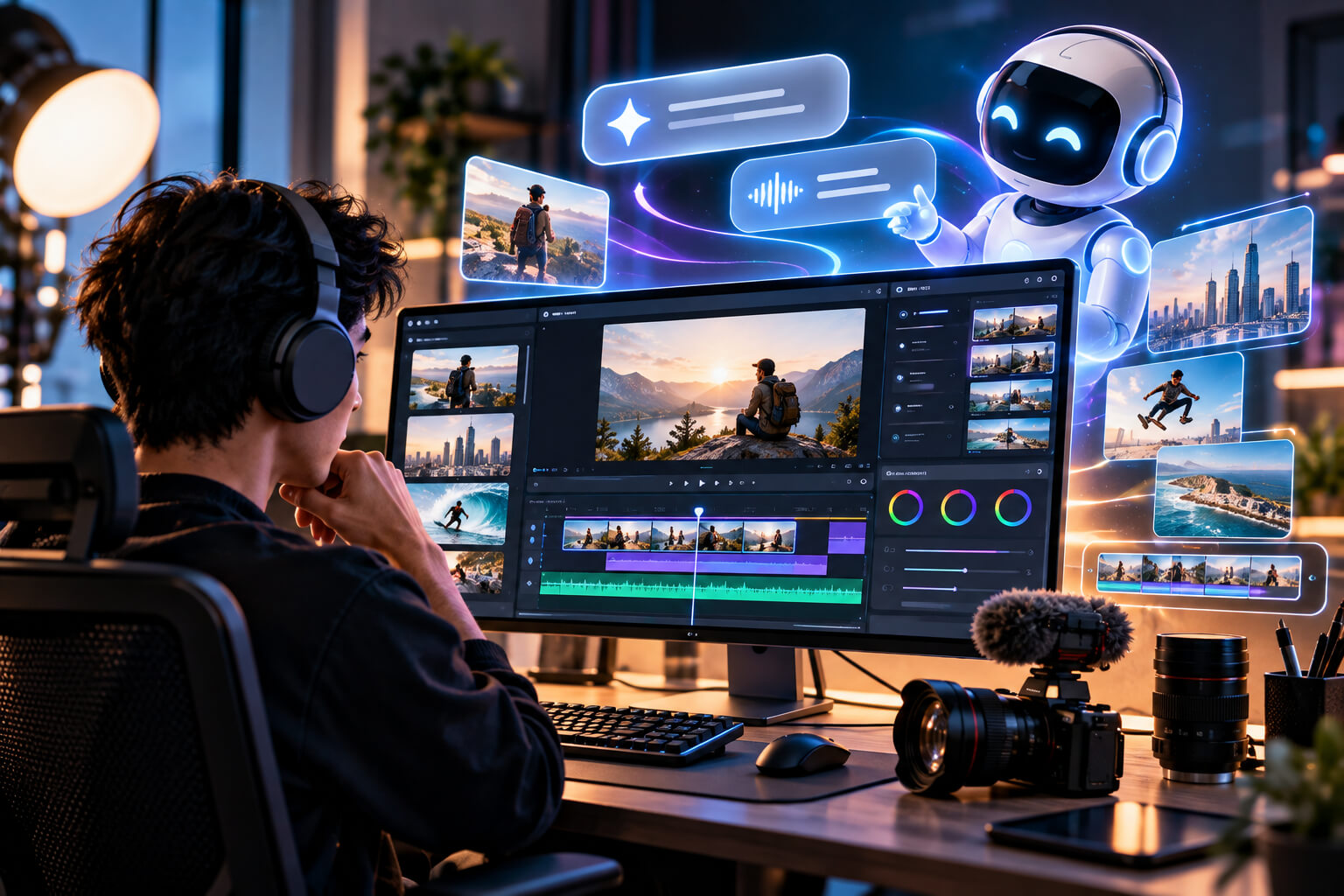
YouTube is pushing artificial intelligence deeper into the creator workflow with a new conversational editing system. The new system is designed to make video production feel less like traditional editing. Instead, it feels more like giving instructions to an assistant.
The company has previewed AI-powered Conversational Editing, a feature that allows creators to describe the changes they want using natural language. Instead of manually handling every cut, transition or pacing adjustment, creators will be able to tell YouTube what they want changed. Then, the platform will translate those instructions into edits.
The feature is being developed for YouTube Shorts and the YouTube Create app. It puts generative AI directly inside one of the most time-consuming parts of content production.
Video Editing Starts to Look More Like a Conversation
YouTube’s Conversational Editing system is built around the idea that creators should be able to edit a video by simply describing what they want. A creator can begin with suggested prompts or type their own instructions. Then, the AI generates an initial edit from available footage. From there, the conversation can continue as the creator asks for additional changes. As a result, this gives the workflow a much more iterative feel than a traditional one-click AI generator.
The system could be used to reorder footage, remove unnecessary pauses, tighten pacing or synchronize cuts with music. YouTube also plans to surface personalized editing suggestions based on the content already inside the project. The result is an editing experience that depends less on knowing where every button or timeline control is located. Instead, creators focus more on communicating the desired result.
Creators Can Keep Refining Videos With Natural-Language Prompts
The first AI-generated version is not intended to be the final cut. YouTube is building the system so creators can continue refining a video through follow-up prompts. They can ask the assistant to make adjustments to elements such as pacing, typography, music, effects or the opening seconds of a Short.
That creates a back-and-forth editing process where a creator might ask the system to make an intro faster, match cuts more closely to a beat or change the overall rhythm of the video. Rather than generating something once and forcing the creator to accept it, the conversational approach gives users room to reshape the result. They can continue until it moves closer to what they had in mind.
Manual Editing Will Still Remain Available
YouTube is not removing the traditional editing timeline. Creators will still be able to move between the conversational AI assistant and manual editing controls whenever they want more precise control over the final video.
That distinction matters because editing style often forms part of a creator’s identity. Small decisions around timing, cuts, sound placement and visual rhythm can change how a video feels. This is especially true in short-form content where every second matters. By keeping manual controls available, YouTube appears to be positioning AI as an assistant. Rather than being a full replacement for the creator’s own editing decisions, AI is there to help.
Gemini Is Moving Deeper Into YouTube’s Creator Tools
The new editing experience is powered by Gemini, extending Google’s generative AI technology further into YouTube’s production ecosystem. Gemini has already been appearing across YouTube tools for ideation, content assistance and creation. However, conversational video editing moves the technology much closer to the actual production process.
This is a notable shift. AI inside creator platforms has often focused on generating standalone images, clips or text suggestions. Conversational Editing instead places AI inside the workflow itself, where it can help organize footage, suggest changes and respond to instructions. This happens while a video is actively being assembled.
The Tool Could Lower the Barrier to Short-Form Editing
One of the clearest uses for Conversational Editing is helping creators who are comfortable shooting content but less experienced with editing software. Traditional editing tools can involve timelines, layers, audio controls, transitions and other technical elements that can take time to learn. Nevertheless, natural-language editing removes some of that friction. It does this by allowing creators to describe an outcome without necessarily knowing the technical steps needed to produce it.
That could make polished short-form video creation more accessible to newer creators, small businesses and casual users who do not have dedicated editing teams. It could also save experienced creators time by automating repetitive tasks. At the same time, it leaves more detailed creative decisions under their control.
YouTube Is Turning AI Into Part of the Production Workflow
Conversational Editing fits into a wider effort by YouTube to bring AI into more stages of content creation. The platform has been expanding tools around video ideation, analytics, thumbnails, production assistance and optimization. Gradually, AI is becoming less of a separate feature and more of an underlying layer across YouTube Studio and YouTube Create.
For creators, the bigger change may be less about a single AI tool and more about how quickly the production process is being compressed. Shooting, organizing, editing and publishing content are increasingly becoming connected inside the same environment. Conversational Editing pushes that approach further by allowing creators to move from raw footage toward a publishable video through instructions. This happens instead of a long sequence of manual edits.
Conversational Editing Could Change How Shorts Are Produced
Short-form video moves quickly, and creators often need to produce content at a pace that makes lengthy editing sessions difficult to sustain. YouTube’s conversational approach could shorten that process by allowing creators to handle basic assembly and revisions through a series of prompts. Manual tools are still available for finishing touches.
It also gives YouTube another way to compete for creators who currently rely on separate mobile editing apps before uploading their content. If more of the editing workflow can happen directly inside YouTube Create or Shorts, creators may have fewer reasons to leave the platform during production.
YouTube’s AI-powered Conversational Editing feature is expected to become available across YouTube Shorts and the YouTube Create app in early 2027. This gives creators another glimpse at how quickly generative AI is becoming embedded in everyday content production.
Sources
Social Media Today — YouTube Previews AI-Powered Conversational Editing
https://www.socialmediatoday.com/news/youtube-previews-ai-powered-conversational-editing/831445/
YouTube Blog — New Tools to Power Your Creation Journey From Start to Finish
https://blog.youtube/news-and-events/made-on-youtube-new-tools-power-creation-journey/
YouTube — Made On YouTube
https://blog.youtube/madeonyoutube/
TechCrunch — YouTube’s Conversational Video Editing Tool Lets Creators Make Edits in Natural Language
https://techcrunch.com/2026/09/23/youtubes-conversational-video-editing-tool-lets-creators-make-edits-in-natural-language/
