


Key Takeaways
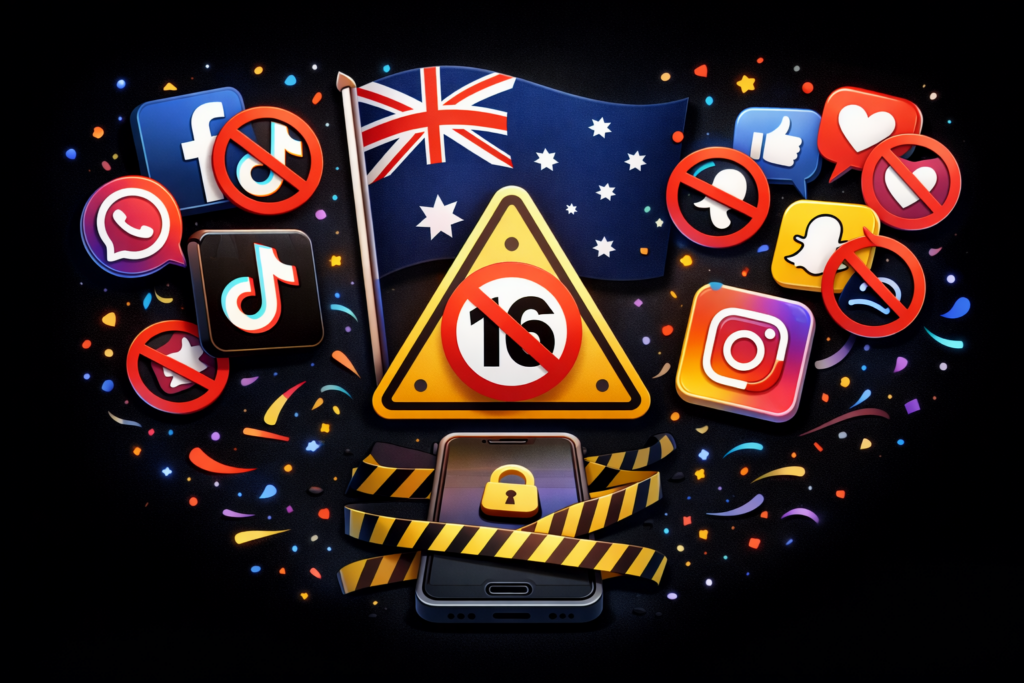
- Australia bans social media for under-16s, becoming the first major country with age-based restrictions on platforms like Instagram, TikTok, and X.
- Officials cite youth mental health and online safety concerns, focusing on age verification and limiting access rather than shutting down platforms.
- The decision has drawn international attention, with support from leaders like French President Emmanuel Macron and ongoing debates in the U.S.
- Major platforms face potential audience shifts and revenue loss, as their younger user demographics could decline with the new restrictions.
- Analysts warn that younger users might migrate to less controlled platforms, increasing risks and audience fragmentation as Australia bans social media for under-16s.
Australia bans social media for under-16s through a nationwide policy. The rule makes Australia the first major country to introduce age based restrictions across social platforms. The ban applies to Instagram, TikTok, and X. Lawmakers introduced the measure after concerns linked to youth mental health and online safety.
Why Australia bans social media for under-16s
Following incidents involving graphic online content. Officials cited risks tied to early exposure. The policy limits access rather than shutting down platforms. Enforcement focuses on age verification and account restrictions. The aim centers on reducing harm to younger users.
International response
The decision drew attention from other governments. French President Emmanuel Macron expressed public support for similar restrictions. France and Malaysia continue reviewing tougher social media rules. In the United States, lawmakers still debate related legislation. It has become a reference point in global policy discussions.
Platform impact for Australia bans social media for under-16s
Major platforms face possible audience shifts. TikTok, Instagram, and X rely on younger users for engagement. Advertising reach linked to youth demographics may decline. This will also places pressure on growth forecasts tied to younger age groups.
Industry reaction and early adjustments
Technology companies opposed similar laws in the past. Concerns focused on revenue and user loss. Some platforms adjusted strategy ahead of restrictions. Lemon8, linked to TikTok, saw higher downloads in markets expecting limits.
Risks linked to alternative platforms
Analysts warned of secondary effects. Younger users may migrate to platforms with fewer controls. These services often have weaker moderation. Audience fragmentation may increase. Advertising control across ecosystems may weaken as Australia bans social media for under-16s.
Market and investor response to Australia bans social media for under-16s
Investor attention increased after the policy announcement. Growth and retention risks gained focus. Regulatory pressure added uncertainty to platform outlooks. Technology stocks tied to youth usage showed volatility. Reports noted SoFi Technologies fell twelve percent despite strong results in 2025.
Future platform strategies
Social media companies consider new approaches. Some explore child focused platforms. Others invest in artificial intelligence safety tools. Subscription models remain under review. Retention under strict age rules remains critical.
Ongoing global monitoring
Compliance costs may rise due to moderation demands. Governments and investors continue tracking outcomes. It will influence platform growth, advertising models, and long term strategy worldwide.