


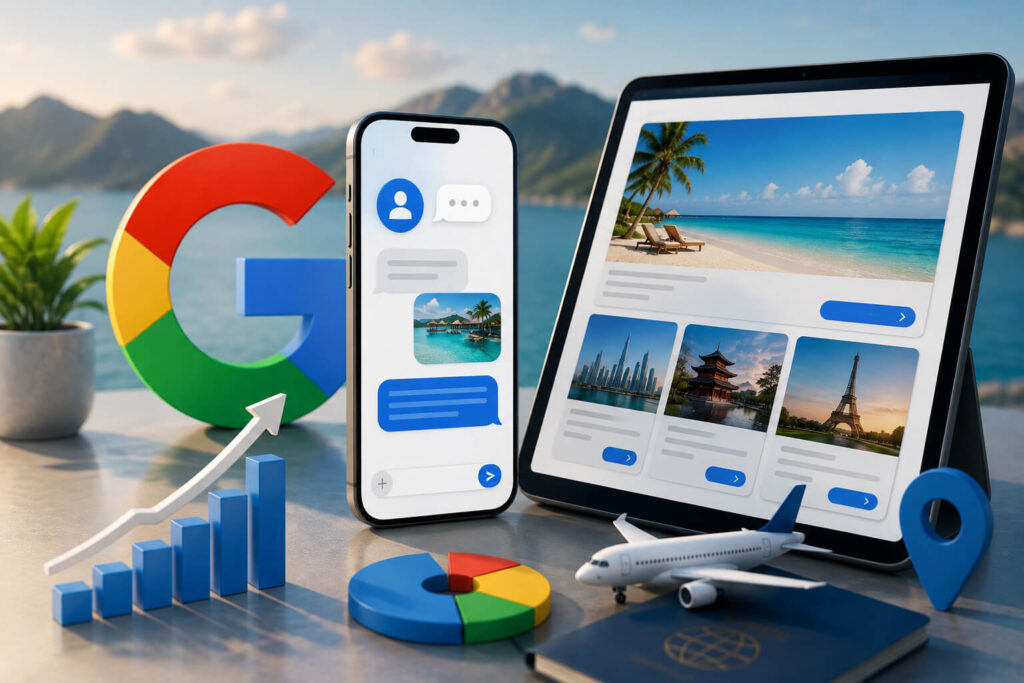
Google is adding more action-focused features to Demand Gen campaigns, giving advertisers new ways to connect with potential customers across YouTube and other Google surfaces.
The latest update brings direct messaging options, travel activity recommendations, personalized hotel promotions and broader access to AI-powered video creation tools. The changes push Demand Gen further beyond simple awareness advertising and closer to a full customer journey platform.
Google says recent Demand Gen improvements have already helped advertisers increase conversions and conversion value across its campaign experiments.
YouTube Demand Gen Ads Are Adding Direct Messaging
Google is testing direct messaging options within YouTube Demand Gen ads, allowing users to start conversations with businesses without taking a long route through a website first. Someone who sees an ad and wants more information could potentially move straight into a messaging app and speak with the advertiser.
That could be particularly useful for service businesses, travel companies and brands selling higher-value products. Many customers hesitate because they still have a question about availability, pricing or product details. A messaging option removes some of that friction and gives advertisers another opportunity to capture interest while it is still fresh.
Google Is Bringing More Travel Activities Into Demand Gen
Travel advertisers are getting a bigger role in the latest Demand Gen update. Google plans to surface activities, local experiences, events and travel-related offers inside campaigns, giving users more context around the destinations they are considering.
That changes the way a travel ad can work. Instead of simply showing a hotel or destination, an advertiser can give potential travelers a clearer idea of what they might actually do during the trip. Attractions, tours and nearby experiences can become part of the advertising journey, which could make campaigns feel more useful and less like a standard promotional placement.
Personalized Hotel Promotions Are Becoming More Dynamic
Google is also improving how hotels appear inside Demand Gen campaigns by introducing more personalized property promotions. The goal is to show travelers accommodation options that better match their interests, preferences and travel intent.
Hotel advertising has already become more dynamic across Google’s ecosystem. Demand Gen campaigns can use hotel information such as pricing, availability, ratings and property details to build more relevant creative. Adding greater personalization could help advertisers move away from showing the same hotel promotion to every potential traveler.
Google Demand Gen Is Moving Closer to Social Advertising
Demand Gen already appears across some of Google’s most visual platforms, including YouTube, YouTube Shorts, Discover and Gmail. The addition of direct messaging makes the format look even more similar to the advertising experiences people already see on major social media platforms.
Brands have become accustomed to running ads on Instagram or Facebook that lead directly into conversations. Google is now exploring a similar path through YouTube. The major difference is that Google can combine visual advertising with signals from search behavior, content engagement and other interactions across its ecosystem.
That combination could make Demand Gen increasingly attractive to marketers who want social-style advertising without relying entirely on traditional social networks.
AI Video Creation Is Becoming a Bigger Part of Demand Gen
Google is expanding access to its AI-assisted video creation tools through Asset Studio. Advertisers can use prompts, existing images and brand materials to help generate video assets for different campaign formats.
This could reduce the amount of manual production required when brands need multiple versions of the same campaign. A marketer might need horizontal video for standard YouTube placements and vertical creative for Shorts. AI tools can help produce those variations without forcing teams to rebuild each asset from scratch.
Google is also giving advertisers more control over branding by allowing them to provide visual materials and guidelines that can influence the generated creative.
Demand Gen Is Becoming More Than an Awareness Product
Demand Gen was originally positioned as a way for advertisers to generate interest before customers actively search for a product or service. The platform now appears to be taking on a much broader role.
A user could discover a product through a video ad, explore a travel destination, view relevant experiences, see personalized hotel options and potentially start a conversation with the business. More of the creative production can also happen through Google’s AI tools.
That makes Demand Gen increasingly difficult to describe as a simple discovery campaign format. Google is steadily turning it into a performance-focused advertising system that blends visual discovery, personalization, conversation and conversion tools.
For advertisers, the direct messaging feature may become one of the most interesting additions. Website traffic still matters, but a direct conversation with someone who is already showing purchase intent can be far more valuable.
What This Means for Social Media Marketers
For social media marketers, Google’s latest Demand Gen update adds another competitor to platforms such as Meta, TikTok and Pinterest. Google is borrowing more of the interaction patterns that have made social advertising effective while connecting them with its own audience data and YouTube reach.
The travel updates are particularly notable because they make advertising more contextual. Instead of simply promoting a destination, marketers can build campaigns around the full experience surrounding that destination. That could lead to stronger engagement, especially among users who are still researching where to travel.
Direct messaging also deserves attention. Social platforms have spent years teaching users to communicate with businesses through DMs. If Google can successfully bring the same behavior into YouTube advertising, Demand Gen may become more useful for brands that rely heavily on customer inquiries before converting a sale.
Sources
- Social Media Today:
https://www.socialmediatoday.com/news/google-adds-dms-and-travel-activity-recommendations-to-demand-gen-ads/829030/ - Google Ads & Commerce:
https://blog.google/products/ads-commerce/ - Google Ads Help – Demand Gen Campaigns:
https://support.google.com/google-ads/answer/13695777 - Google Ads Help – Things to Do:
https://support.google.com/google-ads/answer/10723429