


Google is giving advertisers a little more breathing room inside video campaigns.
Not in a flashy way. No major redesign. No dramatic AI announcement. This one is more practical, and for media buyers, probably more useful than it sounds at first.
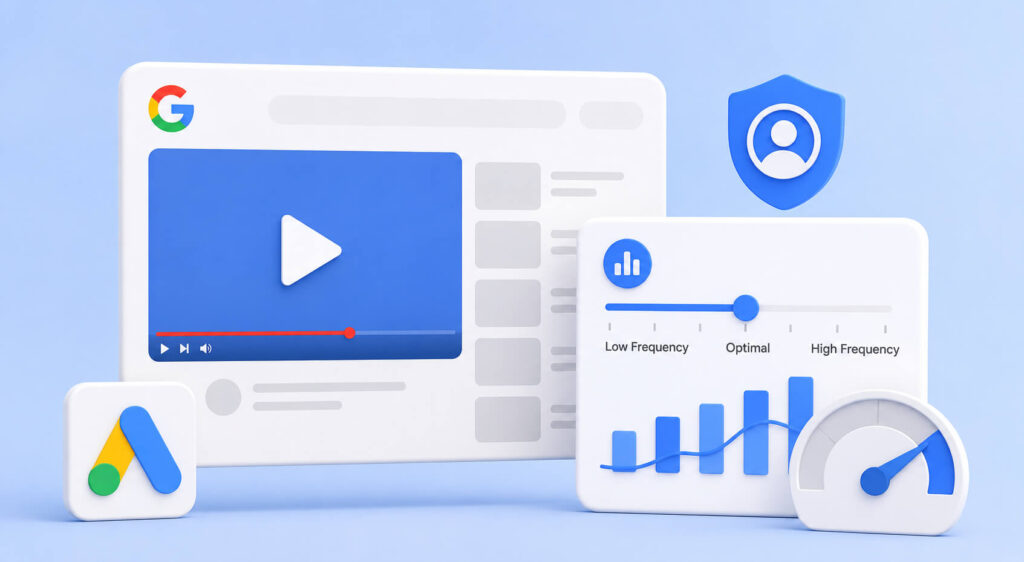
The company has expanded its YouTube reach and frequency optimization controls for video campaign groups in Google Ads. That means advertisers can now manage how often people see their video ads across multiple campaigns, instead of handling exposure settings campaign by campaign.
For brands running several YouTube video promotions at the same time, that matters.
Google Gives Advertisers More Control Over Video Ad Exposure
Ad frequency has always been a tricky part of digital advertising.
Show an ad too few times, and people may never remember it. Show it too often, and the campaign starts to feel annoying. Nobody wants to be chased around YouTube by the same ad ten times in one week.
Google’s expanded controls are aimed at that middle ground.
With the update, advertisers can coordinate reach and frequency across multiple video campaigns inside a campaign group. They can set a shared reach or frequency goal while still keeping individual campaign settings such as budget and creative separate.
That is the important bit. It gives advertisers a cleaner way to manage several moving pieces without flattening everything into one campaign.
Why Frequency Controls Matter for YouTube Ads
YouTube is not just another video platform for advertisers. It is often where brands run awareness campaigns, product launches, seasonal pushes, creator-style ads, and bigger brand storytelling.
That makes frequency control more sensitive.
A brand may want strong repetition during a launch week. Another campaign may need broader unique reach. A third may focus on keeping exposure low to avoid wasted impressions.
Before this expansion, advertisers had more limited ways to manage these exposure goals across grouped campaigns. Now, Google is making that workflow more unified.
It sounds technical because it is. But the practical meaning is simple: advertisers can better decide how often audiences see their ads across connected video campaigns.
Google Points to ROI Lift From Better Frequency
Google says this update is designed to help advertisers hit more effective frequency levels and improve campaign performance.
The company also pointed to a Google Meridian marketing mix modeling study, which found that an optimal video ad frequency of 2.7 exposures per week led to a 19% lift in ROI. The study used data from around 600 US brands between 2023 and 2025.
That number will probably get attention.
Of course, not every campaign magically improves just because it hits a specific weekly frequency. Creative quality still matters. Audience targeting still matters. Timing still matters. A bad ad shown 2.7 times a week is still a bad ad.
But the point is clear enough. Google wants advertisers to think about frequency as a performance lever, not just a control setting buried inside the dashboard.
Unified Reporting Could Be the More Useful Part
The expanded feature also gives advertisers a unified view of key metrics across campaign groups.
That includes unique reach and average weekly impressions.
For marketing teams, this may be one of the more useful parts of the update. When video campaigns are split across different objectives, budgets, creatives, or regions, it can be hard to understand how much overlap is happening.
Are the same users seeing too many ads? Is the campaign reaching enough new people? Is spend being wasted on repeated exposure?
A more unified reporting view should make those questions easier to answer.
Not effortless. Just easier.
Display & Video 360 Is Next
Google said the same reach and frequency coordination features will come to Display & Video 360 advertisers soon.
That extends the update beyond Google Ads and into a broader buying environment, especially for larger advertisers and agencies managing YouTube line items through DV360.
For agencies, this could help simplify planning across bigger video strategies. For brands, it may reduce some of the guesswork around exposure management.
What This Means for Social Media Advertisers
For social media advertisers, the update is another sign that platforms are pushing harder into controlled exposure, cleaner measurement, and campaign-level efficiency.
Ad platforms are not only asking brands to spend more. They are also trying to prove that spend is being managed more intelligently.
That is where frequency controls become more important.
As video advertising becomes more crowded, especially across YouTube, TikTok, Instagram Reels, Shorts, and connected TV, brands cannot rely on reach alone. They need to know how many people they are reaching, how often they are reaching them, and whether that repetition is helping or hurting performance.
Google’s latest update does not change video advertising overnight.
But for advertisers running multiple YouTube campaigns, it gives them a stronger handle on one of the oldest problems in advertising: how much is enough before enough becomes too much?
Sources:
- Social Media Today: Google expands ad frequency controls
- Google Ads & Commerce Blog: Optimize your reach and frequency across campaigns with video campaign groups