


Google is preparing for the holiday shopping rush with new features designed to help consumers find better deals and manage purchases across multiple retailers.
The company announced the U.S. launch of Universal Cart on October 15, 2026, bringing a smarter shopping experience to Google Search and the Gemini app. It also released its first When to Buy Guide, offering insights into the best times to purchase popular products based on historical discount patterns.
The latest Google shopping updates 2026 arrive as retailers prepare for Black Friday, Cyber Monday and the Christmas shopping season.
For consumers, the changes could mean fewer missed discounts and less time switching between shopping websites. Retailers and marketers, meanwhile, have another reason to pay attention to how Google is reshaping online shopping.
Google Launches Universal Cart to Make Online Shopping Easier
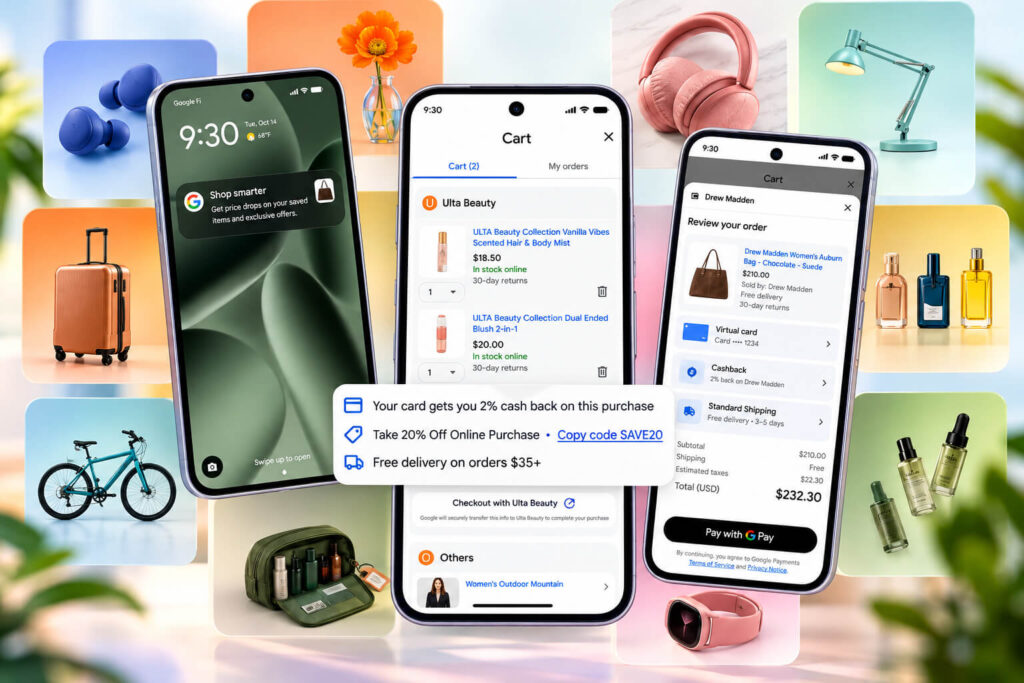
Google has introduced Universal Cart, an AI-powered shopping feature that allows consumers to save products from different retailers in one place. The tool works across Google Search and the Gemini app, giving users a central location to organize products they are considering purchasing.
The company first previewed Universal Cart during Google I/O in May 2026. With the latest launch, Google is expanding access to users across the United States as part of its holiday shopping preparations.
Unlike traditional online shopping carts, which usually belong to individual retailers, Universal Cart allows shoppers to collect items from multiple stores without losing track of their selections.
Someone searching for a handbag through Google’s AI Mode, for example, could add it to Universal Cart and later save clothing or beauty products discovered through Gemini. Those products would remain together, even though they came from different retailers.
The feature aims to reduce the inconvenience of managing multiple shopping tabs, screenshots and saved product links.
Google also plans to extend Universal Cart to YouTube and Gmail, although those integrations are not part of the initial October launch.
Universal Cart Helps Shoppers Track Price Drops and Product Availability
Google’s new shopping cart does more than organize products. It also monitors prices and availability, helping consumers identify opportunities to save money before completing a purchase.
The feature uses Google’s Shopping Graph, which contains more than 60 billion product listings that the company continually updates. This database allows Universal Cart to track changes across participating retailers and notify shoppers when something important happens.
If a saved product becomes cheaper, users can receive a price-drop notification. The system can also alert them when an out-of-stock item becomes available again.
These features could prove particularly useful during the holiday season, when retailers frequently introduce promotions and adjust prices to attract shoppers.
Google has also integrated promotional information into the cart, allowing users to discover relevant discount codes and offers without searching for them separately.
The system can use information from Google Wallet to identify payment-card benefits and suggest payment options that may offer additional savings or rewards.
For shoppers comparing several products before making a decision, the combination of price tracking and payment assistance could make the process more convenient.
Google Simplifies Checkout Across Major Online Retailers
Universal Cart also introduces a more streamlined checkout experience for purchases made through supported retailers.
Google allows shoppers to complete eligible transactions using Google Pay directly through the cart. Users can also transfer their selected products to a retailer’s website if they prefer to complete the purchase there.
The company has highlighted simplified checkout experiences with major retailers including Nike, Sephora, Target, Ulta Beauty, Walmart and Wayfair, alongside participating Shopify merchants.
This arrangement reduces the need to repeatedly search for products after deciding to purchase them.
Google’s Universal Commerce Protocol supports the checkout experience by helping its shopping services communicate with participating merchants.
Retailers continue to handle orders, confirmations and customer support. They also remain the sellers of record, meaning Google does not replace the merchant in the transaction.
The feature could help businesses reduce some of the friction that occurs between product discovery and checkout.
However, availability depends on merchant participation, and not every retailer will support the same purchasing options.
Google’s When to Buy Guide Reveals the Best Times for Holiday Deals
Alongside Universal Cart, Google has released its first When to Buy Guide, a six-page report examining historical shopping trends and promotional patterns.
The guide uses Google Search activity and discount data from U.S. merchants to identify periods when certain product categories have historically offered stronger deals.
Google based its findings on shopping behaviour from 2025, providing consumers with a reference point as they plan purchases for the 2026 holiday season.
The research covers several popular gift categories, including fragrances, handbags, travel accessories, luggage and electronic toys.
One of the main findings is that Black Friday does not always offer the lowest prices across every product category.
Some items experience stronger discounts later in December, while others become more expensive or harder to find as Christmas approaches.
For shoppers, this information could help them make more informed purchasing decisions instead of assuming every holiday promotion represents the best available deal.
Google cautions that the findings reflect historical patterns, not guaranteed prices for the current year.
Google Finds Better Handbag and Fragrance Deals at Different Times
Google’s When to Buy Guide highlights how discount patterns can vary between product categories.
For handbags, the company found that shoppers may benefit from waiting until December rather than purchasing immediately during Black Friday promotions.
Mid-December can offer a useful balance between attractive discounts and product availability. Those willing to accept a smaller selection may find deeper markdowns during late-December clearance sales.
Fragrances follow a different pattern.
Google recommends purchasing perfumes and colognes within the first two weeks after Black Friday weekend. Historical data suggests fragrance discounts do not necessarily improve as Christmas approaches.
Waiting until late December may also reduce the number of available products, particularly when popular gift items sell out.
Travel-related purchases show similar differences.
Google found that travel accessories, including packing cubes, tend to offer stronger deals during November. Larger luggage and suitcases may see deeper discounts during late-December clearance events.
Electronic toys can also experience significant markdowns toward the end of December, although shoppers must consider delivery deadlines and product availability.
The findings reinforce a practical point: the best time to buy depends on what someone is purchasing.
AI-Powered Shopping Becomes a Bigger Part of Google’s E-Commerce Strategy
Google’s Universal Cart reflects the company’s broader investment in artificial intelligence and digital commerce.
Online shopping traditionally requires consumers to compare products, visit different retailers, monitor prices and manage several checkout processes.
Google wants its AI technology to handle more of those tasks within a connected shopping experience.
Universal Cart combines product discovery, price monitoring, promotional information and payment assistance. It also uses Google’s Gemini models to interpret shopping needs and provide more relevant suggestions.
The company is developing these capabilities as part of its wider approach to agentic commerce, where AI systems can assist consumers with increasingly complex shopping activities.
Google has also been expanding the Universal Commerce Protocol, which helps AI-powered shopping services interact with participating retailers.
The technology could eventually make shopping more conversational, allowing people to describe what they need and receive assistance throughout the purchasing process.
For now, Universal Cart focuses on helping users organize products, identify savings and complete purchases with greater convenience.
What Google’s Shopping Updates Mean for Retailers and Digital Marketers
Google’s latest shopping features could influence how retailers approach product visibility and holiday promotions.
The When to Buy Guide offers businesses insight into historical consumer behaviour, including periods when shoppers may expect stronger discounts.
Retailers can use those findings when planning promotional calendars, managing inventory and deciding when to increase advertising activity.
A fragrance retailer, for example, may want to pay closer attention to the weeks following Black Friday. Businesses selling luggage could consider how late-December clearance activity affects customer expectations.
Universal Cart introduces another consideration for online merchants.
As consumers begin saving products through Google Search and Gemini, accurate pricing and inventory information become increasingly important.
Retailers with outdated product listings risk creating confusion when shoppers receive price alerts or attempt to complete purchases.
For digital marketers, the changes also highlight the growing connection between traditional search visibility and AI-powered product discovery.
Businesses may need to consider how their products appear across Google’s expanding shopping services, not just conventional search results.
However, Google has not provided evidence that Universal Cart will automatically increase retailer conversion rates. Businesses will still need to evaluate performance using their own sales and customer data.
Google Shopping Updates Could Change Holiday Marketing Strategies
The timing of Google’s announcements is significant.
Black Friday and Cyber Monday remain major shopping events, but Google’s research suggests that consumer demand and discount opportunities extend well beyond those dates.
For marketers, that creates an opportunity to plan campaigns around specific product categories rather than concentrating every promotion within the same holiday weekend.
Businesses selling fragrances may find the early December period particularly important, while luggage retailers could see different opportunities later in the month.
Universal Cart may also influence how shoppers respond to product promotions.
A consumer who discovers an item through Google might save it without purchasing immediately. A later price-drop notification could encourage that person to reconsider the product.
This creates a shopping journey that continues after the initial search or advertisement.
For brands, maintaining accurate product information and competitive offers may become increasingly valuable as Google develops more AI-assisted shopping experiences.
The challenge will be turning that visibility into actual purchases without relying entirely on aggressive discounts.
Google Prepares for a More Connected Holiday Shopping Experience
Google’s latest shopping updates show how the company is combining AI-powered convenience with consumer shopping data ahead of the 2026 holiday season.
Universal Cart gives users a way to organize products from different retailers, monitor price changes and access simplified checkout options.
The When to Buy Guide offers a separate benefit by helping shoppers understand when certain product categories have historically offered better discounts.
Both developments could influence how consumers approach holiday purchases and how retailers prepare their promotional campaigns.
Google is also strengthening its position in the shopping journey, connecting product discovery through Search and Gemini with price monitoring and checkout assistance.
The real test will come as holiday shopping activity increases and consumers begin using these tools to compare products and track promotions.
For now, Google is making one thing clear: online shopping is becoming more connected, and artificial intelligence is playing a larger role in how people decide what to buy.
Sources
- Social Media Today – Google Introduces Shopping Updates Ahead of the Holidays
- Google Blog – An Intelligent New Shopping Cart
- Google Blog – Data-Backed Secrets to Smarter Holiday Shopping
- Google Blog – Introducing the Universal Cart and More Ways to Help You Shop