

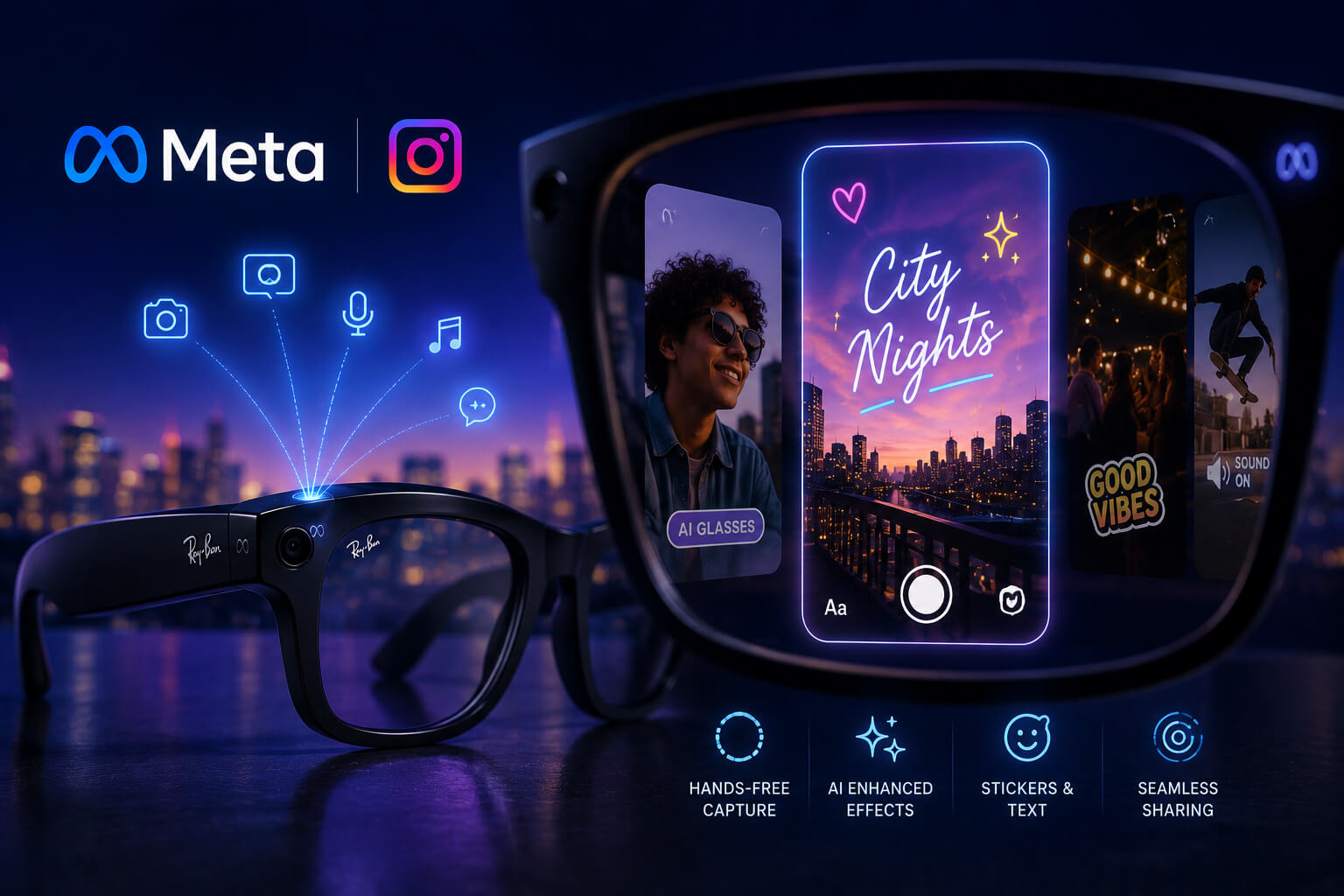
Meta is giving its AI-powered smart glasses a bigger role inside Instagram Stories, and honestly, this is exactly where the company needs these devices to show their value. Not in a demo room. Not in a polished product video. Inside the apps people already use every day.
The company has added new Instagram Stories posting options designed specifically for content captured through its AI glasses. According to Social Media Today, the new tools include formats built around multi-camera capture and motion-style viewing, giving users more ways to post content that feels less like a normal phone clip and more like a scene captured from their own point of view.
Spin View Brings a More Interactive Story Format
One of the new features is called Spin View, and the idea is pretty simple: viewers can rotate their phone to look around the scene from a wider perspective. Instead of watching a flat Story frame, they can pan through the view and explore more of what the glasses captured.
It is a small shift, but it matters. Instagram Stories have always been fast, casual, and mostly vertical. Spin View gives Meta a way to make glasses-shot content feel different without forcing users into a completely new app or format. It makes the capture experience feel more immersive, especially because the glasses can use their wider perspective and multiple cameras to show more of the scene.
Multi-Cam Sync Makes Phone and Glasses Footage Work Together
Meta is also adding multi-cam sync, which helps align footage captured from a phone camera and Meta AI glasses. That means creators can record from both devices and have the clips automatically matched up, making it easier to create more dynamic Stories.
This could be useful for creators, travelers, event-goers, athletes, or really anyone who wants a mix of first-person and phone-shot footage without spending too much time editing. It is not trying to turn Instagram Stories into a professional video suite. That would probably ruin the point. It is more about making different camera angles easier to use.
And that is where Meta’s glasses start to make more sense.
Instagram Adds Editing Tools for Glasses-Captured Content
Instagram is also getting new editing options for Stories made with Meta AI glasses. Users will be able to reframe shots, adjust playback speed, and balance captured audio directly inside the Instagram Stories composer.
That part is important because glasses footage can feel raw. Sometimes that is the appeal. Sometimes it is messy. Giving users quick editing controls inside Instagram makes the whole thing less awkward and more postable.
Meta does not need every glasses user to become a full-time creator. It just needs the content to look good enough that people want to share it, and that other people notice it was captured differently.
This Is Also a Quiet Promotion for Meta’s AI Glasses
There is another layer here, and it is not subtle. These Instagram Stories features are also a way for Meta to promote its AI glasses without making it feel like an ad.
Every time someone posts a Spin View Story or a synced glasses-and-phone clip, the format itself becomes a product showcase. People see the result inside Instagram, not on a sales page. That is a big advantage for Meta because Instagram already has the audience. The company does not need to build a new social platform for its glasses. It can use the one it already owns.
Social Media Today also noted that these dedicated features could help Meta highlight the benefits of its camera-equipped glasses to a large built-in audience, while continuing its push to position glasses as a future connective device.
Smart Glasses Need a Social Reason to Exist
The bigger question is still the same: why should regular people wear AI glasses?
Better capture tools may be one answer. Not the whole answer, but a real one. If the glasses can help people record moments hands-free, capture wider scenes, switch between perspectives, and post directly into Instagram Stories, then the device starts to feel less like a tech experiment and more like a social tool.
That is probably the lane Meta is aiming for. Not just AI assistants on your face. Not just camera glasses. Something closer to a new content device that sits between the phone, the camera, and the social app.
It may take time before that feels normal. But Meta is clearly trying to make the transition happen inside Instagram first, where the behavior already exists. People already post Stories. People already record everything. Meta just wants its glasses to become part of that habit.
Meta’s Wearables Push Is Getting More Social
The new Instagram Stories tools show how Meta is connecting its hardware strategy with its social platforms. Spin View, multi-cam sync, and built-in editing tools are not huge by themselves, but together they make the glasses more visible, more usable, and more tied to everyday content creation.
This is how Meta may try to push AI glasses forward: not by asking users to imagine the future, but by giving them slightly better ways to post what they are already capturing.
And for Instagram, that might be enough to make glasses content start showing up more often.
