

Meta is trying to fix a privacy problem that probably should have been expected from the start.
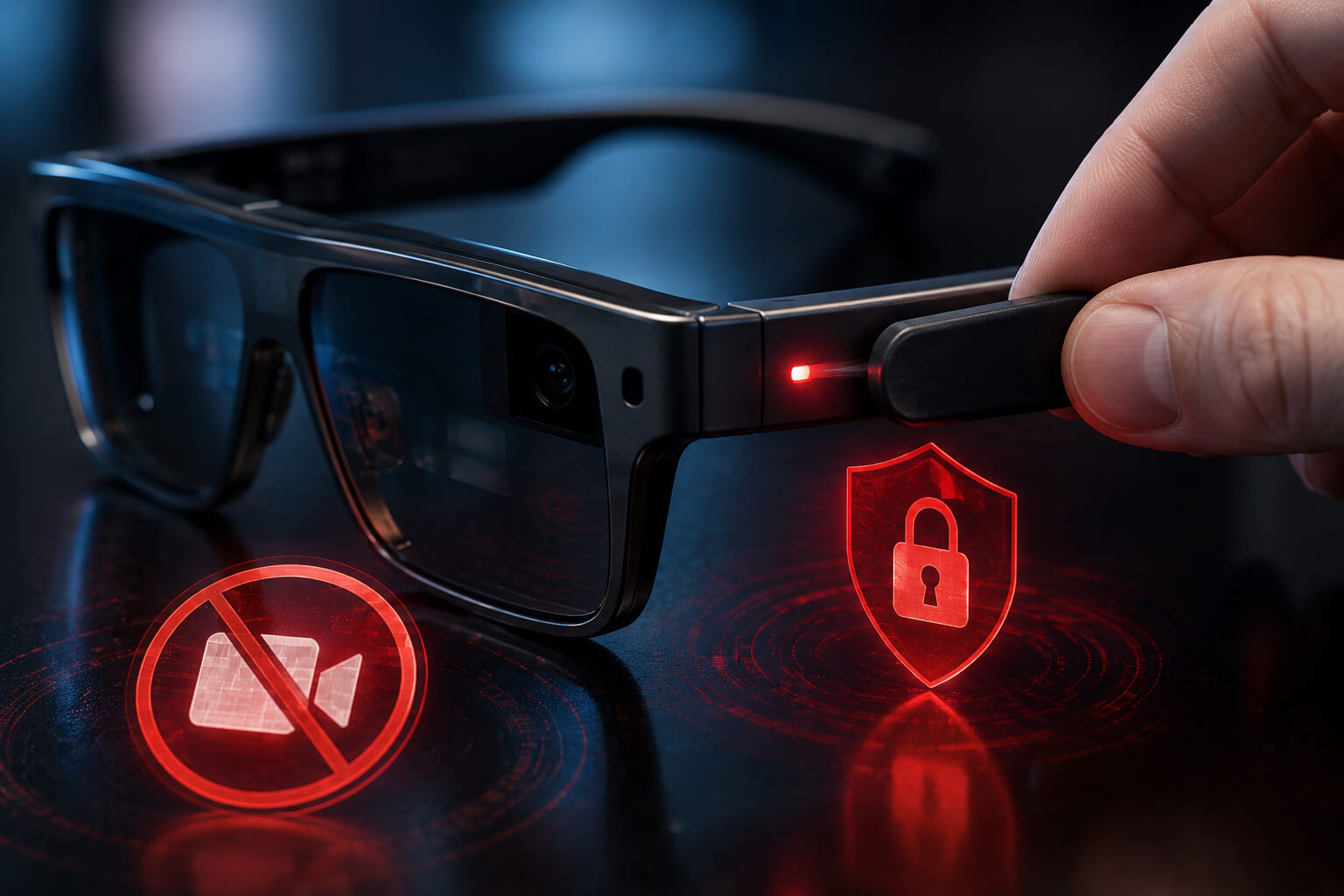
The company has announced a new safety update for its AI glasses that will stop the device from taking photos or videos if the recording indicator light is blocked, damaged, or tampered with. The update applies to Meta’s second-generation glasses, where the front LED light is supposed to turn on whenever the camera is recording.
It sounds like a small hardware safeguard. It is not. This is about whether people around a smart glasses user can actually know when they are being recorded.
Why Meta Is Changing Its AI Glasses
The issue became harder to ignore after reports showed that some Meta AI glasses owners were paying to remove or disable the LED recording light. According to Social Media Today, some services were being advertised online as a way to put the glasses into “stealth mode,” allowing users to record without making the recording obvious to others.
That is where things get uncomfortable.
Smart glasses already sit in a strange space between wearable tech and surveillance tool. Unlike a phone, which usually has to be held up to record, glasses can capture what the user sees while looking almost ordinary. Add hidden recording into that, and the privacy concern becomes much bigger.
Meta Says the Camera Will Shut Off
Meta says that if the system detects the capture LED has been blocked, the camera will automatically be disabled. No photos. No videos. Recording only works again once the light is no longer blocked.
The company also says the camera will be disabled if the LED has been physically damaged or destroyed. That matters because some tampering efforts reportedly involved drilling out the light rather than simply covering it.
Meta framed the move as an industry-leading privacy step, saying that no other camera has taken this kind of approach. That may be true. It also shows how fast smart glasses are moving into territory where older privacy norms do not really fit anymore.
The Bigger Privacy Problem Has Not Gone Away
This update answers one question, but it does not answer all of them.
Yes, blocking LED tampering is useful. People should not be able to quietly remove a recording indicator and keep using the camera like nothing happened. But the bigger issue is still the same. AI glasses are becoming more capable, more social, and much easier to use in public spaces.
Meta is also pushing harder into AI-powered wearable devices, and sales of its smart glasses have been rising. The more common these devices become, the more important the privacy rules around them become too.
A recording light helps, but only if people notice it. Only if they understand what it means. Only if the system cannot be bypassed.
Meta Is Also Targeting Tampering Services
Meta says it is not only changing the device itself. The company also plans to remove ads, posts, and Marketplace listings that promote LED tampering services. Accounts involved in those services could be banned, and Meta says it may take legal action against people or businesses selling LED tampering services on or off its platforms.
That is a stronger stance than simply issuing a warning. It suggests Meta knows this could become a real trust problem if left alone.
Because once people start seeing AI glasses as hidden cameras, the whole product category gets harder to defend.
Smart Glasses Are Becoming a Social Media Issue Too
This is not just a hardware story. It is a social media story.
Meta’s AI glasses connect directly with the company’s bigger ecosystem, including photo sharing, video capture, messaging, and AI features. That means the privacy concerns around recording are tied to the same platforms where the content may later be posted, shared, edited, or analyzed.
For creators, smart glasses could be useful. Hands-free recording, quick photos, first-person video, live moments. There is a clear appeal.
For everyone else nearby, the feeling may be different.
People are already tired of being filmed in public without consent. AI glasses make that tension sharper because the device is less obvious than a phone camera. The LED light is supposed to be the signal. If that signal can be hidden, the trust breaks.
Meta’s AI Glasses Update Is Necessary, But Not Enough
Meta’s LED tampering fix is a needed move. It closes one obvious loophole and makes it harder for users to turn AI glasses into hidden recording devices.
Still, this is only one piece of a much bigger debate.
As AI glasses become more advanced, the question will not only be whether the camera is recording. It will be what the device remembers, what it analyzes, where the data goes, and how much control people nearby actually have.
Meta has patched one privacy weakness. The harder part is convincing the public that AI glasses belong in everyday life without making everyone feel watched.
