

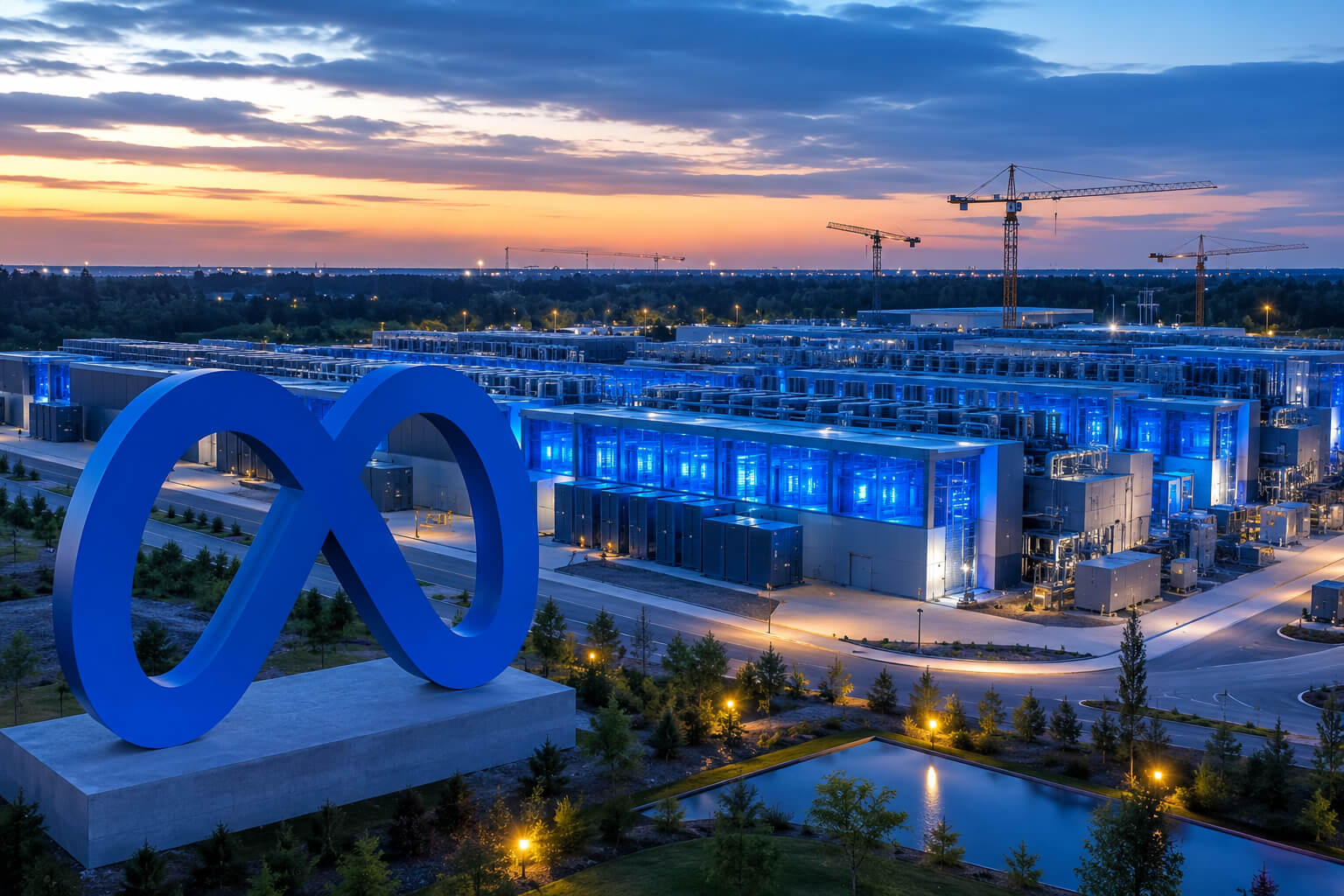
Meta is making its Louisiana data center project much bigger, and the numbers are not small.
The company is expanding its Richland Parish data center development as it continues building the infrastructure needed to power its artificial intelligence plans. Meta says the expanded project represents an investment of more than $50 billion in the region, making it one of the largest AI infrastructure investments in the world.
That is the official version. Big investment. More jobs. Local support. Better infrastructure.
But there is another side to this story too.
As AI companies race to build larger systems, the physical cost of artificial intelligence is becoming harder to ignore. Data centers need land, power, water, roads, workers, grid upgrades, and political support. Meta’s Louisiana project shows exactly how big that race has become.
Meta Louisiana Data Center Expansion Moves Forward
Meta announced that it is expanding its data center project in Richland Parish, Louisiana, with the facility expected to reach 5GW of compute capacity. That is a massive scale, especially for a rural area that is now being pulled directly into the global AI infrastructure boom.
The company says the project will support more than 1,000 roles once operational. It also said Louisiana businesses have already received more than $1.6 billion in contracts since the project broke ground in December 2024.
For Meta, this is not just a construction project. It is part of the company’s larger AI buildout.
The company needs more computing power for AI models, AI products, recommendation systems, ads, creator tools, and future social media features across Facebook, Instagram, WhatsApp, Threads, and its wider Meta ecosystem.
AI may look like software on a screen. Behind it, though, are buildings like this.
More Than $50 Billion for AI Infrastructure
Meta said the data center expansion is an investment of more than $50 billion in the Richland Parish region. The project also includes more than $1 billion in local infrastructure improvements, including roads, water systems, and wastewater systems.
That is the part Meta wants people to notice.
The company is positioning the project as an economic boost for the community, not just a private AI facility. According to Meta, the expansion will support workforce development programs, school funding, local business growth, and utility infrastructure.
Teachers in Richland Parish reportedly received annual bonuses of up to $50,000 because of increased tax revenue connected to the data center project. Meta also said Louisiana Delta Community College is receiving a $5 million donation to help train local residents for data center-related jobs.
It is a strong local story. Almost too polished, maybe.
A small community gets new money. Schools benefit. Contractors get work. Businesses grow. AI infrastructure becomes a hometown economic engine.
That is the pitch.
The Community Benefit Message Is Clear
Meta is trying to get ahead of the criticism that usually follows large data center projects.
The company says it pays the full cost of the energy, water, and related infrastructure used by the data center, so local consumers are not left covering the bill. Meta also pointed to an energy agreement that it says is expected to save Entergy Louisiana customers more than $2 billion over 20 years, in addition to earlier projected savings.
For a company building huge AI infrastructure, this messaging matters.
Data centers are no longer just technical assets hidden somewhere outside town. They are now public issues. People ask about electricity. They ask about water. They ask about roads, noise, pollution, property values, and whether the jobs promised will actually last.
Meta knows that.
So the Louisiana announcement is not only about compute capacity. It is also about trust.
AI Data Centers Are Becoming a Political Issue
The bigger question is whether communities really benefit from these projects in the long run.
Supporters see jobs, tax revenue, school funding, and local contracts. Critics see heavy resource use, grid pressure, environmental concerns, construction disruption, and possible increases in utility costs.
That tension is growing across the United States.
Earlier this year, U.S. Senator Bernie Sanders introduced the Artificial Intelligence Data Center Moratorium Act, a proposal designed to pause new data center construction until stronger safeguards are in place. The bill points to concerns around utility bills, public health, environmental impact, and the pressure AI infrastructure can place on communities.
That does not mean Meta’s Louisiana project will stop.
Actually, the opposite seems more likely.
The U.S. wants to compete in AI. Meta wants to compete in AI. Other tech giants are moving fast too. The appetite for compute is huge, and companies are spending like they believe the next decade will be decided by who controls the most AI infrastructure.
Why This Matters for Social Media
This may sound like a data center story, not a social media story.
It is both.
Meta’s social platforms are now deeply tied to AI. Instagram recommendations, Facebook feeds, WhatsApp AI features, Threads discovery, ad targeting, AI chat tools, creator products, moderation systems, and future mixed reality experiences all depend on more computing power.
So when Meta builds a larger data center, it is not just building servers.
It is building the backend for the next version of social media.
AI-generated content will keep growing. Assistants will become more common. Feeds will get more personalized, advertising will become more automated, and moderation will lean further into machine-led systems. Creator and business tools will probably get more AI features too.
That future needs infrastructure. A lot of it.
Meta’s AI Push Keeps Getting More Physical
The strange thing about AI is that it gets described as weightless.
Cloud-based. Digital. Automated. Invisible.
Then a project like this lands, and suddenly AI looks very physical. It has cement, power lines, water systems, gas plants, roadwork, school funding, local politics, and residents wondering what happens next.
Meta’s Louisiana data center expansion is a major sign of where the company is heading. It wants bigger AI systems, deeper infrastructure, and more control over the compute that powers its platforms.
For Richland Parish, the project may bring real money and real opportunity.
For everyone else, it is another reminder that the AI race is not only happening inside apps. It is happening on the ground, in towns that may now carry the weight of the next social media era.
Sources
Social Media Today: Meta expands its Louisiana data center project
Meta Newsroom: Teachers, local businesses win as Meta expands Louisiana data center
