
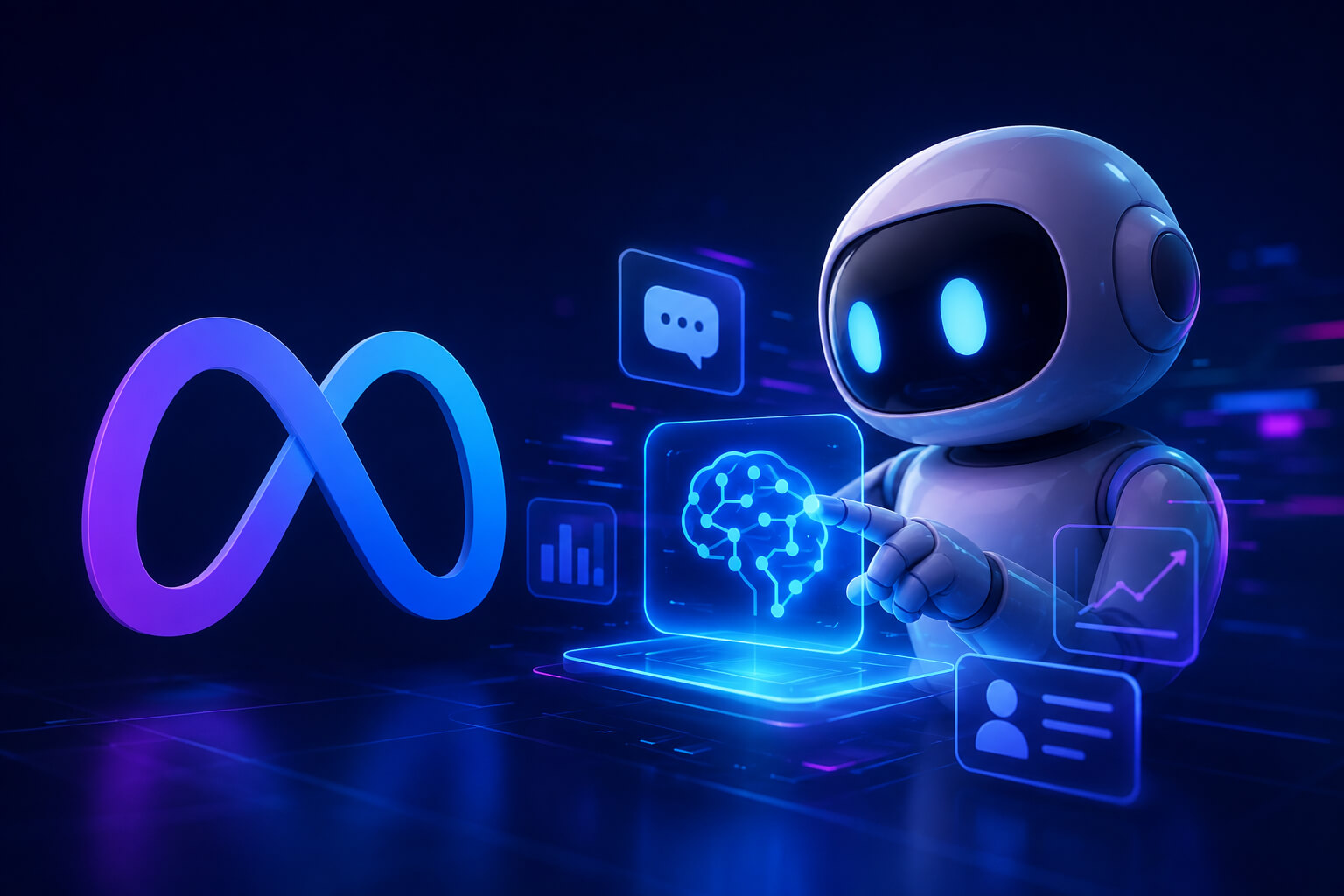
Meta has launched Muse Spark 1.1, a new multimodal reasoning model designed to handle more advanced AI tasks, including automation, coding, tool use, and working across different digital interfaces.
That sounds technical. It is.
But the bigger story is easier to understand. Meta is trying to move its AI systems beyond simple chat responses and into something closer to digital workers. Not just answering questions. Taking action. Planning steps. Using tools. Moving between apps. Maybe even handling parts of business workflows that usually need a human sitting at a screen.
The company says Muse Spark 1.1 is built for “agentic tasks,” which is now one of the hottest terms in AI. In plain language, that means AI that does not just wait for one prompt at a time. It can work through a task, make decisions along the way, and use software tools to get things done.
What Meta Muse Spark 1.1 Can Do
Muse Spark 1.1 is a multimodal model, meaning it can understand and work with more than one type of input. Text, images, interfaces, and other digital information can all become part of the task.
Meta says the model has improved reasoning, stronger coding ability, better multimodal understanding, and more useful computer and tool use. One important detail: it can also maintain context across sessions and adjust when requirements change. That matters because real work rarely happens in one clean prompt.
The model is also designed to understand when automation is better than manual clicking. Instead of going through every desktop step slowly, it can decide when to write a script, when to click through an interface, and when to generate several actions at once. That is where Meta wants this to feel less like a chatbot and more like an assistant that can actually operate software.
Meta Wants AI That Can Act for Users
Muse Spark 1.1 fits into Meta’s wider AI direction. The company is also pushing tools like Muse Image, while talking more openly about its long-term vision for personal superintelligence.
Big phrase. Very Meta.
The idea is that future AI tools should help people create, plan, communicate, and take action across different parts of life and work. For social media, that could eventually mean AI that helps creators edit campaigns, manage content, analyze performance, respond to messages, or build assets with less manual effort.
For businesses, the pitch is even clearer. Meta wants AI that can do useful work inside apps and services, especially for developers and enterprise users.
The Paid Developer Tier Matters
One of the more important parts of this launch is not just the model itself. It is the business model around it.
Muse Spark 1.1 will reportedly be the first Meta AI model to include a paid tier for developers. That signals a shift. Meta has spent heavily on AI, and now it needs clearer paths to revenue. Social platforms can only talk about AI potential for so long before investors start asking where the money comes from.
A paid developer tier gives Meta a more direct monetization route. Developers and businesses could pay for access if the model proves useful enough. That is the key question. Not whether the model sounds impressive. Whether people will pay for it because it saves time, builds products, or replaces messy workflows.
AI Agents Still Come With Risk
There is a less shiny side to this.
AI agents that take action on behalf of users can create real problems when they make bad decisions. Meta has already faced scrutiny around AI-driven support tools, including reports involving Instagram account access issues. That makes the agentic AI race more complicated than the marketing language suggests.
It is one thing for an AI model to summarize a document badly. Annoying, but usually fixable.
It is another thing for an AI system to click buttons, approve requests, move data, or make decisions inside a business process. That kind of mistake can become expensive very quickly.
So Muse Spark 1.1 may be a major step forward for Meta’s AI ambitions. It also raises the same question hanging over the whole agentic AI industry: are these systems ready to be trusted with real work, or are companies rushing because the investment pressure is already too big?
Why This Matters for Social Media and Marketing
For marketers, creators, and social media teams, Muse Spark 1.1 points toward where Meta wants its platforms to go next.
AI will not just suggest captions or generate images. It may start managing workflows, testing creative variations, handling customer interactions, and connecting ad tools with content tools. That could help smaller teams move faster. It could also make platforms more automated, more dependent on AI decision-making, and possibly harder to audit.
Meta is clearly betting that businesses will want this kind of AI support. The challenge is convincing them that it is reliable enough.
Because nobody wants an AI agent that works beautifully in a demo and then breaks something important on a Tuesday afternoon.
