

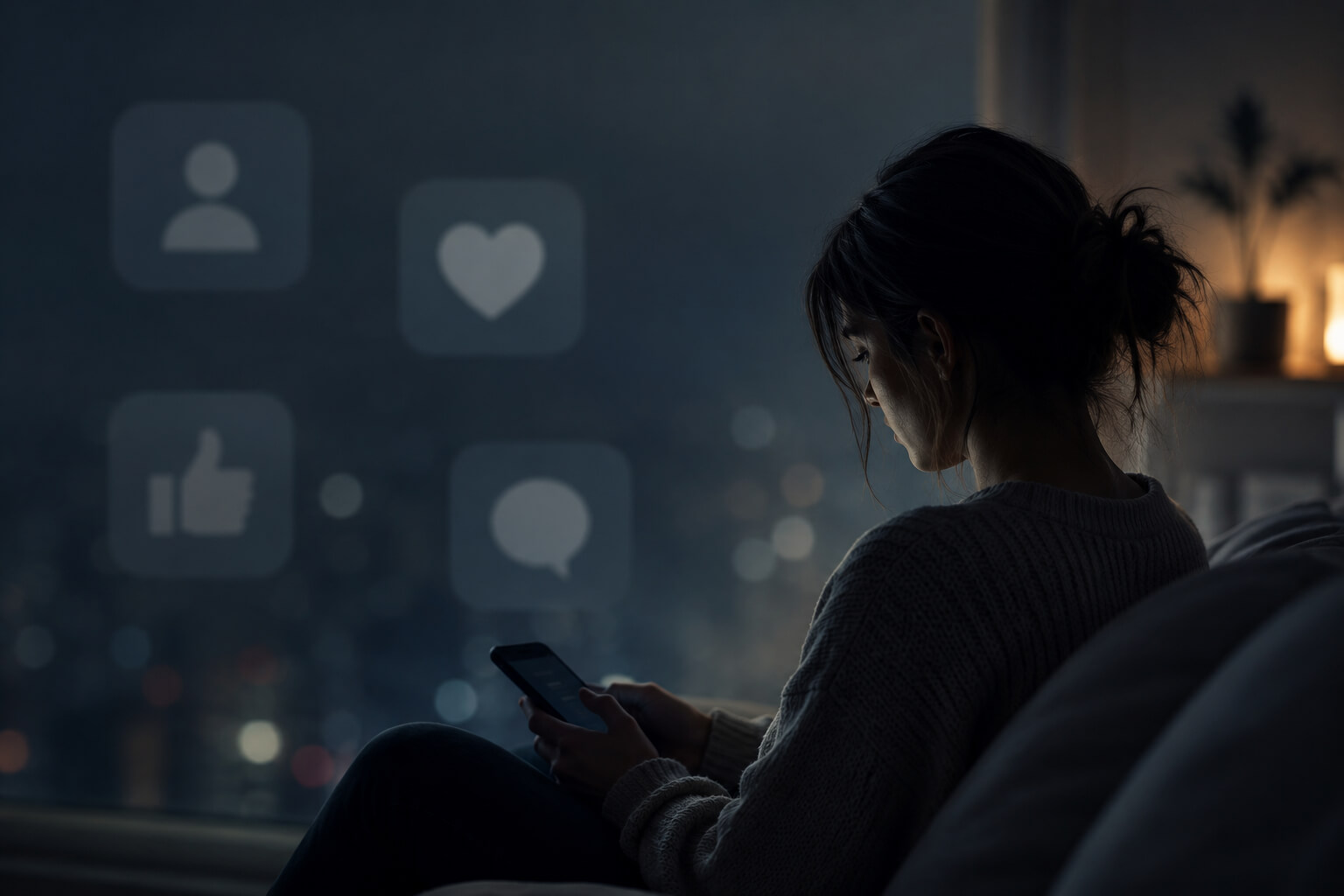
Social media still commands an enormous amount of attention. People open Instagram during lunch, watch TikTok before bed and check Facebook without really thinking about it. But they are not necessarily talking to one another.
A growing share of users now scroll without posting, commenting or sharing anything publicly. The platforms remain busy. The social part, however, has started to fade into the background. New research cited by Social Media Today suggests that social media is becoming less social and more like an endless entertainment service built around short videos, recommendations and algorithmic feeds.
More People Are Watching Instead of Posting
Incogni surveyed 1,000 Americans about how their social media habits have changed. According to the findings, 55% said they post less frequently than they did five years ago. That does not mean they have abandoned social platforms. Many are still there every day. They simply spend more time watching videos, reading posts and moving through recommended content without adding much of their own.
Public posting has never been evenly distributed. Pew Research found in 2019 that roughly 80% of tweets came from just 10% of Twitter users. The old 90-9-1 rule told a similar story: most users observe, a smaller group occasionally participates and only a tiny minority consistently creates content.
That imbalance now feels more obvious. Social feeds may contain an enormous volume of content, yet much of it comes from professional creators, brands, publishers and a relatively small group of highly active accounts. Everyone else is watching.
Personal Conversations Are Moving Into Private Messages
People have not completely lost interest in sharing their lives online. They are simply becoming more selective about where they do it.
Instead of posting a holiday photo for hundreds of followers, users may send it to a small group chat. A personal opinion that once appeared publicly on Facebook or X might now stay inside a private message thread. Direct messages feel safer and less performative. There is no need to worry about reach, engagement or how an update will look to acquaintances who barely know the person posting it.
Research from the UK communications regulator Ofcom also points to declining public participation. In its 2026 findings, only 49% of adult social media users said they post, share or comment, compared with 61% in 2024. Some users have moved toward temporary Stories or specific community groups rather than permanent public posts. The town square has not disappeared. A lot of the real conversation has simply moved into smaller rooms.
Maintaining a Social Media Presence Feels Like Work
Posting used to feel casual. A blurry dinner photo was enough. Nobody needed a strategy. That has changed. More than half of the respondents in the Incogni study said maintaining a social media presence feels like work. Younger users may feel that pressure more sharply because they have grown up watching creators turn online attention into careers.
The visible success stories make content creation look simple. Record a video, build an audience and collect sponsorship deals.
Reality is messier. Creators need ideas, editing skills, consistency, analytics, audience management and enough stamina to keep producing when a post fails. Social Media Today cited research suggesting that more than 48% of creators earn less than $15,000 annually from their online activity.
For ordinary users who are not even trying to build a business, that creator-style pressure can still creep in. Photos need to look polished. Captions need to sound clever. Videos should follow a trend before the trend disappears. At some point, staying visible starts feeling less like socialising and more like unpaid content production.
Algorithms Have Turned Feeds Into Entertainment Channels
The biggest shift may be happening inside the feeds themselves. Social media platforms once placed updates from friends, relatives and followed accounts at the centre of the experience. Modern feeds increasingly recommend posts from strangers based on predicted interests.
TikTok built its growth around that model. Instagram Reels, YouTube Shorts and Facebook video recommendations followed. The result is a feed that behaves more like personalised television than a traditional social network. Users no longer need to follow someone before seeing their content. The algorithm simply keeps selecting the next video.
Meta has said that time spent on Facebook and Instagram has increased as the company placed more short-form videos and recommended content into feeds. That creates an interesting contradiction: people may post less while still spending more time inside the apps. Social media is not necessarily shrinking. It is changing jobs.
Political Anger Can Make Public Posting Less Appealing
Algorithmic feeds also reward emotion, and calm discussion rarely travels as quickly as outrage. Posts that provoke anger, fear or heated disagreement often produce more comments and shares. That engagement tells the platform that the content is worth distributing further.
The cycle can make feeds feel permanently tense. Political arguments, culture-war clips and deliberately provocative posts compete for attention beside family updates and entertainment.
Incogni’s research suggests this growing political intensity has pushed some people away from active participation. Users may continue scrolling, but they become less willing to join the conversation.
There is also the problem of permanence. Ofcom found that concerns about old posts causing future personal or professional problems increased from 43% in 2024 to 49% in 2025. Deleting an account does not always erase screenshots, archives or reposts. Staying quiet can feel like the easier option.
Social Platforms Are Still Growing, Just Differently
None of this means social media has become irrelevant. Global social media user identities reached an estimated 5.66 billion in October 2025, equivalent to 68.7% of the world’s population. The figure had increased by 259 million over the previous 12 months.
The audience is still huge. What users expect from the platforms is what has changed. People increasingly open social apps to watch videos, follow news, discover products, search for recommendations or pass a few minutes. Staying connected with friends remains part of the experience, but it no longer defines the entire product.
That distinction matters for marketers. Brands cannot assume audiences are waiting to have public conversations. Many users prefer to watch quietly, share content privately or respond only when something feels genuinely useful.
Brands May Need to Stop Chasing Empty Engagement
A quieter audience is not necessarily an uninterested audience. Someone may watch an entire video without liking it. Another person might save a post and return days later. A product recommendation could travel through a private group chat without generating a single visible share.
Traditional engagement metrics miss much of that behaviour. Brands may need to pay closer attention to watch time, saves, direct-message enquiries, search activity and conversions instead of treating comments as the only proof that content worked.
The tone may also need to change. Posts built around forced questions and obvious engagement bait can feel awkward when users increasingly treat social platforms as entertainment feeds. Useful, memorable or genuinely entertaining content has a better chance of surviving the shift.
Social Media Is Not Disappearing, but the Old Version Is
The early idea of social media was fairly simple: people would create profiles, connect with friends and post regular updates about their lives.
That version still exists, although it now shares space with recommendation algorithms, professional creators, political commentary, online shopping and endless vertical video. Users have not stopped consuming content. They have become quieter while doing it.
The next phase of social media may therefore look less like a public conversation and more like a personalised media stream, with actual social interaction happening privately in messages and small groups. The platforms remain crowded. They just do not feel as social as they once did.
Sources
- Social Media Today – Social Media Is Becoming Less Social
- Incogni – Social Media Use and Posting Habits Study
- The Guardian – UK Social Media Users Become Less Active
- We Are Social – Digital 2026 Global Overview Report
