
TikTok is trying to get ahead of a problem it helped make louder.
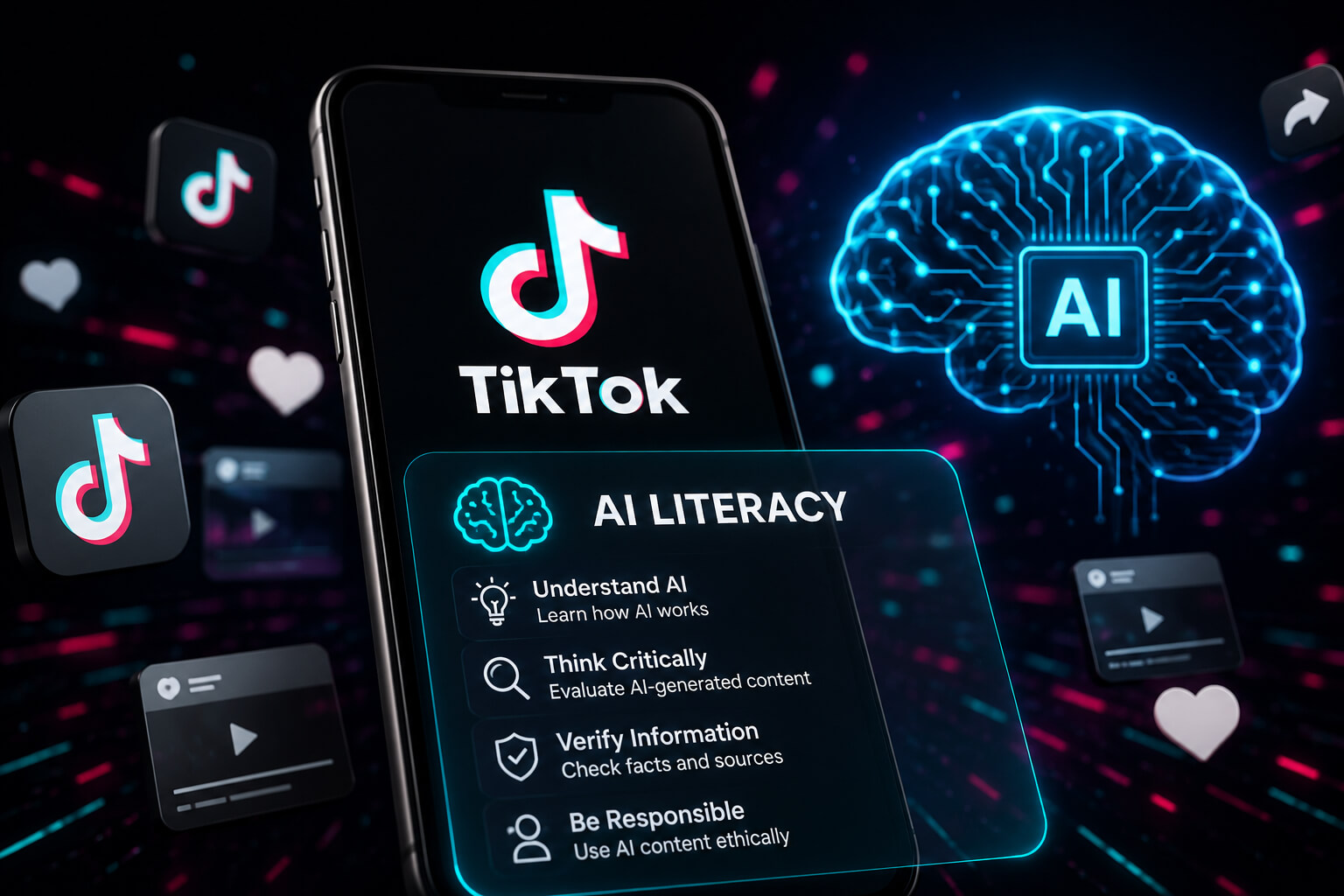
The platform has launched new AI literacy measures designed to help users recognize artificial intelligence-generated content, understand how AI tools are being used, and spot posts that may not be as real as they first appear.
It is not just a small safety update. TikTok is now dealing with the same messy reality facing every major social media platform. AI-generated videos, fake accounts, spammy content, misleading edits, and synthetic posts are becoming harder to separate from normal user content.
So now TikTok is teaching people how to look twice.
TikTok Launches New AI Literacy Guide
The first part of the update is a new AI literacy guide.
TikTok created the guide with support from industry partners, including the National Association for Media Literacy Education and AI expert Henry Ajder. The goal is simple enough: help users understand AI content before they accidentally trust, share, or react to something misleading.
The guide includes video explainers and educational material about how AI-generated content can appear on the app. It also gives users a better idea of what signs to watch for when content looks strange, overly polished, emotionally manipulative, or just a little too convenient.
This matters because AI content is no longer limited to obvious filters or funny edits. It can look like news. It can look like financial advice. It can look like medical information. Sometimes it looks like a real person saying something they never said.
That is where the risk gets bigger.
A New In-App AI Learning Hub Is Coming
TikTok is also preparing to launch an in-app learning hub in the coming weeks.
The hub will appear when users search for AI-related terms. Instead of only showing regular search results, TikTok will use those moments to teach practical AI detection skills.
That is a smart placement. People searching for AI content are already curious, confused, or trying to figure something out. TikTok is stepping in at the exact point where users may need more context.
Not everyone will read a policy page. Almost nobody does. But a short learning hub inside the app? That has a better chance of actually being seen.
TikTok Wants to Fight AI Spam and Misinformation
The bigger issue is not just AI creativity. It is AI spam.
TikTok says it already removes fake accounts at scale, with more than 86 million fake accounts removed in the first three months of the year. Now the company is testing stronger detection systems aimed at accounts that post AI-generated spam around sensitive topics.
The areas TikTok specifically pointed to include politics, current events, financial advice, and medical content.
That list says a lot.
These are the topics where bad AI content can cause real damage. A fake political clip can spread quickly. Bad financial advice can hurt people’s money. Misleading medical content can push users toward unsafe choices. And because TikTok moves fast, false information can travel before users even stop to question it.
AI makes that speed more dangerous.
AI Labels Are Becoming More Important
TikTok is also expanding its AI labeling efforts.
The platform says it has already labeled more than 3 billion videos as AI-generated content through a mix of Content Credentials, creator labeling tools, and invisible watermarking technology.
That number is huge, but it also shows how large the problem has become.
AI labels are useful, but they are not perfect. Some creators may fail to label their content. Some AI content may avoid detection. Some users may ignore labels completely. Still, labeling gives platforms at least one visible way to tell people, “pause, this may not be fully real.”
It is not a full solution. More like a warning sign.
Social Platforms Are Stuck in an AI Contradiction
Here is the awkward part.
Social apps keep promoting AI tools while also trying to reduce the damage caused by AI content.
TikTok, Meta, YouTube, Instagram, and other platforms all want creators and advertisers to use AI because it can speed up production and increase engagement. At the same time, users are getting tired of low-quality AI posts filling their feeds.
The industry has a word for it now: AI slop.
Too much content. Too fast. Too fake-looking. Too empty.
TikTok’s new AI literacy measures are part of a larger clean-up effort. The company still wants AI to be useful for creators, but it also needs to stop the app from becoming flooded with cheap synthetic posts that weaken trust.
That balance is going to be difficult.
Why This Update Matters for TikTok Users
For regular users, this update means TikTok is giving more tools to question what appears in the feed.
For creators, it is another reminder that AI-generated content needs to be handled carefully. Labeling matters. Trust matters. Audiences are becoming more alert to fake or overly automated content.
For brands and marketers, the message is even clearer. AI can help produce content, but it cannot replace credibility. A campaign that looks artificial, misleading, or spammy can backfire quickly.
TikTok’s move is not the end of AI confusion on social media. Not even close. But it is a sign that platforms are being pushed to take AI literacy more seriously before the feed becomes too hard to trust.
Sources:
- Social Media Today: TikTok launches AI literacy measures
- TikTok Newsroom: Addressing the rise of AI-generated content
