


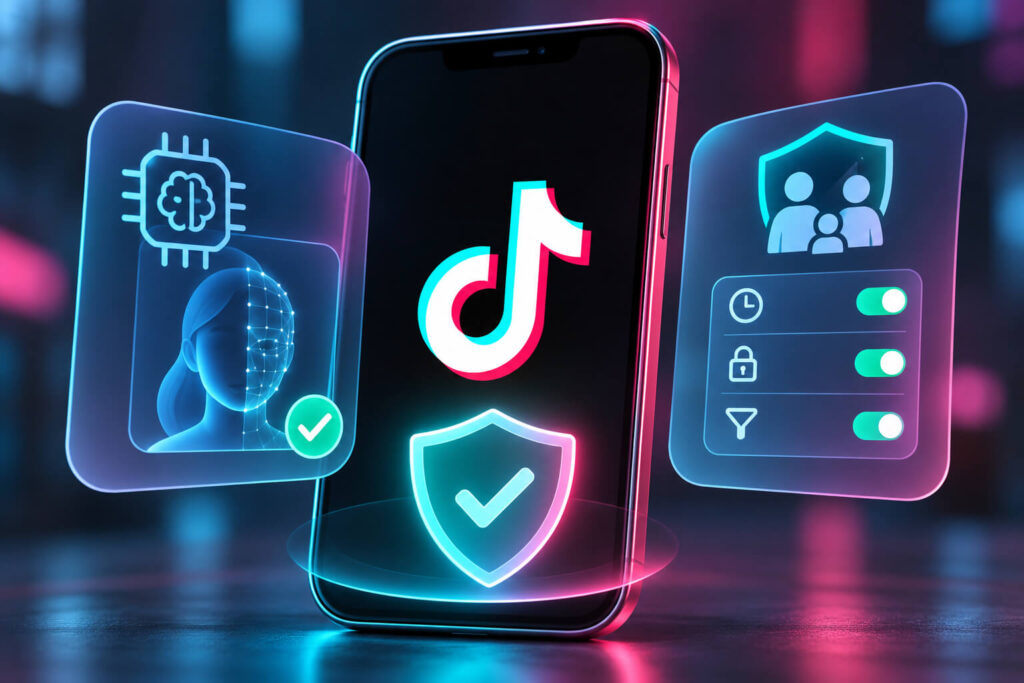
TikTok is rolling out new safety features aimed at tackling AI-generated content, protecting creators from digital impersonation, and giving parents a better understanding of their teenagers’ online activities. These updates are part of a broader focus on TikTok AI transparency and parental controls to enhance user safety and awareness.
The updates were announced during TikTok’s third Safety and Innovation Summit in November 2026. They include an AI content verification tool, a new likeness detection system, redesigned Family Pairing controls, and educational resources for schools.
The changes arrive as social media platforms face increasing pressure to address misinformation, artificial intelligence misuse, and concerns about younger users spending time online.
TikTok appears to be focusing on something beyond simply adding restrictions. It wants users to understand what they are watching, help creators protect their identities, and give families more information about how teenagers experience the platform.
TikTok Introduces AI Transparency Tool to Identify AI-Generated Content
AI-generated videos are becoming harder to distinguish from authentic recordings, and TikTok wants to give users another way to check what they encounter online. The company has launched an AI transparency tool that allows anyone to upload an image or video to determine whether it was created or edited using TikTok’s AI features. The tool is available through TikTok’s Transparency Center, and users do not need an account to access it.
The technology examines digital information embedded in AI-generated content, including Content Credentials and TikTok’s proprietary invisible watermark, VeraDura. These systems help identify material created with the platform’s AI tools, even when content has been downloaded or shared elsewhere. TikTok says its existing AI labeling technologies have already helped identify more than five billion AI-generated videos.
The tool does have limitations. It is designed to detect content associated with TikTok’s own AI creation technology rather than every synthetic image or video circulating online. Still, the addition gives users a practical way to investigate suspicious content instead of relying entirely on visual judgment.
New Likeness Detection Feature Protects Creators From AI Impersonation
For creators, AI impersonation is becoming a growing concern. A person’s face can now appear in fabricated videos, misleading advertisements, or manipulated content without their permission. TikTok’s new Likeness Detection feature is intended to help eligible creators and public figures identify AI-generated material that may use their appearance without consent.
The system works through an optional enrollment process. Eligible creators verify their identity through a trusted third-party provider, allowing TikTok to identify potentially matching content and accounts. Creators can then review the results and report material they believe violates the platform’s rules.
TikTok says its safety teams will remove reported content that violates policies covering harmful, misleading, or nonconsensual AI-generated depictions. The company has begun rolling out the feature globally to eligible creators and public figures.
For influencers, entertainers, and digital entrepreneurs, protecting their likeness is increasingly tied to protecting their businesses. An unauthorized AI-generated endorsement could damage credibility, confuse audiences, or create problems with brand partnerships. TikTok’s latest feature offers another layer of protection, although its effectiveness will depend on how accurately it identifies impersonation attempts.
TikTok Expands Family Pairing With More Parental Controls
Parents are also getting a clearer view of what their teenagers are doing on TikTok. The company has redesigned its Family Pairing experience to provide additional information about teenage accounts, including posting activity, screen time, and the creators influencing their online experience.
One of the more noticeable additions allows parents to watch a sample of videos from verified creators their teenagers follow. Rather than seeing only account names or usage statistics, parents can get a sense of the communities, interests, and topics their children regularly encounter.
TikTok says more than 80% of the parents of teenagers it consulted expressed interest in having access to this type of information. The company has also made screen time data easier to find, showing parents how much time their teenagers spend on the platform and when they are most active.
The redesigned controls build on TikTok’s existing protections for teenage accounts, including default privacy settings and a 60-minute daily screen time setting. While the new features offer greater visibility, they also introduce questions about how parents can balance online safety with their teenagers’ growing need for independence and privacy.
TikTok Developing Parental Alerts for Self-Harm-Related Searches
Another feature under development could notify parents when their teenagers repeatedly search for terms associated with self-harm. TikTok says it is working with experts to design alerts that provide useful information without encouraging unnecessarily alarming responses.
The proposed notification system would inform parents about potentially concerning search activity and offer expert-backed guidance on starting supportive conversations. Instead of simply flagging a search, the feature is intended to help families respond thoughtfully when teenagers may be looking for sensitive or harmful material.
TikTok has not announced a general release date for the system, and the feature remains in development. Search behavior alone cannot determine someone’s mental health or intentions, making careful implementation particularly important.
The initiative reflects a broader challenge for social media companies: identifying potentially harmful online experiences while respecting users’ privacy. For parents, the value of such notifications will depend heavily on their accuracy and the quality of the guidance provided.
TikTok Launches Educator’s Guide to Promote Digital Literacy
TikTok is extending its safety efforts into classrooms with a new Educator’s Guide developed in consultation with teachers and youth safety experts. The resource is designed to help schools better understand how the platform works and support discussions about responsible social media use.
The guide provides educators with information about TikTok’s features, online safety tools, and the digital experiences shaping young people’s daily lives. It also gives teachers additional resources for discussing how students interact with social platforms and navigate online content.
Digital literacy has become increasingly important as teenagers encounter AI-generated videos, algorithm-driven recommendations, and online communities that can influence their interests and opinions. Understanding how these systems operate is no longer just a concern for technology specialists.
By providing educational resources, TikTok is acknowledging that online safety cannot be handled through platform controls alone. Schools and families also play a role in helping young people evaluate information, recognize manipulated content, and make informed decisions about their online behavior.
Why TikTok’s Latest AI and Safety Features Matter
TikTok’s latest updates highlight how quickly the conversation around social media safety is changing. A few years ago, much of the debate centered on screen time, inappropriate content, and online interactions. Those concerns remain, but AI-generated media has added another layer of complexity.
Creators now have to think about unauthorized digital versions of themselves. Parents want to know not only how long their teenagers spend online but also what kinds of content shape their interests. Ordinary users increasingly need ways to determine whether the videos appearing in their feeds are authentic.
TikTok’s new transparency and parental control tools attempt to address these concerns from different directions. AI verification gives audiences more information about content creation, while Likeness Detection provides eligible creators with a way to identify potential impersonation. Family Pairing and educational resources focus on helping adults understand younger users’ experiences.
There is also a business dimension to these changes. Social media platforms depend heavily on user confidence, advertiser trust, and the willingness of creators to continue publishing content. Stronger protections could help TikTok maintain those relationships as regulators and policymakers examine how social networks handle teenage safety and artificial intelligence.
TikTok Faces Growing Pressure to Build a Safer Social Media Experience
The latest announcements come amid wider scrutiny of social media platforms and their responsibilities toward younger audiences. Governments in several regions have been considering tighter restrictions on teenage social media access, while concerns about AI-generated misinformation continue to attract attention.
TikTok’s approach suggests that the company sees transparency and parental involvement as important parts of its response. Rather than relying entirely on content removal, it is introducing tools intended to help people make more informed decisions about what they see and share.
Whether those tools deliver meaningful improvements remains to be seen. AI detection systems can face technical limitations, and parental controls are only useful when families understand and use them.
For now, TikTok is giving users, creators, parents, and educators more ways to navigate an increasingly complicated digital environment. The real measure of success will be whether those features make the platform safer and more trustworthy in everyday use.
Sources
- Social Media Today – TikTok Adds New AI Transparency and Parental Controls
- TikTok Newsroom – More Tools to Provide Clarity and Control Around AI-Generated Content
- TikTok Newsroom – Updates From the 2026 TikTok Safety and Innovation Forum
- TikTok Transparency Center – Official Transparency and Safety Resources