

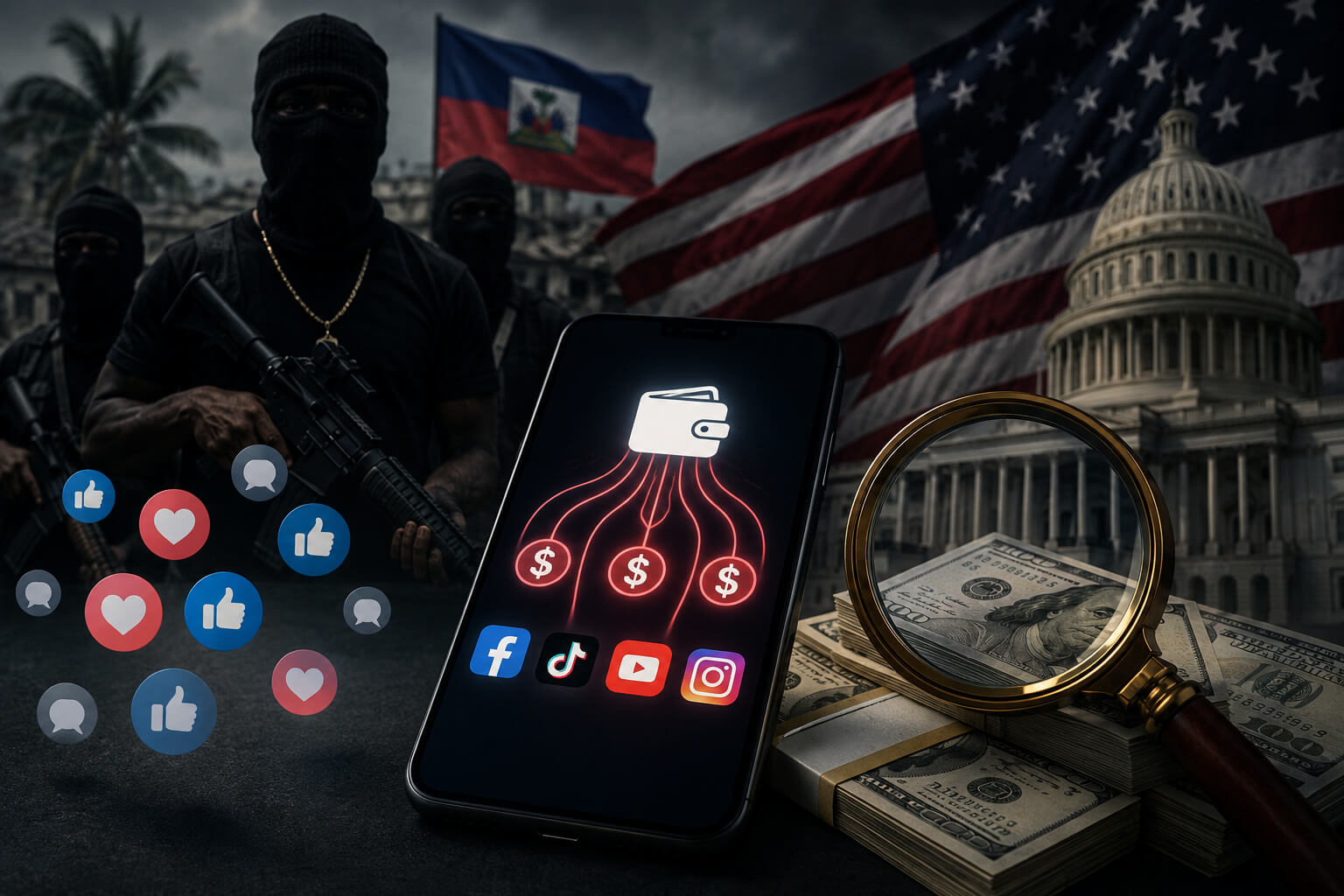
Haitian gangs have turned social media into more than a place to issue threats or show off weapons. Recent reports have shed light on Haitian gangs making money on social media through various schemes and activities.
For some gang leaders, it has become a publicity machine. For others, it may also be a source of income.
The United States now says it plans to disrupt that system.
US Ambassador to the United Nations Mike Waltz told the UN Security Council that Washington would soon take action against violent Haitian gangs making money from social media content. He did not explain exactly what the crackdown would involve, leaving questions about whether the government will target platform payments, individual accounts, financial intermediaries, or all three.
Haitian Gangs Are Using Social Media as a Business Tool
Gang leaders in Haiti regularly post videos celebrating violence, threatening rivals, displaying weapons, and presenting themselves as powerful public figures.
The content is not always crude propaganda filmed in the street. Some younger gang members produce music videos, show stacks of cash, and package gang life as something glamorous or financially rewarding.
That matters in a country where poverty and instability leave many children vulnerable to recruitment.
Social platforms can give these groups reach far beyond the neighbourhoods they control. A video can spread across Haiti, reach diaspora communities abroad, attract followers, and potentially generate money through advertising, donations, sponsorship-style payments, or other online financial channels.
Waltz described the activity as deeply troubling and promised that the US would move to shut it down. The announcement was direct. The details were not.
The Crackdown Could Put More Pressure on Social Platforms
The US government has not yet named the platforms that may face scrutiny or explained how it intends to prevent gang-linked creators from earning revenue.
Still, any serious action would probably require cooperation from major social media companies.
Platforms may need to identify accounts connected to sanctioned gangs, remove monetisation access, trace repeat accounts, and stop banned content from simply returning under another username. Payment services and financial institutions could also become part of the process when online revenue crosses international borders.
This will not be easy.
Removing a gang leader’s main account does not erase the audience. Supporters can repost videos, create fan pages, distribute clips through messaging apps, or upload the same material to another platform.
YouTube previously removed Johnson André, known as Izo, after criticism over his large online following. Despite platform bans, content linked to powerful gang figures has continued to circulate through other accounts and channels.
Recruitment May Be More Dangerous Than the Revenue
Money is the headline, but recruitment may be the bigger concern.
Videos showing expensive clothes, weapons, vehicles, music, and cash can make gang membership look like a route out of poverty. That image hides the coercion and violence behind it, yet it can still influence children who see few realistic alternatives around them.
The online performance is part intimidation, part advertisement.
Haiti’s armed groups have already been accused of recruiting and exploiting children for surveillance, checkpoint duties, attacks, and other gang operations. The US State Department has also documented cases involving gangs exploiting women and children while using social platforms to spread threats and violent material.
Stopping monetisation would not end that recruitment. It could, however, remove one incentive to keep producing highly polished gang content and reduce the appearance that platforms are rewarding violent actors with visibility and income.
Haiti’s Security Crisis Keeps Getting Worse
The social media crackdown is arriving during another brutal period for Haiti.
Gang violence has displaced nearly 1.5 million people, while more than 2,300 people have reportedly been killed since the beginning of 2026. Armed groups remain deeply entrenched across Port-au-Prince and other parts of the country.
Haiti has also gone without an elected president since the assassination of Jovenel Moïse in July 2021. General elections would be the country’s first in more than a decade, but insecurity continues to make voting preparations difficult in gang-controlled areas.
Officials say thousands of additional police officers and military recruits are expected to join Haiti’s security forces. A UN-backed international mission has also established its headquarters and begun operations against gang infrastructure.
The problem is that gangs adapt quickly. Close one route and they find another. Shut down a physical base and they move. Remove an account and another one appears.
Social Media Companies Face an Uncomfortable Question
Platforms already prohibit terrorist organisations, violent criminal groups, threats, and graphic content. Enforcement becomes much less straightforward when gang leaders mix violent propaganda with music, commentary, local news, or influencer-style posts.
An account may not explicitly ask viewers to join a gang in every video. It may still build the leader’s reputation, normalise violence, intimidate communities, and direct attention toward channels where money can be collected.
That grey area has allowed some criminal figures to develop surprisingly large online audiences.
The coming US measures could force platforms to treat monetisation as a separate enforcement problem. Leaving a video online is one decision. Allowing the person behind it to earn money is another.
Washington Has Promised Action, but the Real Test Comes Next
The US pledge sounds forceful, yet several important questions remain unanswered.
Washington has not provided a timeline. It has not identified the companies involved. It has not said whether new sanctions, criminal charges, platform agreements, or financial restrictions will be used.
Those details will decide whether the announcement changes anything.
Haitian gangs have already learned how to use the language and mechanics of the creator economy. They build audiences, produce shareable content, promote personalities, and use attention as power.
Now the US wants to cut off the money behind that attention.
Actually finding it — and stopping it from moving somewhere else — will be the difficult part.
Sources
- WTOP – US pledges to crack down on Haitian gangs making money off social media
- Associated Press – US pledges to crack down on Haitian gangs making money off social media
- US Department of State – Haiti Human Rights Report
- US Department of State – Trafficking in Persons Report: Haiti
- US Treasury Office of Foreign Assets Control
