

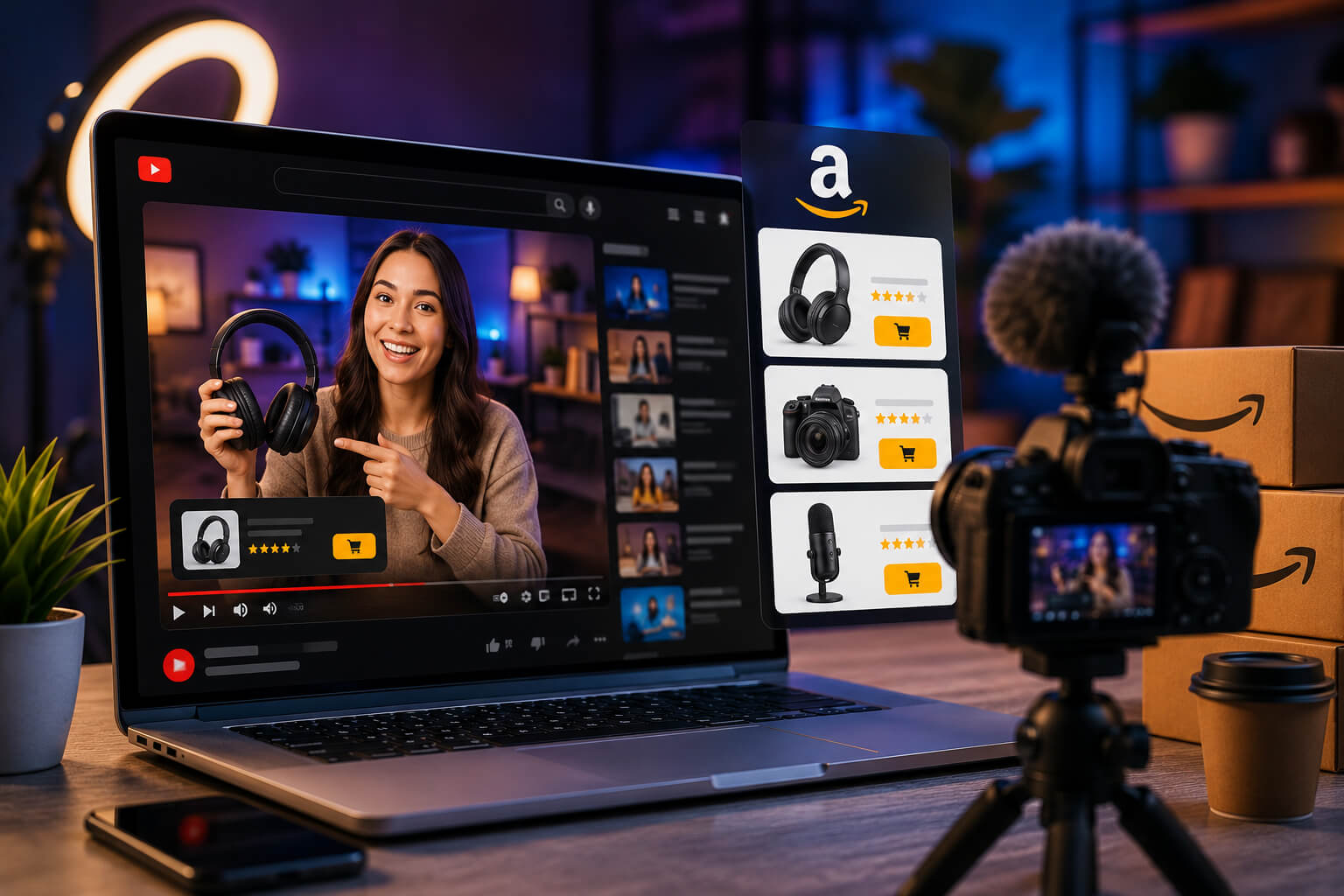
YouTube is making Amazon recommendations a lot easier to monetize.
Eligible creators in the United States can now tag Amazon products directly inside YouTube videos, Shorts, and livestreams. If a viewer follows one of those recommendations and makes an eligible purchase, the creator can earn a commission.
The change brings Amazon into the YouTube Shopping Affiliate Program and cuts out one of the clumsier parts of affiliate marketing on video: telling viewers to hunt for a product link buried somewhere in the description.
For creators who already talk about gadgets, beauty products, home items, clothing, gaming gear, or pretty much anything sold through Amazon, that could be a meaningful upgrade.
Amazon Products Can Now Appear Directly in YouTube Content
The integration works across several of YouTube’s biggest content formats. Eligible creators can attach Amazon products to traditional videos, Shorts, and livestreams instead of relying entirely on external affiliate links. Viewers can discover the tagged item while watching and then purchase it through Amazon. The creator receives a commission when the transaction qualifies under the affiliate program.
It’s a small change to the viewing experience, but potentially a big one for creators. Product discovery happens closer to the moment when someone actually sees the item being demonstrated, reviewed, worn, tested, or recommended. That matters because every extra step between “I want that” and the checkout page gives a shopper another chance to lose interest.
Creators Still Need Both YouTube and Amazon Accounts
This isn’t automatically available to every YouTube channel. Creators need to be enrolled in the YouTube Partner Program and the U.S. YouTube Shopping affiliate program. They also need an active account with either the Amazon Influencer Program or Amazon Associates Program and must connect that account with their YouTube channel.
Once enabled, creators can choose Amazon products through YouTube Studio’s product picker. Amazon isn’t opening its entire catalog for tagging either. YouTube says Amazon provides a curated selection of popular and frequently requested products. Creators who can’t find something they want to feature can ask YouTube Creator Support to consider adding it.
YouTube Can Automatically Find Amazon Products to Tag
Creators won’t necessarily have to tag everything manually. YouTube’s existing auto-tagging system can also work with eligible Amazon products. When the feature is enabled, YouTube may review recent uploads and identify products that can be attached to the content automatically. Future uploads can receive similar treatment.
That’s particularly useful for creators with large video libraries. An older review, tutorial, unboxing, or recommendation video could still attract search traffic months after publication. Adding relevant shopping tags gives that back catalog another potential revenue layer without requiring the creator to rebuild every description manually.
YouTube Says Product Tags Beat Description Links
YouTube already has some numbers to support the push. During an internal experiment conducted from July 14 to July 29, 2026, YouTube found that videos using YouTube Shopping product tags alone generated more than 110% more product clicks than videos relying on description links alone.
That’s probably the most interesting part of this announcement. Affiliate links in descriptions aren’t disappearing, but they’re easy to ignore. Someone watching a Short may never open the description at all. A shopper watching a livestream may not want to leave the action and search around for a link. Native shopping tags remove some of that friction.
Amazon Affiliate Earnings Will Show Up in YouTube Studio
YouTube is also pulling parts of the affiliate process into its own creator ecosystem. Creators will be able to see their overall daily Amazon earnings through YouTube Studio, although YouTube says the reporting won’t provide detailed earnings breakdowns for individual products or videos.
Amazon earnings are finalized on a monthly cycle and paid through AdSense alongside regular YouTube affiliate payments. Product returns can also reverse previously recorded commissions, meaning creators could occasionally see a temporary negative affiliate balance. The system is still tied to Amazon’s underlying commerce mechanics, but YouTube is making the connection between content and purchase much more direct.
The Feature Starts With Eligible U.S. Creators
Amazon product tagging is currently available to eligible creators participating in YouTube Shopping in the United States. That doesn’t necessarily mean only American viewers will see those products.
YouTube says Amazon tags may appear internationally. In some cases, YouTube Shopping can match the tagged product with an offer from a trusted merchant in the viewer’s market. If no suitable local offer exists, the shopper may still be directed toward Amazon’s U.S. storefront or a relevant local Amazon store. Creators also remain responsible for properly disclosing affiliate relationships and following applicable advertising and endorsement rules.
YouTube Is Quietly Building a Bigger Social Commerce Business
The Amazon integration makes more sense when viewed as part of YouTube’s broader shopping push. YouTube originally introduced its Shopping affiliate program for U.S. creators before expanding access into additional markets. Adding Amazon gives creators access to a familiar shopping destination covering an enormous range of categories.
A tech reviewer can tag accessories. A beauty creator can feature skincare. A gaming channel can recommend controllers or headsets. A home creator can tag something sitting in the background of a kitchen video. It starts to blur the old separation between watching a creator and shopping from one.
What This Means for YouTube Creators
For creators, the attraction isn’t difficult to see. A recommendation that would previously end with “link in the description” can now become part of the actual YouTube experience.
That doesn’t guarantee more money. The product still needs to fit the content, viewers still need a reason to buy it, and commissions can vary. Still, YouTube’s own experiment suggests that making products easier to find can materially increase clicks.
Creators with evergreen product-focused videos may have another opportunity here too. Old videos don’t necessarily stop earning when the initial traffic spike disappears. Search-driven reviews and tutorials can keep attracting shoppers long afterward, making native Amazon tags potentially useful well beyond launch day.
For YouTube, the bigger goal looks increasingly obvious: keep more of the creator-commerce journey connected to YouTube itself. The video isn’t just where somebody hears about the product anymore. It can also be where the shopping begins.
Sources
- Social Media Today: “YouTube Adds Amazon Affiliate Links”
https://www.socialmediatoday.com/news/youtube-adds-amazon-affiliate-links/829031/ - YouTube Blog: YouTube Shopping and Amazon creator affiliate update
https://blog.youtube/ - YouTube Help: YouTube Shopping and product tagging information
https://support.google.com/youtube/
