
YouTube is giving more parents control over how their children use the platform.
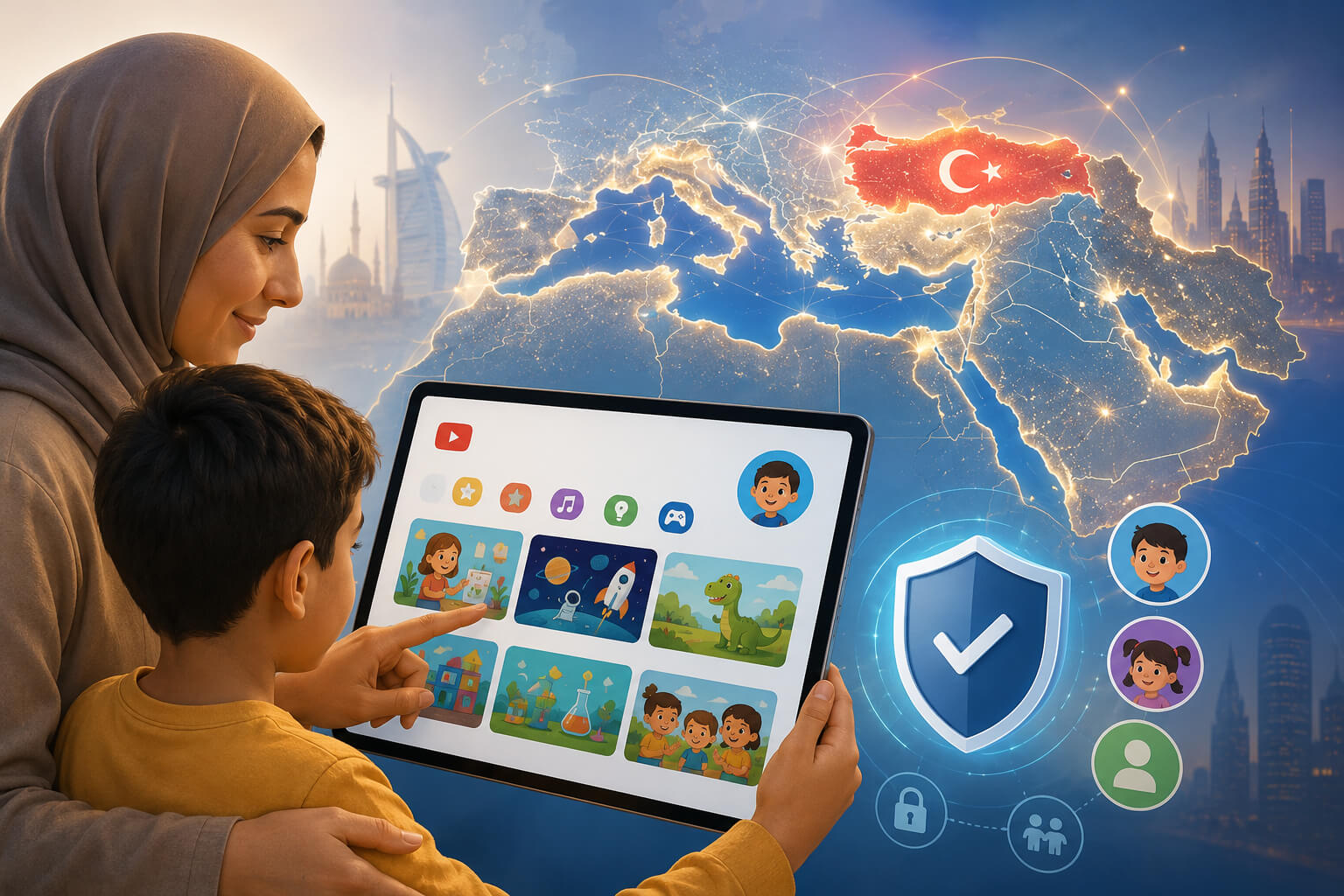
The company has expanded its supervised kid account options to the Middle East, North Africa, and Türkiye, bringing a wider set of parental controls to younger users in the region. The feature is available through YouTube’s Family Center and is designed to sit alongside the platform’s existing protections for teen users.
YouTube Gives Parents More Control Over Kids’ Viewing
The main idea is simple. Parents can now choose what kind of YouTube experience is suitable for their child.
Through supervised kid accounts, parents can select from three content settings. These settings decide what level of videos a child can access inside the app. YouTube says the options are broadly aligned with international content ratings, which should make the system easier for parents to understand without needing to inspect every video manually.
This is not a full lockbox. Kids are still using YouTube. But the experience is more controlled, more filtered, and more clearly managed by the parent.
For families in MENA and Türkiye, that matters. YouTube is already a major place for education, entertainment, music, cartoons, tutorials, and creator-led learning. The challenge has always been the same: how do you let children explore without handing them the entire open platform?
Shorts Gets Its Own Timer
One of the more important additions is a Shorts feed timer.
Parents will be able to manage how long their children spend scrolling YouTube Shorts. That is a small feature on paper, but a very practical one. Short-form video is designed to keep people watching, and children are not exactly known for putting the phone down after “one more video.”
YouTube added a similar Shorts timer option to U.S. teen accounts in April, after introducing supervised kid accounts in the U.S. earlier this year. Now that same direction is moving into more markets.
Comments, Creation, and Ads Are Also Restricted
YouTube’s supervised kid accounts also include controls over whether a child can create content or write comments.
That part is important because online safety is not only about what children watch. It is also about how they interact, who can respond to them, and whether they are being pushed into public participation too early.
Another key detail: child accounts will not receive targeted ads.
That will likely be welcomed by parents, especially as regulators and advocacy groups continue to question how social platforms handle young audiences.
YouTube Is Trying to Avoid the “Ban Kids From Social Media” Debate
This expansion also comes at a time when governments are taking a harder look at children’s access to social platforms.
YouTube’s position is clear enough. The company does not want the answer to be simple exclusion. It argues that digital literacy and age-appropriate tools are better than blocking young people from online spaces entirely.
That sounds neat in a company statement. Real life is messier.
Parents want their children to learn, explore, watch lessons, enjoy cartoons, and use digital platforms safely. At the same time, many parents are tired of addictive feeds, algorithmic rabbit holes, unsafe comments, and content that feels too mature too quickly.
YouTube is trying to sit in the middle of that tension.
Why This Rollout Matters
YouTube remains one of the most widely used platforms among younger audiences. A Pew Research study cited by Social Media Today found that around 90% of U.S. teens aged 13 to 17 use YouTube, making it the most popular app among that age group.
That kind of reach brings pressure.
When a platform becomes part of childhood, entertainment, homework, language learning, and family routines, parental controls stop being a side feature. They become part of the product’s basic responsibility.
The MENA and Türkiye rollout shows YouTube is expanding its child safety strategy beyond the U.S. and into regions where local education and family-focused creators already have strong audiences.
YouTube Wants Kids Protected, Not Cut Off
YouTube says its supervised kid accounts were developed with independent child development specialists and are meant to create age-appropriate experiences that protect children in the digital world, rather than from it.
That line probably sums up the whole strategy.
YouTube does not want parents to leave the platform. It wants them to feel more comfortable letting children use it.
Whether these controls are enough will depend on how well they work in daily use. Parents will care less about the announcement and more about whether the settings actually reduce unwanted content, limit endless Shorts scrolling, and make YouTube feel less risky for younger viewers.
For now, YouTube is giving families in MENA and Türkiye more tools. Not a perfect solution. But a stronger set of controls than before.
