

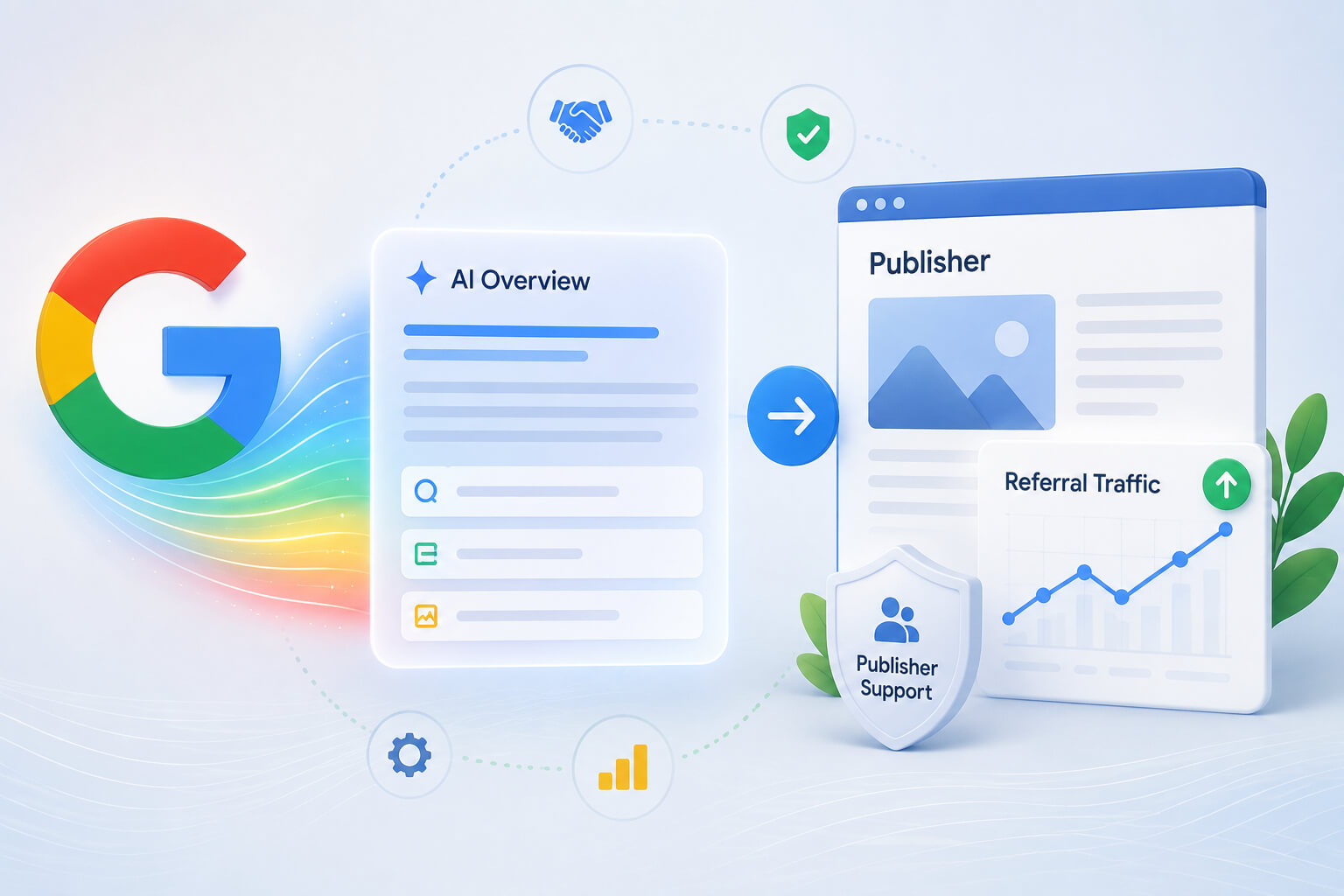
Google is taking new steps to address publisher concerns about the impact of AI Overviews on referral traffic from Search.
With Google Search increasingly infused with artificial intelligence, publishers, website owners and SEO pros are watching closely. They want to see how AI-generated summaries affect clicks, impressions and visibility of content.
AI Overviews are designed to provide users with quick answers in search results. But many publishers worry that if users can get what they need without clicking through to a website, referral traffic could decline.
Now, Google is launching new tools and options that aim to keep referral traffic coming. These tools give publishers more control over how their content appears in generative AI search features.
Google Adds More Links Inside AI Summaries
One of the most significant changes Google is making is adding more inline links inside AI-generated responses.
These links are intended to help users more easily visit the websites that support or expand on the information in AI Overviews. Additionally, Google has added website previews and is testing new link designs to make sources more visible and useful in AI-powered search results.
The update seems to be part of Google’s efforts to balance AI-generated answers with the needs of publishers that rely on Search traffic.
The move could create more opportunities for website owners to get clicks from AI-generated results. However, the actual outcome will vary by query and prominence of the sources.
Preferred Sources Give Users More Control
Google has also announced Preferred Sources for AI Overviews.
This feature gives users a voice in what sources they want to see more of in AI-powered search experiences. For publishers, this could also create new opportunities to build loyalty with audiences and encourage repeat visibility in Google Search.
If users regularly select trusted publishers or websites as preferred sources, those brands may gain an advantage. This advantage will matter in AI search environments where visibility is becoming more competitive.
New Publisher Controls for AI Search
Google is also adding new controls that allow website owners to withhold their content from AI search features, including AI Overviews.
The move follows action from the United Kingdom’s Competition and Markets Authority, which said publishers should have effective tools to prevent their content from being used to power AI features in Search.
Google says websites that opt out of AI search features will not receive traffic or impressions from those generative AI features. The company also says these controls will not be used as a ranking signal for standard search results outside generative AI Search.
This gives publishers more control, but it also creates a difficult decision. Opting out may prevent content from being summarized in AI results. However, it could also reduce visibility in one of the fastest-growing areas of Google Search.
Search Console Will Show AI Search Insights
Google is also rolling out new Search Console insights for website owners.
These insights will show data about how pages appear in generative AI Search features. According to Google, the new reporting will include impressions data. It will also include information about which pages appear in AI responses and in which countries.
This could become a key tool for publishers and SEO teams to understand the impact of AI Overviews on visibility, content performance and referral traffic.
As AI Search becomes more common, reporting tools will be essential for measuring whether content is being surfaced, clicked, or replaced by AI-generated summaries.
Publishers Remain Concerned About Search Traffic
The changes come as many publishers continue to raise concerns about declining referral traffic from Google.
Google has said that total organic click volume from Search has remained relatively stable year over year. The company adds that click quality has increased. However, some outside reports have suggested that news publishers have experienced major declines in Google referrals.
This difference underscores the uneven impact AI Overviews could have. Some websites could benefit from a visibility boost from AI results. Meanwhile, others could lose traffic if users are able to find enough information on the search results page.
News publishers in particular may face added pressure, as their content often involves providing quick answers to time-sensitive questions that can be readily summarized by A.I. systems.
SEO Is Changing as AI Search Grows
Google’s latest updates make one thing clear: SEO is moving into a new phase.
Traditional search optimization is no longer just about ranking in blue links. Publishers need to think about how AI Overviews present their content. They should also evaluate whether AI mentions their brand, displays their links prominently, and encourages users to click through.
As a result, content strategies may need to focus more on authority, originality, first-hand reporting, expert analysis, and brand trust.
Websites that publish generic or easily summarized content may face greater pressure. Meanwhile, publishers that offer unique insights, data, reporting, or analysis may gain more visibility in AI-driven search results.
Why It Matters
Google’s overviews of AI are transforming how people search for information online.
This shift could have implications for traffic, revenue, audience growth and content strategy for publishers, bloggers, marketers and social media news platforms. If more and more users are getting answers from Google, publishers may have to work harder to get clicks and build direct connections with readers.
The new tools provide website owners with more control and more data, but also highlight the growing challenge of competing in an AI-first search environment.
The key message for brands and publishers: visibility in Google Search is no longer just about ranking. It’s also about being cited, trusted, selected and clicked in AI-powered results.
