

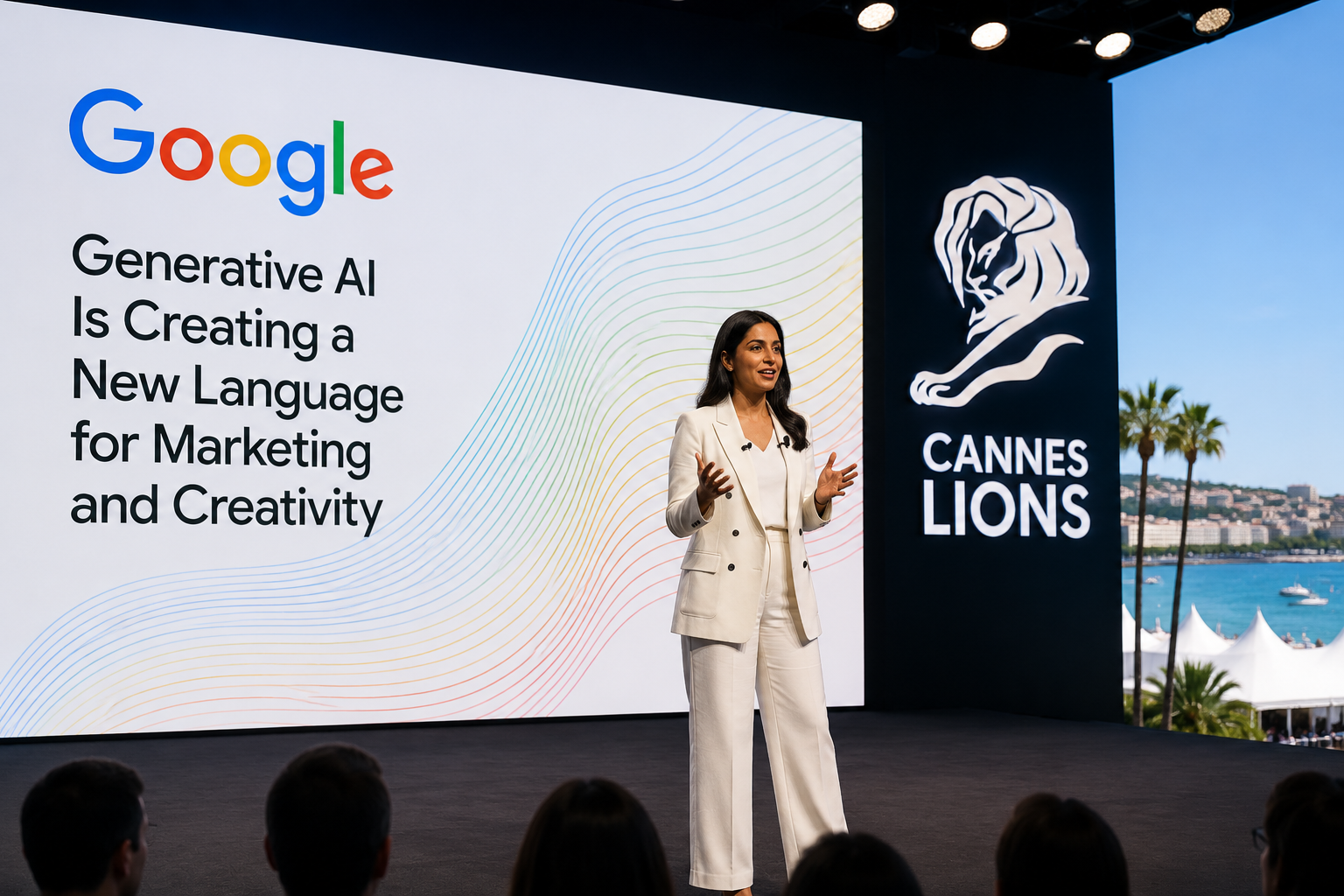
Generative AI is no longer just a tool for speeding up repetitive marketing tasks. According to Google’s Laura O’Connell, Head of U.S. Agency Partnerships for Independent Agencies, the technology is beginning to reshape how brands, agencies, and creators think about the future of advertising.
Speaking at Cannes Lions 2026, O’Connell said generative AI is the beginning of a new creative language for the marketing industry. Marketers are no longer simply using AI to automate basic workflows, but are being encouraged to ask a bigger question: what can this technology make possible that was difficult or impossible before?
That shift could have major implications for advertising, brand storytelling, and creative production.
Google Compares AI’s Creative Shift to Early Cinema
O’Connell compared today’s AI moment to the early days of filmmaking. When cinema was born, the creators had to invent techniques that we now take for granted, such as close-ups, jump cuts and camera shots on the move.
Marketers are still learning the creative grammar of generative AI. The industry is experimenting with new formats, new workflows and new ways of developing campaigns that marry machine-generated ideas with human judgment.
For brands, that means AI should not be treated as a shortcut. It can also be a creative partner, helping teams explore more concepts, try ideas faster, and build campaigns with more flexibility.
Why Human Taste Still Matters in AI-Driven Marketing
One of the key messages from O’Connell’s comments is that human creativity is not going anywhere. As AI does more of the technical work, human taste, judgment and strategy become that much more important.
AI can generate many iterations of an image, an ad, a headline or a concept for a video. But people still make the decisions about what feels right for the brand, what resonates with the audience and what message deserves to be heard.
This makes creative direction a vital skill in the AI era. Marketers will need to better direct AI systems with sharper prompts, more brand knowledge and better editorial judgment.
Creative Assets Could Require More Testing Budget
One other big takeaway from the discussion is the role of creative assets in driving business results. O’Connell noted that creative work can be responsible for a large share of incremental sales, yet brands often spend far more time and money testing media placement, targeting, and distribution.
Generative AI could change that imbalance.
Marketers can use AI tools to make more creative variants for less money. This makes it easier to test various visuals, messages, calls to action, and styles of campaigns before a bigger launch.
This could open the door to a more data-driven creative process for advertisers, whereby campaigns are created not just faster, but smarter.
What This Means for Brands and Agencies
The rise of generative AI in marketing could change the dynamic between agencies and brands. Agencies may use AI to speed up brainstorming, personalize content, and create more campaign variants. Brands may use the technology to test creative ideas earlier and refine messaging before committing to significant media spends.
But the biggest advantage could go to teams that know how to combine AI output with human insight. The winners may be the marketers who understand both technology and storytelling.
AI content generation can churn out more stuff, but good marketing is still about strategy, originality and emotional connection.
The Future of AI in Advertising
The message from Google at Cannes Lions 2026 is part of a bigger trend: AI is becoming a part of the creative foundation of modern marketing. The technology is not just changing how ads are made. It is changing how marketers think about ideas, experimentation and performance.
As generative AI continues to evolve, brands will have more tools to create, test and personalize creative work. But the human role will be critical.
The future of marketing may not be AI replacing creativity. It may be AI expanding what creative teams are able to imagine, produce, and measure.
Key Takeaway
Generative AI in marketing is entering a new stage. It’s not just automating tasks, it’s helping brands and agencies to create a new creative language. The challenge for marketers now is to learn how to use AI not just to work faster, but to create better, smarter and more effective campaigns.
