

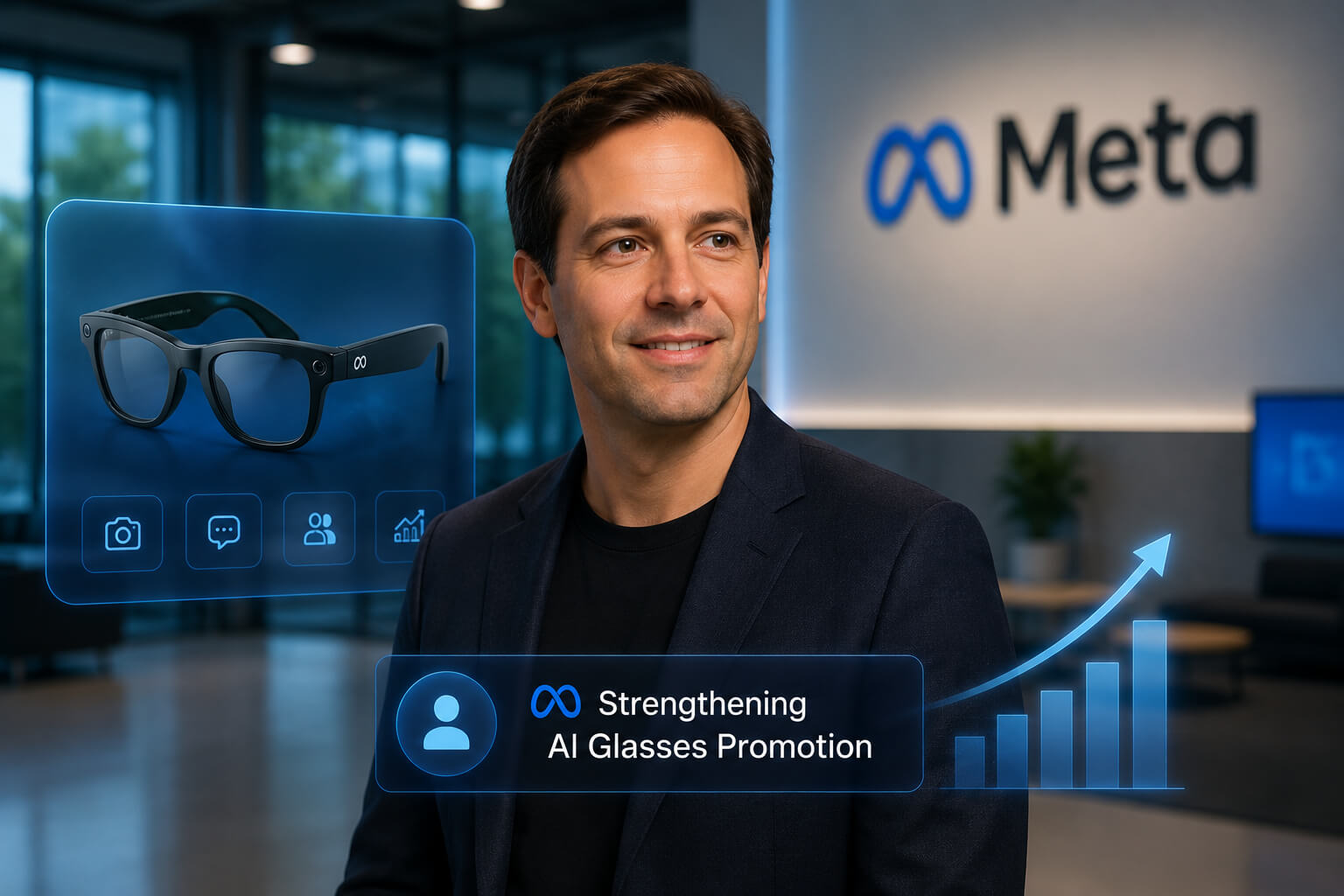
Meta is making a bigger push into wearable artificial intelligence, and its latest hire suggests that creators, celebrities, and high-profile influencers could play a major role in that strategy.
The company has reportedly hired Jim Shepherd, Snap’s former director of global content partnerships, to help increase visibility for Meta’s AI-powered smart glasses. Shepherd previously worked on talent and content relationships at Snap, where he helped connect the platform with celebrities, creators, musicians, athletes, and other influential figures.
Now, Meta appears to be bringing that experience into its growing AI wearables business.
Meta Turns to Creator Influence for AI Glasses Growth
Meta’s Ray-Ban smart glasses have become one of the company’s most important consumer AI products. The glasses allow users to capture photos and videos, take calls, listen to audio, and interact with Meta AI through a wearable device.
By hiring a former Snap partnerships leader, Meta may be looking to make the product more visible in everyday social content. If more celebrities and creators are seen using Meta AI glasses, the company could build stronger consumer awareness and make the device feel more mainstream.
This approach mirrors a familiar social media playbook: when influential people adopt a product publicly, audiences often become more curious about how it works and why it matters.
Why This Hire Matters for Meta’s AI Strategy
Meta has invested heavily in artificial intelligence, and the company is under pressure to show how its AI tools can become useful, popular, and profitable. While AI chatbots and image tools are now common across platforms, wearable AI gives Meta a different way to bring its technology into users’ daily lives.
Smart glasses could become a bridge between social media, AI assistants, and augmented reality. Instead of opening an app, users can access AI features directly through a device they wear.
That makes promotion especially important. Many consumers still need to understand why they would use AI glasses and how the product fits into their routine. Creator-led demonstrations could help answer those questions in a more natural way than traditional advertising.
Meta and Snap Are Competing in Wearable AR
The move also comes as Snap continues to explore augmented reality hardware. Snap has spent years building AR lenses and wearable technology, while Meta has been developing both AI glasses and future AR devices.
With Shepherd now joining Meta, the company gains someone who understands how Snap worked with creators and entertainment figures. That experience could be valuable as Meta tries to position its own glasses ahead of broader competition in wearable AI and AR.
AI Wearables Could Become the Next Social Media Battleground
Meta’s AI glasses are not just a hardware product. They are part of a larger shift in how social platforms may connect users with cameras, assistants, and real-time content creation.
For creators, AI glasses could make it easier to capture first-person video, share behind-the-scenes moments, and interact with audiences in new ways. For Meta, this could help keep users connected to its ecosystem across Facebook, Instagram, WhatsApp, and future AI services.
The challenge is convincing everyday users that wearable AI is useful, stylish, and worth adopting. That is where celebrity partnerships and creator campaigns could make a major difference.
What Comes Next
Meta’s decision to bring in a former Snap content partnerships executive shows that the company is taking promotion of its AI glasses seriously. The next phase may focus less on explaining the technology and more on showing how influential people use it in real life.
If Meta can turn its AI glasses into a creator-friendly social media tool, the product could become a major part of the company’s broader AI strategy.
For now, the hire signals one clear direction: Meta wants its AI glasses to become more visible, more culturally relevant, and more connected to the people who shape online trends.
