

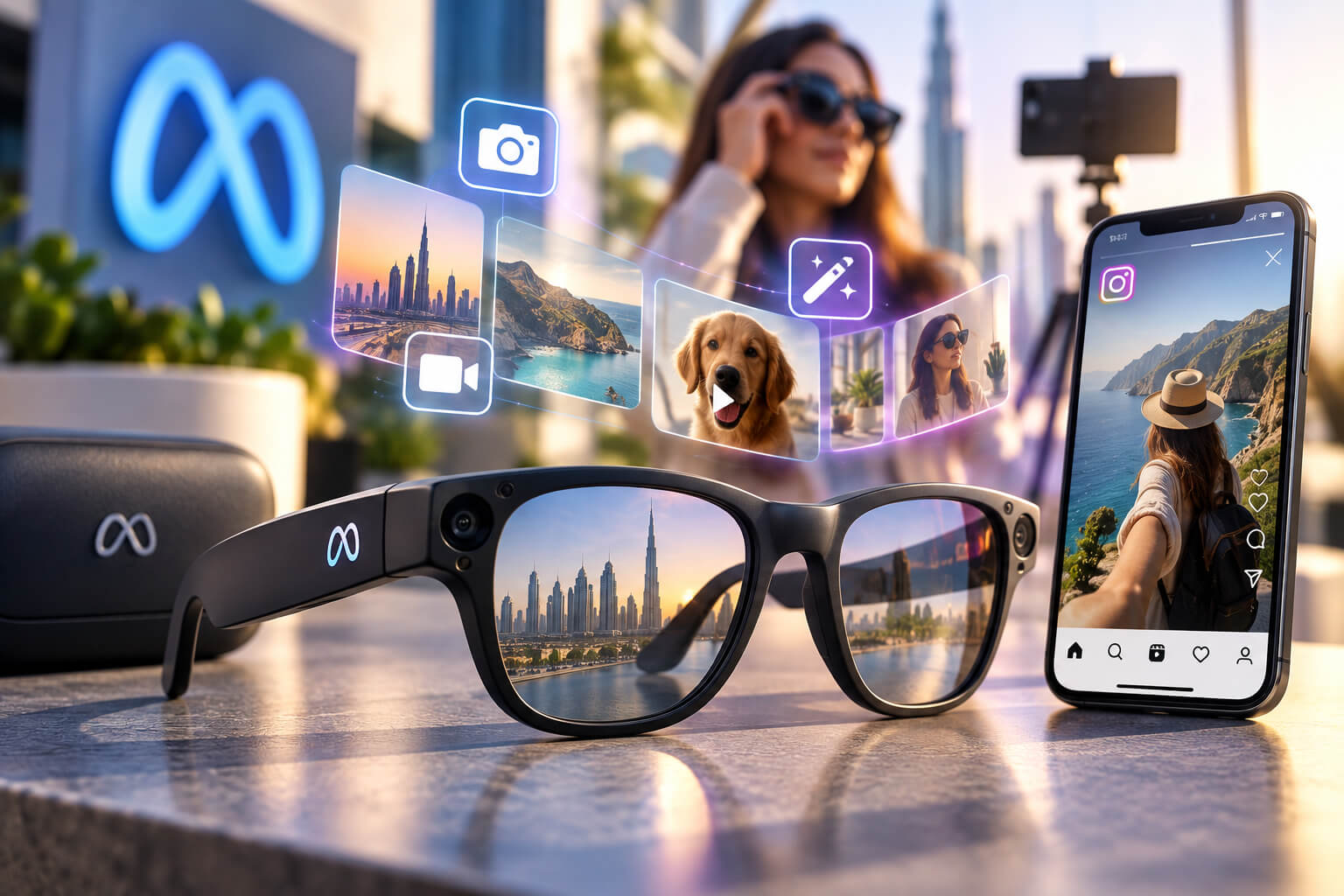
Meta is giving creators another reason to look beyond the smartphone camera. The introduction of Meta AI glasses creation tools is set to open new creative possibilities.
The company has been showcasing content creation features built around its AI-powered glasses, including unusual video perspectives, synchronized phone-and-glasses footage and editing tools that connect directly with Instagram.
Meta recently highlighted these capabilities as part of a broader push to make AI glasses feel less like experimental hardware and more like a practical content creation device. For creators, that shift matters because wearable cameras can capture angles and moments that are harder to reproduce with a phone.
Spin View Makes AI Glasses Footage Feel More Immersive
One of the more unusual features is Spin View. Instead of watching footage through a fixed frame, viewers can rotate their phones to reveal more of the scene captured through Meta’s AI glasses. The idea is to make the content feel closer to the wearer’s actual point of view rather than simply showing a conventional rectangular video.
For creators, Spin View gives wearable footage a format that feels different from ordinary smartphone content. That difference could help Meta justify why someone would choose its glasses for recording in the first place. Rather than treating the glasses as another camera, the company is building formats that depend on the perspective and capture style of the wearable itself.
Multi-Cam Combines Smartphone and Glasses Footage
Meta is also putting more attention on Multi-Cam, which allows footage captured on a smartphone to be synchronized with video recorded through its AI glasses. This gives creators two perspectives of the same moment without requiring them to manually match separate recordings afterward.
The feature could be particularly useful for travel, sports, cooking, demonstrations, events and behind-the-scenes content. A creator can record the wider scene with a phone while the glasses capture a first-person perspective at the same time. That makes multi-angle production easier without requiring a complicated camera setup.
Instagram Editing Tools Bring Wearable Footage Into the Same Workflow
Meta is not treating its AI glasses as a standalone camera system. Instagram also includes editing options designed specifically for content captured through the wearable, allowing users to work with that footage inside a familiar publishing environment.
That integration is important because Meta already has a massive creator ecosystem inside Instagram. Instead of asking users to learn a new platform or editing workflow, the company can place AI-glasses features directly inside a social app where creators already publish Stories, Reels and other visual content. The easier that process becomes, the more likely creators may be to experiment with wearable footage.
Instagram Is Becoming a Showcase for Meta’s AI Glasses
Meta has an advantage that most camera companies do not have. It controls both the hardware and the social platforms where much of the content could eventually be published.
By developing specialized formats such as Spin View and Multi-Cam, then integrating them into Instagram, Meta can make wearable footage stand out inside its own ecosystem. Each piece of content created with the glasses can effectively become a demonstration of what the hardware can do.
That strategy could be more valuable than simply advertising the glasses as an AI assistant. Social content gives potential buyers a visible reason to understand the product. When creators use the glasses to produce footage that looks noticeably different from standard smartphone video, the hardware becomes easier to explain.
Creator Use Cases Could Become a Major Selling Point
The strongest argument for AI glasses may not be artificial intelligence alone. For creators, hands-free recording could be just as important.
First-person footage works naturally for travel, events, tutorials, sports, food preparation and lifestyle content because creators can record without constantly holding a phone. The result can feel more spontaneous and less staged, particularly in situations where using a smartphone would interrupt the moment.
That does not mean smartphones are going away. The more realistic possibility is that glasses become another camera creators can use alongside their phones, especially when they want a first-person perspective or hands-free footage.
Privacy Concerns Remain Part of the Conversation
The expansion of wearable cameras also brings familiar privacy concerns. AI glasses can record from the wearer’s perspective with less visible effort than pulling out a smartphone, which raises questions about whether people nearby always know when they are being filmed.
Meta has built a capture indicator into its glasses to signal when photos or video are being recorded. Even so, wearable cameras continue to attract scrutiny around consent, public recording and the social norms that will develop as these devices become more common.
Those concerns could become more significant if creators begin using the glasses more frequently for public-facing content. Better recording tools may make the product more attractive, but they also put more attention on how and where wearable cameras are being used.
Meta Wants AI Glasses to Become Another Social Media Camera
The bigger story is not just that Meta has added a few new creation features. The company appears to be building a content ecosystem around wearable cameras.
Spin View gives the footage a more interactive feel. Multi-Cam makes it easier to combine first-person and smartphone perspectives. Instagram editing tools shorten the gap between capturing a moment and publishing it.
Taken together, the features suggest Meta wants its AI glasses to become part of the normal social media creation toolkit. They are no longer being positioned only as an AI assistant that happens to include cameras. Meta is increasingly treating them as a new way to shoot social content.
Whether creators embrace that idea at scale is still uncertain. But Meta is clearly trying to make the glasses useful for something people already understand very well: making content for Instagram.
Sources
Social Media Today — Meta Highlights Creation Tools for AI Glasses
https://www.socialmediatoday.com/news/meta-highlights-creation-tools-for-ai-glasses/830238/
Meta — Meta AI Glasses Updates and Features
https://about.fb.com/
