

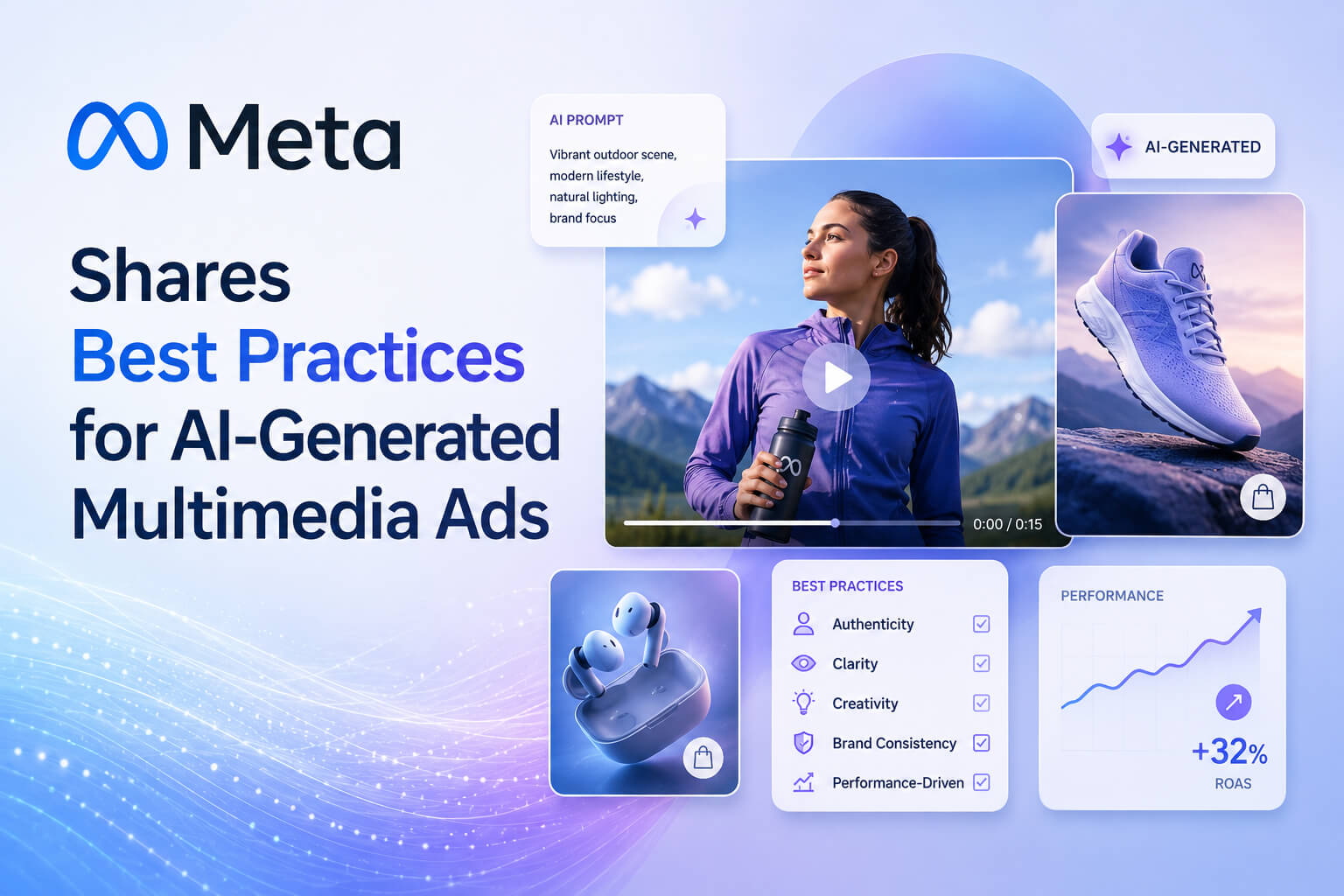
Meta is continuing to expand its use of artificial intelligence in advertising, and its latest guidance gives marketers a clearer look at how to get better results from AI-generated multimedia ads.
The company is encouraging advertisers to use its updated creative workflow in Meta Ads Manager, where brands can upload multiple images and videos into a single ad setup. Meta’s system can then use those assets to generate different ad variations, match them to placements, and deliver the versions most likely to perform with specific audiences.
Meta Wants Advertisers to Give AI More Creative Options
One of Meta’s main recommendations is simple: provide more creative assets.
With Meta’s multi-media ads, advertisers can upload up to 10 images and videos into one ad. These assets can include different formats, such as square images, vertical videos, and multiple creative versions using the same aspect ratio.
Instead of building separate ads for each placement or audience, marketers can allow Meta’s AI-powered delivery system to decide which combination of assets should appear across Facebook, Instagram, Reels, Stories, Feed, and other supported placements.
For brands, this could reduce the time spent manually creating several ad versions while giving Meta more material to test and optimize.
How AI-Generated Multimedia Ads Work
Meta’s AI ad tools are designed to analyze the creative assets provided by advertisers and generate multiple versions of an ad campaign. These variations may be adapted for different placements, audiences, and content formats.
For example, a brand could upload a mix of product photos, short videos, and vertical creatives. Meta’s system can then determine which assets are best suited for each environment and serve them where they are most likely to drive engagement or conversions.
Advertisers still have control over key campaign elements. Meta says marketers can manually adjust details such as cropping, text, destination URLs, and placements when needed.
This means brands can combine AI-powered automation with human review, giving them flexibility while still benefiting from Meta’s optimization tools.
Why This Matters for Social Media Advertisers
The update reflects a bigger shift in digital advertising: platforms are moving toward automated creative testing and AI-assisted campaign delivery.
For small businesses, creators, agencies, and large brands, Meta’s latest ad tools could make it easier to test more creative ideas without building each version manually. This may be especially useful for advertisers that need to run campaigns across multiple formats, including video-first placements like Reels and Stories.
The more creative inputs advertisers provide, the more opportunities Meta’s system has to identify winning combinations. This could help improve ad performance, particularly as competition for attention continues to grow across social platforms.
Meta’s AI Ad System Is Becoming More Important
Meta has been investing heavily in AI-powered advertising tools, using machine learning to improve targeting, placement, creative generation, and delivery. The company has also pointed to AI improvements as one reason its ad performance has strengthened in recent years.
For advertisers, this means campaign success may increasingly depend on how well they work with Meta’s automation tools. Rather than relying only on manual ad creation, brands may need to build creative libraries that give AI systems enough variety to test and optimize effectively.
Best Practices for Using Meta’s AI-Generated Multimedia Ads
Advertisers testing Meta’s AI-generated multimedia ads should consider the following best practices:
1. Upload a mix of images and videos
Using both images and videos gives Meta more flexibility when matching ads to placements. Since different users respond to different formats, a varied creative set can help improve delivery opportunities.
2. Include multiple aspect ratios
Brands should upload creative assets in different sizes, including square and vertical formats. This helps Meta adapt campaigns for feeds, Stories, Reels, and other placements without forcing one format to fit every space.
3. Test different creative angles
Advertisers can include multiple versions of the same message, such as product-focused creatives, lifestyle visuals, promotional offers, or benefit-led messaging. This gives Meta’s system more options to determine what resonates with each audience.
4. Review AI-generated variations before scaling
While automation can save time, advertisers should still review campaign outputs to make sure the ads match brand guidelines, messaging goals, and landing page expectations.
5. Compare AI-assisted results with manual campaigns
Brands may want to test Meta’s AI-generated multimedia ads against traditional manually created campaigns. This can help marketers understand whether Meta’s automated creative workflow improves performance for their specific audience and objectives.
What Marketers Should Watch Next
Meta’s latest guidance shows that AI is becoming a bigger part of social media advertising. The ability to upload multiple assets and let the platform generate optimized ad variations could become a standard part of campaign planning.
However, the best results will likely come from advertisers that combine strong creative strategy with Meta’s automation tools. AI can help test and distribute content, but brands still need clear messaging, high-quality visuals, and a strong understanding of their target audience.
As Meta continues to expand its AI ad features, marketers should expect more tools that automate creative production, campaign testing, and delivery optimization across Facebook and Instagram.
For now, AI-generated multimedia ads offer advertisers a new way to scale creative testing and improve campaign efficiency inside Meta Ads Manager.
