

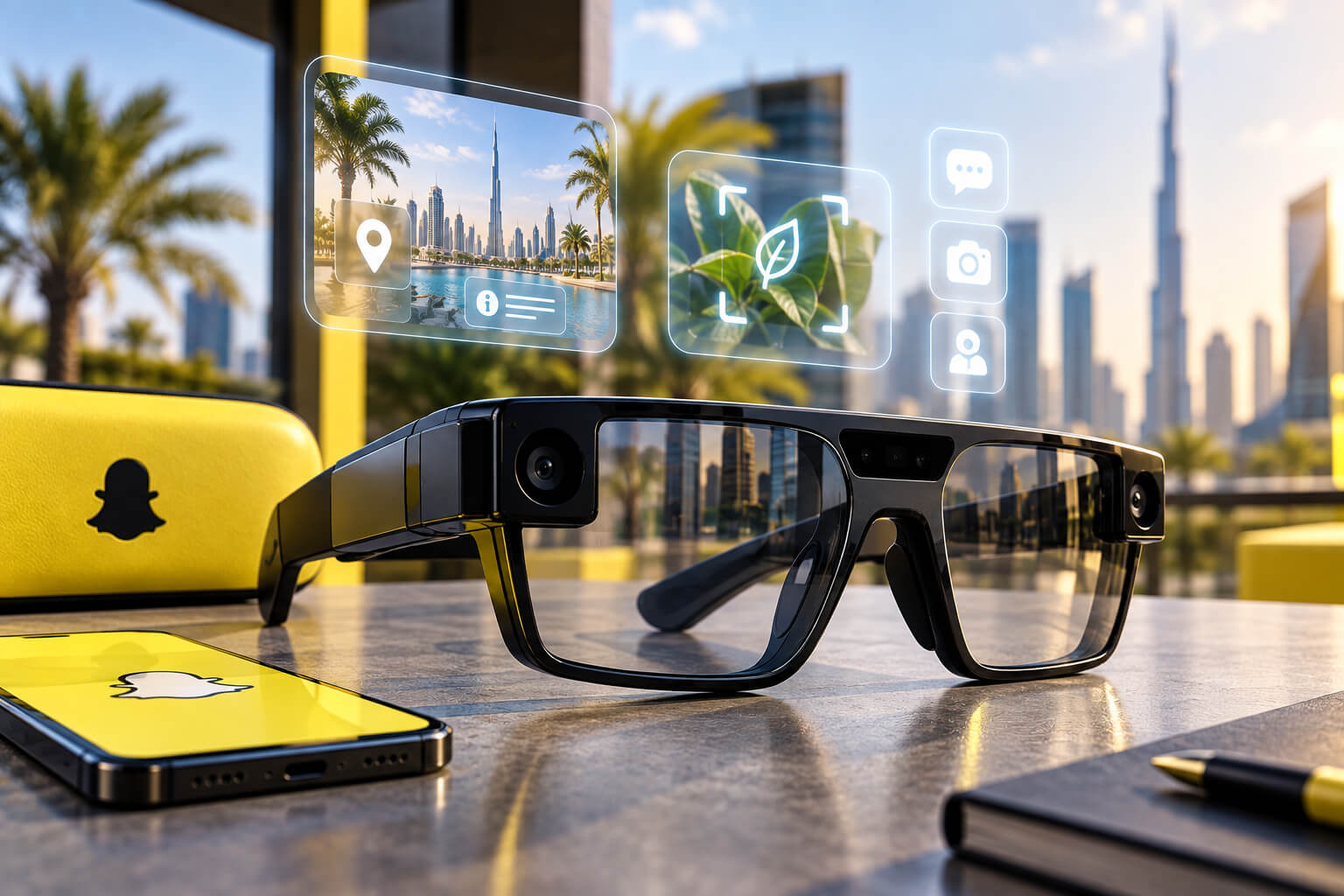
Snap is finally putting its long-running augmented reality bet in front of consumers.
The company has launched SPECS, its standalone augmented reality glasses, with a price tag of $2,195. This is not another simple camera accessory for Snapchat. Snap is pitching SPECS as a wearable computing platform that combines augmented reality, artificial intelligence, communication and digital tools inside a pair of glasses.
It is an ambitious jump. The price makes it an interesting one, too.
Snap has spent years experimenting with AR hardware. SPECS represent its clearest attempt yet to move augmented reality beyond the smartphone screen and into everyday life.
Snap SPECS Bring Augmented Reality Into the Real World
SPECS use transparent displays to place digital information and virtual objects directly into the wearer’s surroundings. The glasses provide a 51-degree field of view and contain their computing hardware within the device. That means users do not need to carry a separate computing puck to power the main experience.
Snap has also designed SPECS around natural interaction. Users can control experiences through their hands and voice instead of constantly reaching for a smartphone. Digital content can appear alongside physical objects, while apps can react to what is happening around the wearer.
That approach gives Snap a much bigger goal than simply creating smarter sunglasses. The company wants SPECS to function as another type of personal computer, only one that sits directly in front of the user’s eyes.
SPECS Intelligence Adds an AI Layer
Artificial intelligence plays a major role in Snap’s new hardware strategy. The company introduced SPECS Intelligence, an AI service built to provide contextual assistance based on information users choose to connect with the system.
Instead of relying entirely on traditional prompts, SPECS Intelligence aims to anticipate useful information. Before a meeting, for example, the glasses could surface relevant reminders or questions. When a trip approaches, the system could help organize plans and identify possible scheduling conflicts.
That makes the AI experience more proactive than a standard chatbot sitting inside an app. Snap wants the assistant to work alongside the wearer throughout the day, providing information when it becomes useful rather than waiting for someone to open a separate application.
Snapchat Gets a Hands-Free SPECS Experience
Snapchat remains a major part of the product. Snap has redesigned parts of its social platform specifically for SPECS, giving users new ways to capture moments and communicate without holding a smartphone.
Wearers can take a Snap using a finger-snapping gesture. Hands-free video calling also allows another person to see what the SPECS wearer is seeing. The result is a more first-person style of communication than a traditional smartphone video call.
Snap is also bringing Connected Lenses into the experience. Multiple SPECS users can interact with the same augmented reality content while standing in a shared physical space. Experiences such as virtual Chess, Dominoes and Table Tennis show how Snap could turn AR into something social rather than keeping it limited to individual users.
Real-Time Translation and Navigation Come to SPECS
SPECS are also designed for practical everyday situations. Real-time translation can place translated subtitles directly into the wearer’s view, with Snap saying the technology supports 60 languages.
Navigation works in a similar way. Instead of repeatedly checking a phone for directions, users can see navigation information integrated into their surroundings. A Tripadvisor experience can also help people discover restaurants and landmarks while providing tools such as phrase translation and currency conversion.
These features give Snap a practical argument for AR glasses. Filters and games may attract attention, but navigation, translation and local discovery could give people reasons to use the hardware when travelling or exploring unfamiliar places.
Snap Turns SPECS Into a Virtual Workspace
Snap is not limiting SPECS to entertainment and social communication. The glasses can connect wirelessly to a computer and create virtual displays around the wearer, turning the surrounding space into a digital workspace.
Users can interact with documents, brainstorm using virtual whiteboards and connect Bluetooth accessories such as keyboards. Instead of relying on several physical monitors, SPECS can place digital screens within the user’s field of view.
Entertainment fits into the same idea. Snap says users can access services such as YouTube and HBO Max through the SPECS browser and watch them on a large virtual display. The company compares the viewing experience to looking at a 115-inch screen from roughly 10 feet away.
Shopify Brings AR Shopping to Snap SPECS
Shopping is another area Snap wants to bring into augmented reality. Through the Shopify Catalog, SPECS users can explore products in 3D and place digital versions of selected items into their physical surroundings.
Furniture provides an obvious example. Instead of trying to imagine whether a product fits a room, someone could view a full-scale digital version of the item in that space before making a purchase.
Snap has experimented with AR commerce through Snapchat for years. SPECS take that idea away from the phone display and place the shopping experience directly into the environment around the customer.
NBA and WNBA Partnerships Expand AR Sports
Sports are also becoming part of Snap’s SPECS ecosystem. The company is working with the NBA and WNBA on augmented reality basketball experiences that can bring training exercises and interactive guidance into physical spaces.
Rather than watching instructions on a separate screen, athletes could see digital guidance while actually moving through a drill. Snap is exploring similar possibilities around soccer and golf.
The concept shows how AR could blend digital coaching with real-world activity. It also gives Snap another way to demonstrate that SPECS can handle experiences beyond messaging, entertainment and social media.
Snap Sees SPECS as an Enterprise Device Too
Businesses are part of Snap’s strategy from the start. The company is working with technology partners including Salesforce, Amazon Web Services, NVIDIA, Trifork and Hololight to explore enterprise applications for the glasses.
Workers could potentially use SPECS to access instructions or operational information while keeping their hands free. Retail employees could view product information while helping customers, while industrial workers could access guidance without repeatedly checking another device.
The enterprise market could become especially important because SPECS carry a premium price. Companies may find it easier than individual consumers to justify the cost when the glasses solve a specific workplace problem or improve productivity.
The $2,195 Price Could Be SPECS’ Biggest Challenge
The technology may be impressive, but $2,195 is still a serious asking price for a new consumer wearable.
At that level, Snap is competing for money that could otherwise buy a premium laptop, smartphone or several other devices. Social Media Today also highlighted questions around the size and weight of the glasses, factors that could matter considerably if Snap expects people to wear them for extended periods.
Snap knows hardware adoption can be unpredictable. Its original Spectacles generated considerable attention after arriving in 2016, but demand eventually cooled and left the company with excess inventory.
The new SPECS are dramatically more advanced than those early camera glasses. They are also much more expensive. Convincing consumers that augmented reality deserves a place in their daily routine may prove just as important as the technology itself.
Snap Has Spent Years Building Toward SPECS
SPECS are the result of a long hardware experiment rather than a sudden shift in strategy. Snap says it has spent 11 years and more than $3 billion pursuing its augmented reality vision.
The journey started with camera-equipped Spectacles before expanding into increasingly advanced AR hardware and developer-focused devices. At the same time, Snapchat became one of the biggest consumer platforms for AR Lenses, giving Snap years of experience with how people interact with digital objects through a camera.
SPECS bring those efforts together. Snap now wants to move the AR experience away from a phone held in someone’s hand and place it directly within the person’s surroundings.
SPECS Push Snap Deeper Into the AI Wearables Race
Smart glasses are changing quickly as artificial intelligence becomes a bigger part of wearable technology. Cameras and speakers are no longer enough. Companies are increasingly exploring assistants that can understand context, translate conversations, answer questions and provide information without forcing users to pull out a phone.
Snap is approaching that market from a different direction. Its biggest strength remains augmented reality, and SPECS combine that AR foundation with AI, social communication and spatial computing.
The hardware is still relatively bulky. The $2,195 price will narrow the potential audience. Those realities make mainstream adoption far from guaranteed.
Still, SPECS show exactly where Snap believes computing is heading. The company no longer sees augmented reality as something that should remain trapped inside a Snapchat Lens.
It wants AR sitting in front of users throughout the day.
Snap has opened SPECS pre-orders in the United States, United Kingdom and France, with shipments expected to begin later in fall 2026.
Sources
Social Media Today — Snap Launches AR Specs
https://www.socialmediatoday.com/news/snap-launches-ar-specs/830613/
Snap Inc. — SPECS Make Computing More Human with New Experiences, Partnerships, and SPECS Intelligence
https://investor.snap.com/news/news-details/2026/SPECS-Make-Computing-More-Human-with-New-Experiences-Partnerships-and-SPECS-Intelligence/default.aspx
Snap Newsroom — Snap to Launch New Lightweight, Immersive Specs in 2026
https://newsroom.snap.com/launch-specs-2026
