

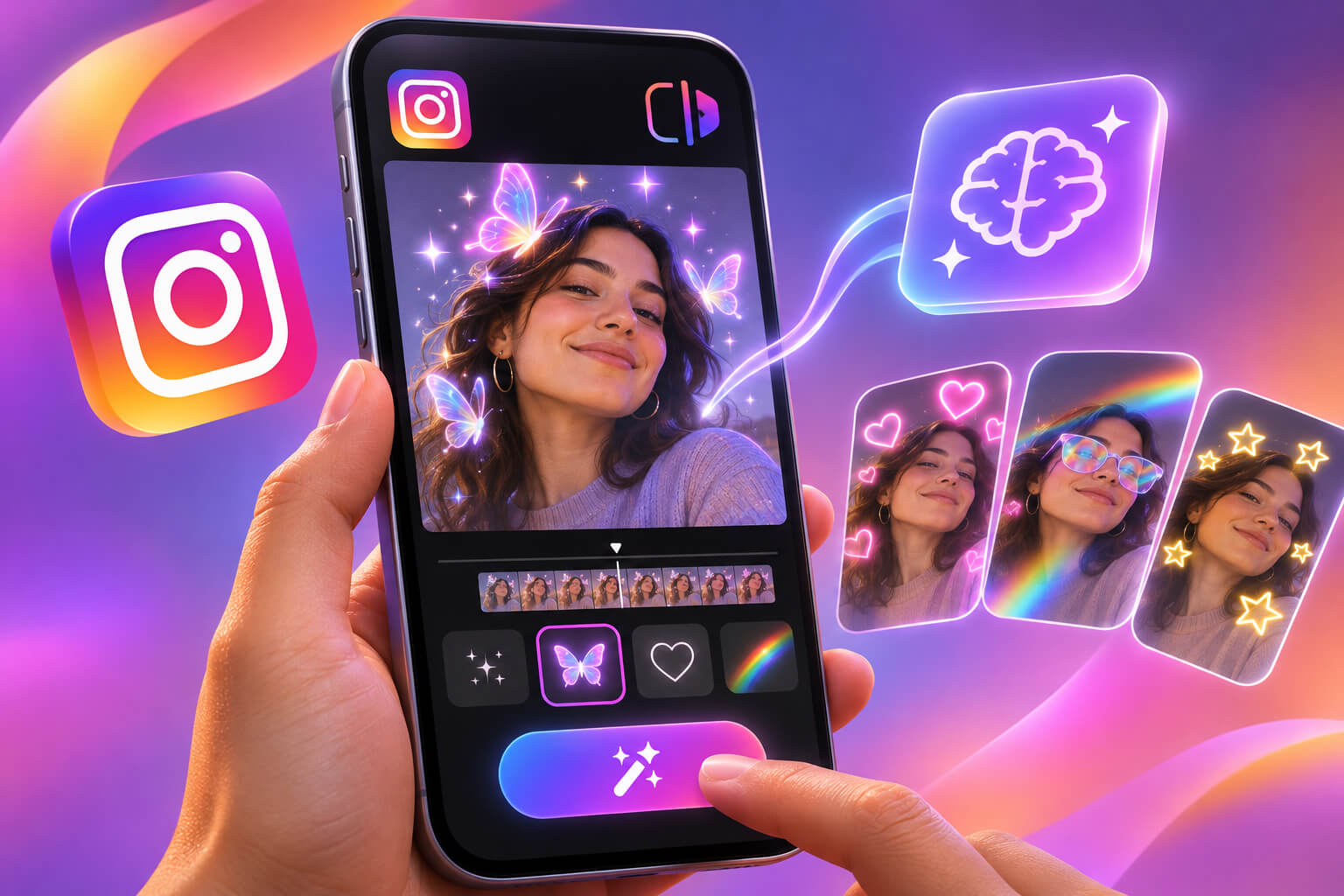
Instagram has introduced Effect Builder, a new AI-powered creative tool that allows users to design and share custom visual effects for Instagram Stories without coding or advanced design skills.
The feature, announced on November 9, 2026, expands Instagram’s Edits platform with a browser-based tool that turns simple written descriptions into visual effects. Creators can describe the appearance they want, test the results on their photos, and refine the effects before publishing them.
The tool is currently available for free to users aged 18 and older in the United States.
For Instagram, this is another attempt to make AI part of everyday content creation. Instead of asking creators to learn complicated software, Meta wants them to focus on the creative idea and let AI handle much of the technical work.
Instagram Effect Builder Lets Users Create Visual Effects With Simple Prompts
Creating custom effects for Instagram once required specialized software and technical knowledge. Developers and designers often spent considerable time building filters that other users could apply to their photos and videos.
Instagram’s new Effect Builder simplifies that process by allowing people to describe their ideas in ordinary language.
A creator could request a vintage film effect, a watercolor-inspired appearance, or a dramatic cinematic look. Meta AI interprets the description and generates a visual effect based on the instructions.
The tool also supports follow-up prompts, allowing users to make adjustments without rebuilding the effect from the beginning.
Instagram product designer Cheechee Lin explained that the company wanted to make effect creation accessible to people who previously lacked the necessary design or programming experience.
The result is a creative tool that places more emphasis on imagination than technical ability.
How Instagram’s New AI Effect Builder Works
Instagram has designed Effect Builder around a relatively simple workflow. Users can visit the web-based tool at https://edits.com/effectbuilder and enter a description of the visual style they want to create.
Meta AI then generates an effect based on that description. Creators can preview the result using their own photos, giving them an opportunity to see how the effect performs before making it available to others.
The interface includes editable elements that allow users to refine their creations. They can change their prompts, adjust the appearance, and experiment with different styles until they achieve a result they like.
Instagram also offers an AI-assisted option that expands short prompts into more detailed instructions.
The process removes much of the manual work associated with traditional effect development, although creators may still need to experiment with several prompts to achieve the desired appearance.
Once satisfied, users can submit their effects for review and potential publication.
Instagram Allows Reference Images to Guide AI-Generated Effects
Effect Builder goes beyond text-based instructions by allowing creators to upload reference images.
This feature gives Meta AI a visual example of the appearance a user wants to reproduce. The system examines elements such as color, lighting, and texture to help shape the generated effect.
For example, a travel creator could upload a photograph with warm sunset lighting and ask the tool to create a similar atmosphere. A fashion creator might use a reference image featuring muted colors and soft contrast to develop a recognizable visual style.
Reference images could be particularly useful when creators have a specific aesthetic in mind but struggle to describe it through text.
The feature also provides more flexibility for people who want their Instagram Stories to maintain a consistent appearance.
However, AI-generated results may not always match the reference perfectly. Users can continue refining their instructions and testing different variations until they find a suitable result.
Meta Reviews Custom Instagram Effects Before Public Release
Instagram is allowing creators to publish their effects for other users, but each submission must pass a safety review before becoming publicly available.
After submitting an effect, creators can monitor its review status through the Library section of Effect Builder.
Meta says the review process generally takes less than 24 hours, although approval times may vary.
Once approved, the effect appears in Instagram’s Stories effects browser, where other users can discover and apply it to their own photos.
Instagram also provides attribution to the original creator. When someone uses a published effect, the creator’s Instagram profile is linked to it.
This could give creators another way to attract attention beyond their own posts.
An effect that becomes popular may introduce its creator to people who have never visited their profile before.
While Instagram has not promised additional reach or follower growth, the attribution system creates a direct connection between shared effects and the people who developed them.
Instagram Brings Back Creator-Made Effects After Meta Spark Shutdown
The introduction of Effect Builder comes nearly two years after Meta announced the closure of its third-party augmented reality platform, Meta Spark.
Meta Spark officially shut down in January 2025, removing many creator-developed AR effects from Instagram and Facebook.
The platform had allowed designers and developers to create interactive effects, but building them often required experience with specialized software.
Effect Builder introduces a different approach.
Instead of asking users to construct effects manually, Instagram now allows generative AI to interpret creative instructions and produce visual transformations.
The new tool does not fully replace Meta Spark’s advanced AR capabilities. Its current focus is on AI-generated visual styles for Instagram Stories rather than complex interactive augmented reality experiences.
Still, it restores an important element of Instagram’s creative ecosystem: the ability for users to develop effects that others can discover and use.
Instagram Builds on Its Existing AI Restyle Technology
Effect Builder expands on Instagram’s AI Restyle feature, which the company introduced in October 2025.
Restyle allows users to modify the appearance of their Stories through AI-powered prompts. People can describe a visual transformation and let Meta AI apply the changes to their photos.
The new Effect Builder offers a more dedicated environment for developing and refining those effects.
Rather than focusing only on transforming an individual Story, the tool gives creators additional controls and a way to publish reusable effects for the wider Instagram community.
This distinction could make the feature more appealing to creators who want to experiment with different aesthetics or develop recognizable visual styles.
Instagram is also making the process more accessible through desktop browsers, where users may find it easier to work with detailed prompts and visual references.
The update reflects Meta’s continued interest in turning generative AI into a practical creative tool rather than limiting it to standalone chatbot experiences.
Instagram Expands Edits Beyond Mobile Video Creation
The launch of Effect Builder comes as Instagram continues developing Edits into a broader creative platform.
Instagram originally introduced Edits as a mobile video creation application, offering tools for recording, editing, and producing content for social media.
In November 2026, the company expanded Edits to macOS, giving creators access to a desktop editing environment.
The introduction of a web-based effects creator adds another element to that expansion.
Creators who prefer working on larger screens can now experiment with AI-generated visual effects without relying entirely on the Instagram mobile application.
Effect Builder remains a separate browser-based tool, but Meta presents it as part of the broader Edits creative experience.
The strategy suggests that Instagram wants Edits to become more than a video editor. It is gradually building a collection of tools that support different stages of content production.
What Instagram Effect Builder Means for Content Creators and Brands
Instagram’s new Effect Builder could provide additional creative opportunities for influencers, photographers, social media managers, and businesses.
Creators who want to maintain a recognizable visual identity can experiment with custom effects that reflect their preferred colors, lighting, and overall aesthetic.
The ability to publish effects also introduces another form of audience interaction.
Instead of simply watching a creator’s Story, followers can apply that creator’s effect to their own content.
For businesses, custom effects could eventually support visual branding and social media campaigns.
A fashion brand might develop a distinctive color treatment, while a travel company could experiment with effects inspired by particular destinations.
These possibilities remain subject to the tool’s availability and Instagram’s publishing requirements.
Meta has not announced a global rollout schedule, and the current release is limited to eligible adult users in the United States.
For creators outside that market, the feature is something to watch rather than a tool they can immediately incorporate into their workflows.
Instagram’s AI Effect Builder Could Make Custom Visual Effects More Accessible
Instagram’s latest creative update removes a major obstacle that previously limited custom effect development.
Users no longer need extensive design knowledge or programming experience to experiment with their own visual effects.
They can describe an idea, upload a reference image, test the result, and publish an approved effect for others to use.
The feature also creates opportunities for creators to gain visibility through effects that circulate beyond their own accounts.
There are still limitations. The tool is not available globally, and AI-generated effects may require repeated adjustments before they produce satisfying results.
But Instagram’s direction is becoming clearer.
Meta wants AI to play a larger role in how people create content, and Effect Builder brings that technology into a familiar part of the Instagram experience.
For creators who have wanted to develop their own visual effects without learning complex software, the process is now considerably simpler.
Sources
- Social Media Today – Instagram Launches Visual Effects Creator for Edits
- The Verge – Instagram’s Effect Builder Makes New Filters From AI Prompts
- The Next Web – Instagram Launches Effect Builder for Making AI Stories Filters From Text
- 9to5Mac – Instagram Effect Builder Lets You Create Images With an AI Prompt
- Digital Trends – You Can Now Create Custom Instagram Stories Effects Just by Describing Them
