

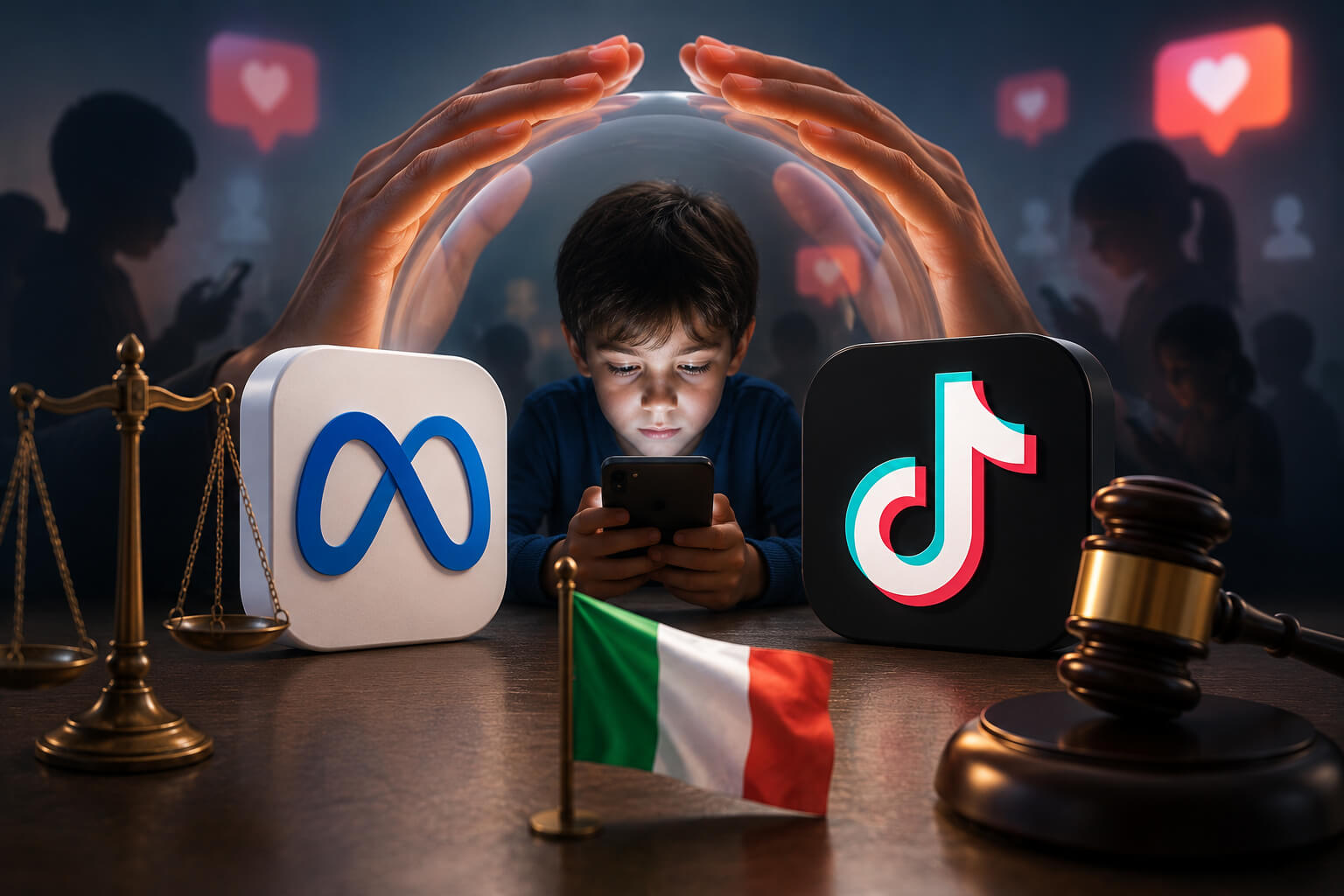
Social media companies face increasing pressure to improve protection mechanisms for children amid growing global concern regarding youth safety online. Recently, the Italy Meta TikTok minors social media lawsuit has drawn attention as a parents’ rights group in Italy has sued Meta and TikTok over alleged safety concerns connected with social platforms usage by minors.
Legal Battles Escalate in Italy Over Child Protection
The legal battle regarding online safety of minors is escalating in Italy after a parents advocacy organization sued Meta, TikTok, and other leading social media networks. The lawsuit filed in Milan court accuses TikTok, Facebook, and Instagram of inadequate age restrictions and lack of proper monitoring of children’s behavior online, which could lead to exposure to harmful algorithm-based experience.
Parent’s Organizations Demand Age Restrictions
According to the legal claims reported by sources, the Milan court will be requested to force stronger age-verifications systems for users under 14 years old based on current Italian requirements.
Apart from the enforcement of age restrictions, the lawsuit questions algorithms designed by social networks, which many criticize for being detrimental for children:
- Infinite scrolling
- Algorithm-based content recommendations
- Feed engagement algorithms
- Behavioral personalized targeting and recommendation
All such features are believed to be harmful and can influence the mental health and behavior of social media users under 14.
Global Efforts To Tighten Regulation in Social Media
The case of Milan demonstrates global efforts to impose more strict requirements for social networks in terms of child safety online. Worldwide, authorities are taking steps to regulate such aspects of social media industry as:
- Online security of children
- Impact on youth mental health
- Implementation of effective age verification methods
- Platform addiction
Recently, European Commission President, Ursula von der Leyen, announced that EU might adopt additional laws aimed at restricting social media access for young people.
Australia, France, and Greece consider or already adopted similar regulations to tighten requirements in social media industries.
Increased Scrutiny of Meta and TikTok
Both companies already received increased attention from authorities regarding child safety violations. In recent times, Meta and TikTok experienced numerous accusations regarding their products.
For example, in Italy, TikTok has been accused several times for inappropriate content moderation and excessive access to the network for users under 18.
Previously, TikTok was fined in other European countries due to such allegations.
Similarly, Meta is currently facing multiple lawsuits claiming harm to minors’ mental well-being and violation of privacy.
Children’s Online Safety Debated Once Again
The current case in the Milan court has brought up the discussion whether social media companies are responsible for providing safe experience for underage people.
Advocacy groups and parent organizations believe that current safety measures imposed by Meta and TikTok are inadequate since children still easily bypass age limitations.
Therefore, many advocate for such measures as:
- Transparency of algorithms used in social media
- More efficient parental controls
- Redesigning platforms to reduce addictive behaviors
- Additional measures to make social media less harmful
At the same time, companies continue arguing about the investments in new technologies, artificial intelligence monitoring, and parental controls.
Importance of the Milan Court Case
This legal proceeding may significantly impact social media companies in the EU. In particular, the case in Milan court can result in implementation of new safety procedures by social media companies, namely:
- Strict identity verifications
- Algorithms re-designing for minors’ use
- Additional transparency of recommendations
- Expanding safety measures
Besides, Milan’s case shows how government and parents are becoming aggressive towards social networks’ business models.
Conclusion
Overall, the case filed by parents’ organization in Italy becomes another milestone in the discussion about child safety and social media’s responsibility in providing it.
