

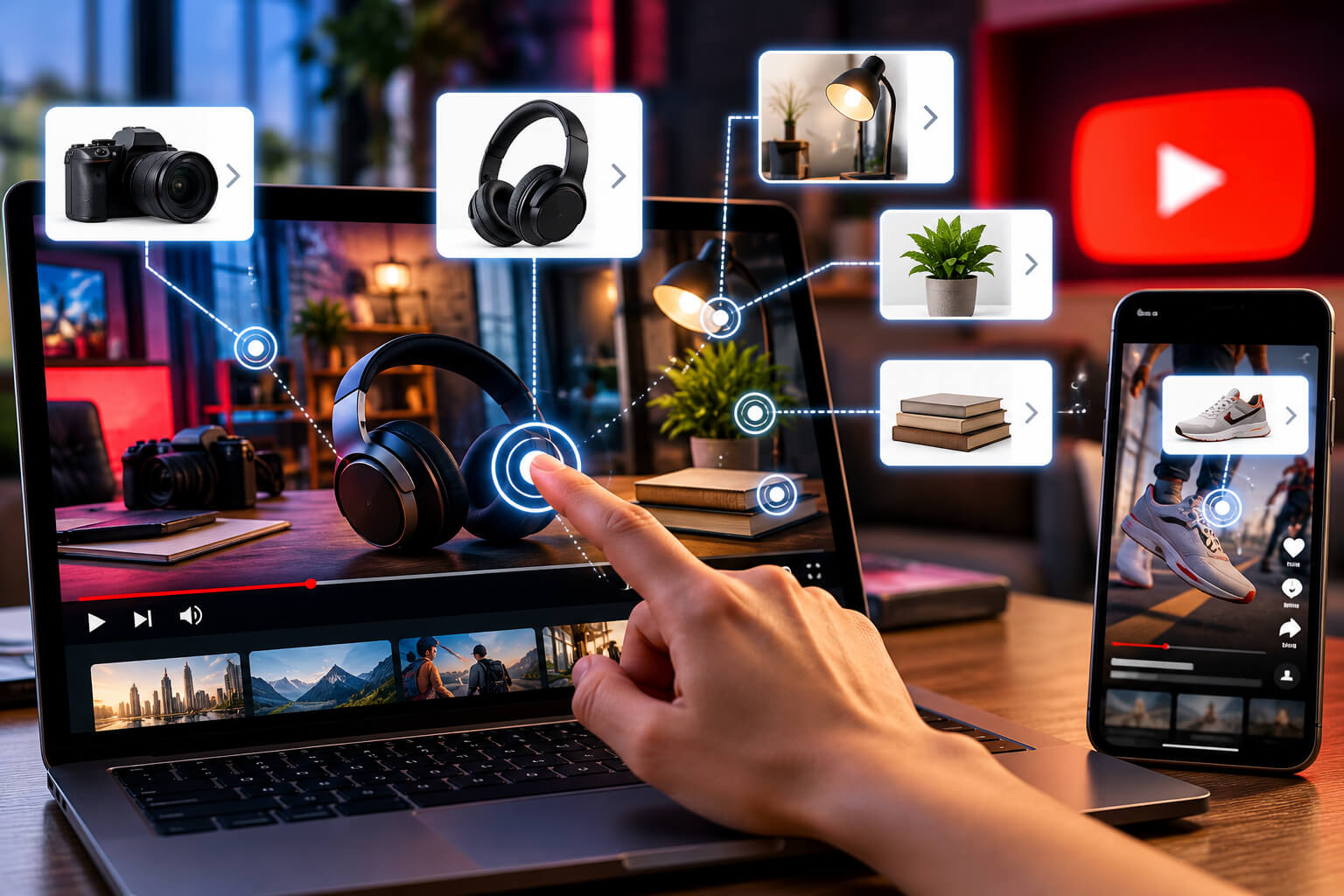
YouTube is experimenting with a different way to put shopping products in front of viewers — without necessarily showing those prompts to everyone.
The platform has begun rolling out a dynamic product tag placement system for members of the YouTube Shopping affiliate program. Instead of keeping product tags equally visible for every viewer, YouTube will adjust where those products appear based on how people interact with them.
It is a relatively small interface change, but one that points to a bigger YouTube strategy: making shopping more visible when there is genuine interest and less intrusive when there isn’t.
YouTube Makes Product Tags More Dynamic
YouTube announced the experiment on September 23, 2026, saying its new system will optimize where tagged products appear. When a viewer shows interest in products featured in a video, YouTube may display the shopping product tags directly on the video as well as in the description.
When viewers show little or no engagement with those items, YouTube will take a quieter approach. The tagged products will remain accessible through the video description instead of occupying a more prominent position around the video.
That gives YouTube another way to personalize the viewing experience. Someone who regularly interacts with shopping content could encounter stronger product visibility, while another viewer watching the same creator may get a cleaner experience.
YouTube Wants Shopping Without the Distraction
The logic behind the experiment is fairly straightforward. Shopping prompts can help creators earn revenue, but persistent product labels can also become another piece of interface competing for a viewer’s attention.
Dynamic placement gives YouTube room to do both.
Rather than displaying the same shopping experience to everyone, the platform can use engagement signals to determine when a product deserves more prominent placement. Social Media Today noted that the approach appears designed to reduce disruption for viewers who aren’t showing interest in the products being promoted.
It also fits neatly with how YouTube already handles commerce. Viewers can discover products through descriptions, product shelves, shopping buttons and other placements across eligible videos, Shorts and live streams.
Video Reach and Recommendations Won’t Be Affected
Creators may naturally wonder whether weaker interaction with product tags could hurt the performance of their videos.
YouTube says it won’t.
According to the platform, the change only affects where tagged products appear. It has no impact on a video’s reach, discovery or recommendation performance.
That’s an important distinction. The experiment is about shopping presentation, not whether YouTube’s recommendation system gives a creator more or less exposure based on product-tag engagement.
For creators already using affiliate links heavily, that means there should be no need to chase clicks simply out of concern that shopping engagement might affect regular video distribution.
Product Tagging Is Becoming More Automated
The placement experiment isn’t happening in isolation. YouTube has been steadily adding tools that make product tagging easier and more automated.
Eligible creators can currently tag products featured in videos and Shorts, with YouTube allowing as many as 60 products to be attached to eligible content. Long-form videos can also use product timestamps so specific products appear at relevant moments.
YouTube is pushing automation further through its auto-tagging system. The feature can identify products in uploaded videos and automatically attach relevant shopping tags. Its system analyzes elements including the video itself, title, description and captions when identifying products.
Put those pieces together and the direction becomes clearer. YouTube isn’t only automating what products get tagged. It is beginning to automate when and where viewers see them.
What the Change Means for YouTube Creators
For creators participating in YouTube Shopping, dynamic placement could make product promotion feel less forced.
A creator can still tag products that genuinely appear in a video. YouTube then has more control over how prominently those items surface for individual viewers. Someone demonstrating clear shopping intent may see stronger product prompts, while someone interested only in the video itself gets fewer interruptions.
That could be particularly useful for creators who mix reviews, tutorials, entertainment and product recommendations rather than producing content built entirely around shopping.
There is another reason to pay attention: product relevance matters more when the platform itself decides whether a tag deserves extra visibility. Randomly attaching loosely related products may offer less value than tagging items that viewers can clearly connect to what they are watching.
YouTube’s own guidance encourages creators to tag products that are meaningfully connected with their content and prominently featured or mentioned.
YouTube Keeps Building Commerce Into Video
YouTube has spent years trying to shorten the distance between discovering a product in a video and actually buying it. Shopping buttons, product shelves, affiliate tags, Shorts stickers, automatic tagging and product timestamps all move the platform further into that territory.
Dynamic product placement adds another layer.
Instead of treating shopping as a fixed feature sitting beside the video, YouTube can increasingly shape the commerce experience around individual viewer behavior.
For creators, the immediate change may look modest. A tag moves from one place to another. Behind that change, though, YouTube is testing a more personalized model for creator commerce — one where shopping prompts become more visible when viewers appear ready to use them.
Sources
Social Media Today — YouTube tests new product tag placement options
Read the Social Media Today report
YouTube Help — YouTube test features and experiments
View YouTube’s official experiment announcement
